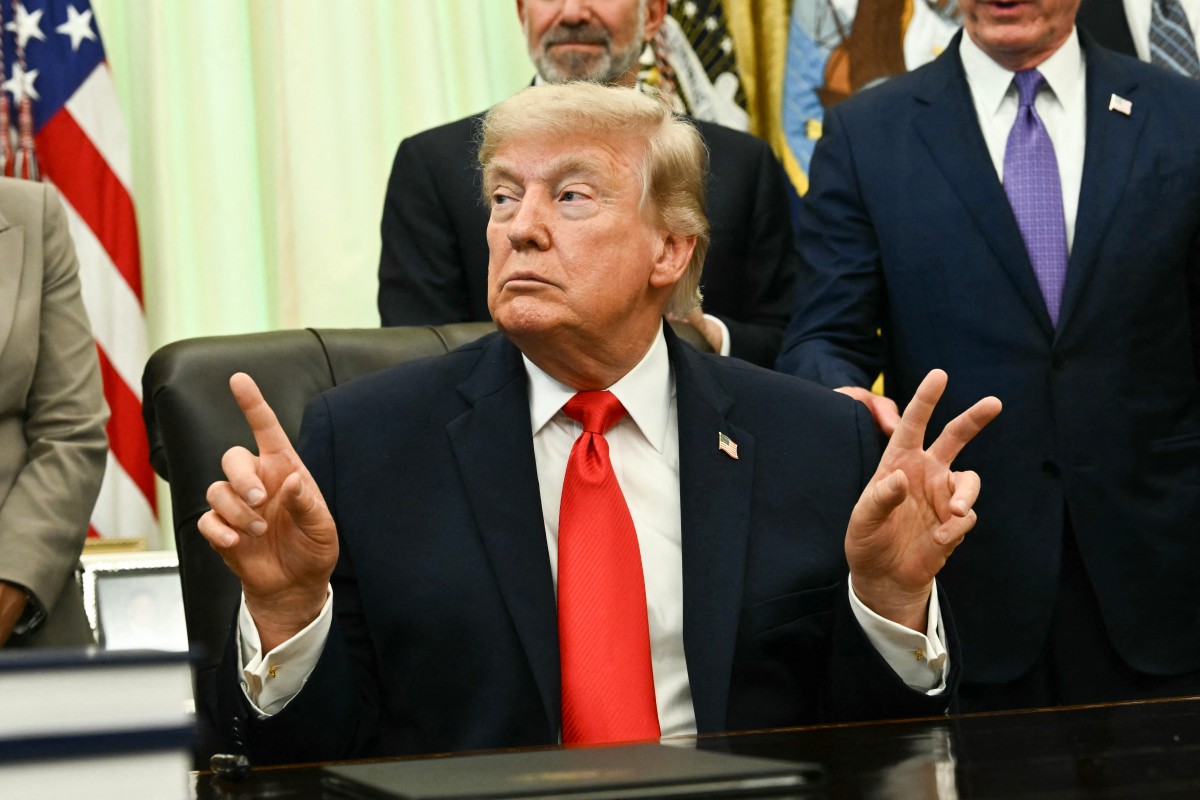
The US Congress has approved President Donald Trump’s controversial plan to slash $9 billion in federal funding, targeting foreign aid programs and public broadcasting in a dramatic late-night vote that signals broader budget battles ahead.
House Republicans secured a narrow 216-213 victory just after midnight Friday, fulfilling Trump’s campaign pledge to reduce government spending despite Democratic warnings that the cuts could jeopardize future budget negotiations and lead to a potential government shutdown later this year.
The legislation, which now heads to the White House for Trump’s signature, represents the most significant federal spending reduction since his return to office, though it achieves only a fraction of the $1 trillion in annual savings initially promised by the now-disbanded Department of Government Efficiency initiative.
Major cuts target international aid and public media
The approved budget cuts primarily impact programs supporting countries facing health crises, armed conflicts, and natural disasters. However, the legislation also eliminates $1.1 billion in funding previously allocated to the Corporation for Public Broadcasting over the next two years.
This reduction affects more than 1 500 local public radio and television stations nationwide, along with national broadcasters NPR and PBS. Conservative lawmakers have long argued that public broadcasting funding is unnecessary and promotes biased coverage, making it a prime target for elimination.
Originally, the bill included $400 million in cuts to a global AIDS program credited with saving 26 million lives worldwide. However, this funding was preserved following opposition from moderate Republicans who broke ranks with party leadership.
Political reactions highlight deep partisan divide
Trump celebrated the victory on Truth Social, declaring: “REPUBLICANS HAVE TRIED DOING THIS FOR 40 YEARS, AND FAILED… BUT NO MORE. THIS IS BIG!!!” House Speaker Mike Johnson echoed the president’s enthusiasm, stating that Republicans had delivered on their promise of “fiscal responsibility and government efficiency.”
Democratic leaders responded with sharp criticism, framing the cuts as a betrayal of bipartisan budget processes. House Minority Leader Hakeem Jeffries, joined by fellow Democratic leadership, accused Republicans of “rubber stamping Donald Trump’s extreme, reckless rescissions legislation” instead of protecting American welfare.
Senate Minority Leader Chuck Schumer called the vote “a dark day for any American who relies on public broadcasting during floods, hurricanes, tornadoes, and other disasters,” highlighting the potential impact on emergency communications during natural disasters.
Budget battle sets stage for September showdown
The successful vote represents more than immediate spending cuts – it establishes a precedent for future “rescissions packages” that could cancel previously approved government expenditures. White House budget director Russell Vought has already indicated that additional spending reduction proposals are likely forthcoming.
Democrats now face a strategic dilemma as they threaten to withdraw cooperation on future budget negotiations. Since Republicans need Democratic support to maintain government funding beyond September, this political standoff could precipitate a government shutdown if both parties cannot reach compromise.
The budget dynamics remain complex, as Republicans recently passed domestic policy legislation expected to add more than $3 trillion to the national debt, creating apparent contradictions in their fiscal responsibility messaging.
With Republicans controlling only 53 seats in the 100-member Senate, they require at least seven Democratic votes to pass future budget measures, giving the minority party significant leverage in upcoming negotiations. The success of these initial cuts may depend heavily on whether Democrats follow through on their threats to abandon bipartisan cooperation in response to what they view as unilateral Republican budget actions.