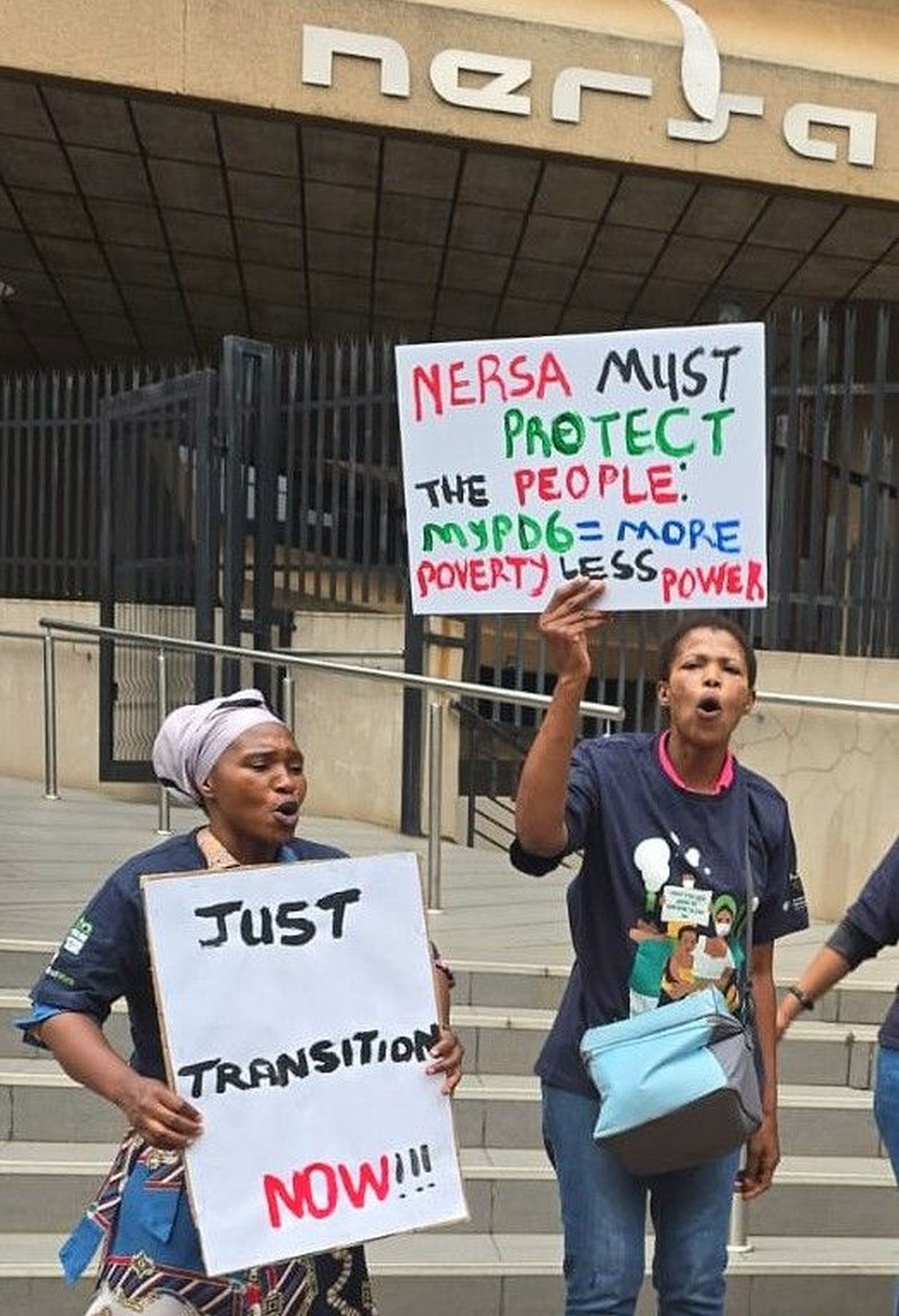
Community organisations will present their opposition to Eskom’s proposed electricity tariff increases at public hearings in Pretoria today, warning that higher prices will push more households into energy poverty.
The National Energy Regulator of South Africa (Nersa) is hearing oral submissions on Eskom’s Sixth Multi-Year Price Determination (MYPD6), which proposes an 8.83% increase for residential customers and 8.84% for municipalities in the 2027/28 financial year.
Earthlife Africa Johannesburg and community groups from Gauteng, the Eastern Cape and Limpopo say the increases will force families already struggling with food, transport and housing costs to make impossible choices between basic needs.
Profit versus people’s needs
Thabo Sibeko from Earthlife Africa said communities want to know why households should pay more when Eskom made a profit last year.
“How much profit is enough when families are being forced to choose between electricity and food? These are not luxuries but bare necessities, and Nersa has a responsibility to protect people from a pricing system that pushes households further into poverty,” Sibeko said.
On 2 October, members of the Women in Energy and Climate Change Forum, Grassroots for Climate Action and the Climate Justice Action Group demonstrated outside Nersa’s head office. They handed over written comments demanding the regulator reject the tariff applications and increase free basic electricity.
Women-run businesses under threat
Community representatives said high electricity prices are already damaging household livelihoods, small businesses, education and access to essential services. Women running chicken farms and sewing businesses say rising costs threaten their fragile incomes.
“Women in our communities carry the consequences of unaffordable electricity into every part of daily life. Families are choosing between food and electricity, women-run businesses are struggling to survive, and children are affected when households cannot afford the electricity and connectivity they need for their education,” a Women in Energy and Climate Change Forum representative said.
The groups want Nersa to support community-owned renewable energy projects that can return power and economic opportunity to local areas.
Free basic electricity inadequate
Communities say the 50 kilowatt-hour free basic electricity allocation is too low and difficult for eligible households to access. They want it increased and better targeted to households experiencing energy poverty.
Zodwa Rannyadi of Soweto Cultural Senior Citizens said unemployed people need at least 350 kilowatt-hours per household.
“Eskom’s tariff hike will deepen the burden on poor and working-class communities. Nersa must protect those who cannot afford electricity and expand access to affordable, reliable and clean power,” Rannyadi said.
Earthcare Action Network said Nersa must assess Eskom’s application against the reality of energy poverty, not only the utility’s revenue needs. The organisation wants transparent reporting on who receives free basic electricity.
Accountability and transparency
Bongani Dlamini of Tshwaranang said the demonstration reflected growing frustration among communities facing rising living costs.
“When electricity becomes unaffordable, people do not simply stop needing energy. They are pushed towards difficult and unsafe choices, while households already under financial pressure fall deeper into poverty,” Dlamini said.
ALSO READ: Public Protector investigates energy regulator over R76 billion tariff error
Mokgethi Khumalo of Ezamathole said the hearings should also examine who owns and benefits from South Africa’s future energy system. He said communities want to become producers of clean energy through rooftop solar and locally owned renewable-energy projects.
Ulrich Steenkamp of Earthlife Africa said people are being asked to pay more while many communities continue to experience unreliable electricity, pollution and deteriorating infrastructure.
“Nersa must require Eskom to show clearly how every additional rand collected from consumers will improve the system. Eskom must account publicly for tariff revenue, loans and development finance,” Steenkamp said.
The organisations want Nersa to reject the proposed tariff increases, strengthen free basic electricity, demand greater accountability from Eskom, and support an energy system where communities can be active participants and owners rather than only consumers.
ALSO READ: Nersa approves 8.76% Eskom tariff hike amid calculation error controversy