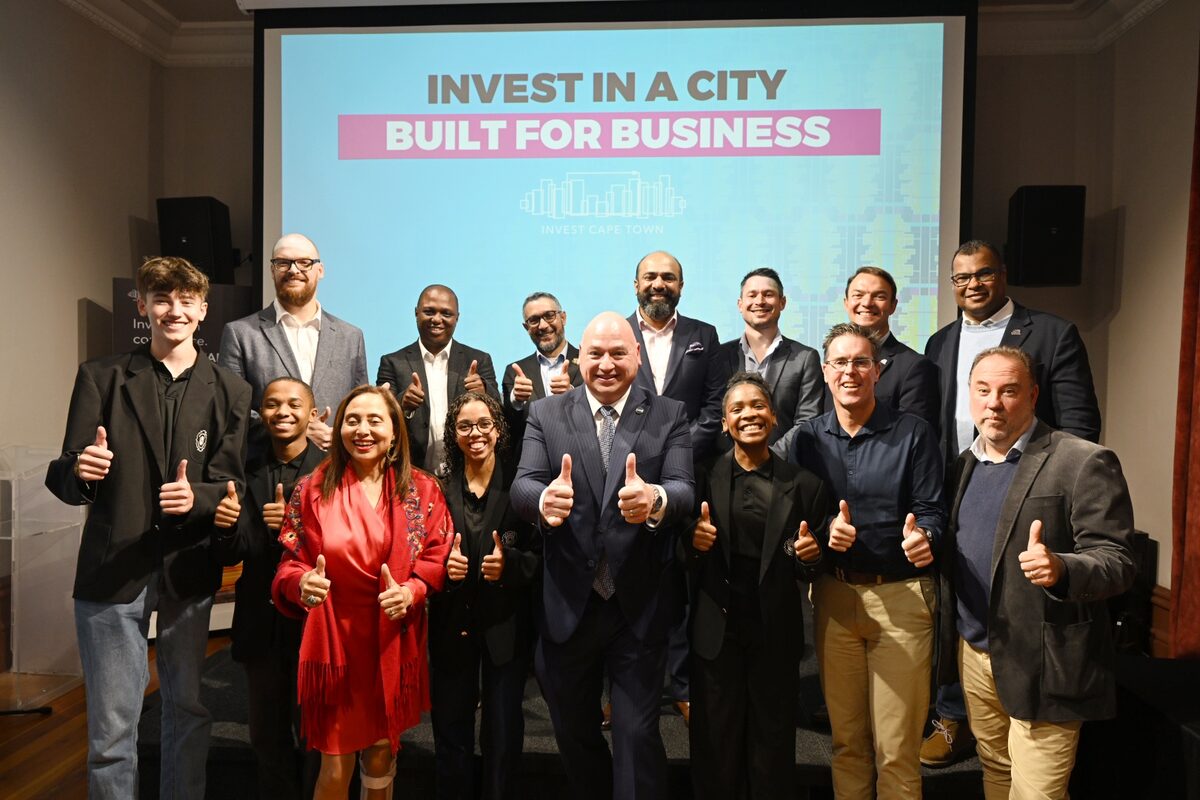
Residents and businesses are being invited to comment on a new draft Manufacturing Support Policy that aims to position Cape Town as South Africa’s premier destination for manufacturing investment while creating more local jobs.
The public-participation process, running until 3 December, seeks input on a revised policy framework that addresses shortcomings in the City’s 2018 Investment Incentives Policy.
While the original policy showed success in attracting manufacturing investment it struggled to engage other targeted sectors such as film, IT and business services and proved costly due to large-scale financial incentives.
“Cape Town is open for business,” said James Vos, Mayco member for Economic Growth. “This new policy is the next step in making Cape Town the easiest and most attractive place to do business in South Africa.”
Strategic shift to manufacturing focus
The draft policy represents a strategic pivot towards supporting the manufacturing sector specifically, recognising its potential for broad economic impact and job creation across skill levels. Unlike the previous policy, which concentrated on six industrial zones, the new framework extends support across all 33 industrial areas in the metro.
Key features include prioritising non-financial support such as streamlined approvals, permit assistance and active investment facilitation, measures the City found investors valued most. The policy also introduces smaller, strategic financial elements such as development-application fee waivers.
“This is a simpler, smarter and more cost-effective policy,” said Vos. “It positions Cape Town as a globally competitive destination for manufacturing investment. Most importantly, it is jobs-focused.”
Addressing national manufacturing challenges
The City’s new approach comes against a backdrop of significant challenges facing South Africa’s manufacturing sector. According to a November 2024 report from the Centre for Development and Enterprise, highlighted by the Cape Chamber of Commerce and Industry, the country’s current national industrial policy is “harming manufacturing rather than promoting it”.
The chamber’s statement reveals alarming statistics: manufacturing’s share of GDP fell from 20% to 13% between 1960-2023, only 20% of South African manufacturers export at all, and manufacturing employment declined from 1.8 million in 2001 to less than 1,6 million in 2023.
“Government’s key focus appears to be protectionist measures,” it stated, “such as tariffs that provide short-term relief, but do little to bolster the fundamental strength of local companies, calling for ‘a fresh policy approach’ vital to hopes of reindustrialisation, export growth and job creation.”
This criticism is particularly relevant to the Western Cape, which serves as the country’s fourth largest exporting province, responsible for more than half South Africa’s agricultural exports and more than two thirds of all marine manufacturing.
Cape Town’s competitive approach
Cape Town’s new manufacturing policy addresses many concerns raised by the business community about national industrial policy. Rather than focusing on protectionist measures, the City emphasises global competitiveness through streamlined processes, reduced red tape and strategic support that helps companies become more export-ready.
The Cape Chamber has “long advocated the need for economic reform aimed specifically at making local firms more globally competitive”, positioning the City’s new policy as aligned with private-sector recommendations for focusing on competitiveness rather than protection.
The new policy also emphasises environmental responsibility by incentivising green-technology development and offering a Generic Environmental Management Programme for development projects within the Atlantis urban area.
Lessons from previous policy
The City’s evaluation of the 2018 Investment Incentives Policy revealed that while manufacturing showed strong engagement other targeted industries demonstrated limited interest. Large-scale financial incentives created significant costs for the City and often supported expansion of existing operations without generating substantial new employment.
The revised policy shifts emphasis from direct financial incentives to comprehensive non-financial support measures, reducing the financial burden on the City while maintaining effectiveness.
“This is not a static tool,” noted Vos. “It will continue to evolve with investor needs and global competition, but always with one mission in mind: creating more jobs and opportunities for Capetonians.”
The policy aims to complement national investment incentives, creating a comprehensive support ecosystem that leverages Cape Town’s competitive advantages. The Cape Chamber noted: “The current closer working relationship between government and the private business sector is a golden opportunity to recalibrate industrial policy.”
The public-participation process closes on 3 December 2025 with the final policy expected to be implemented in 2026.