

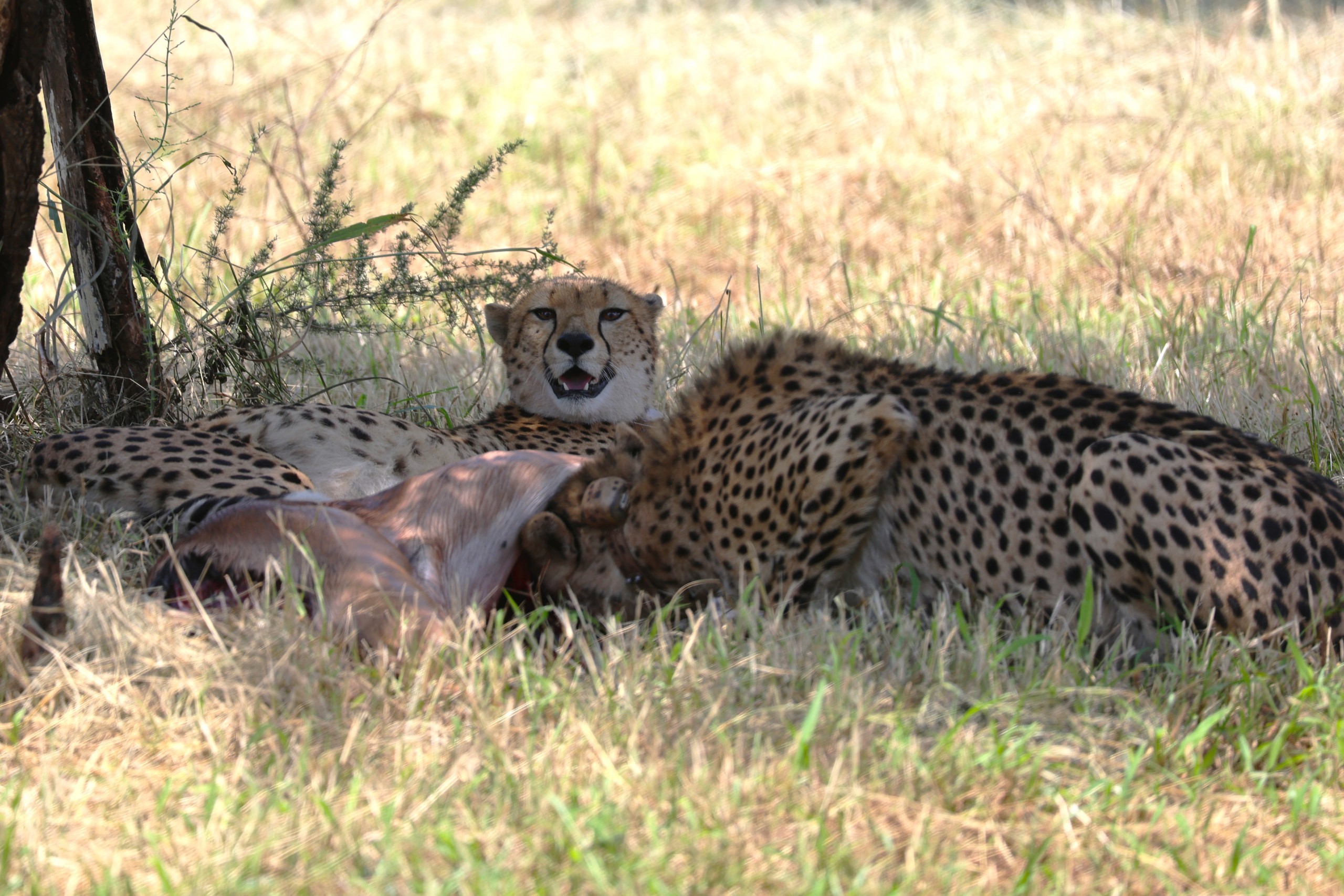
ESWATINI – Four cheetahs have been successfully reintroduced to Eswatini’s Royal Jozini Private Game Reserve, marking the return of the species to the kingdom for the first time in more than 35 years and establishing a founder population for future conservation efforts.
The landmark project forms part of the Southern African cheetah metapopulation programme and is being hailed as a significant step in restoring large carnivores to Eswatini.
Historically, cheetahs were widely distributed across the country, but habitat loss, human persecution and declining prey populations led to their disappearance. Records indicate that the last viable cheetah population in Eswatini existed during the 1980s.
The reintroduction took place in two phases.
In December 2025, two adult female cheetahs were translocated from Nyosi Wildlife Reserve in the Eastern Cape through a collaboration between Nyosi Wildlife Reserve and the Global Humane Conservation Fund of Africa, with support from Mantis and ALL Accor Members.
Following quarantine procedures, veterinary clearance and a 30-day acclimatisation period, the females were released into Royal Jozini in January.
According to conservation officials, both females adapted exceptionally well to their new environment, successfully hunting and establishing territories within the reserve.
The second phase of the project took place in April when two adult male cheetahs were moved from Dinokeng Game Reserve to Royal Jozini.
The translocation was coordinated by the Wildlife Emergency Fund and The Metapopulation Initiative, while tracking collars were provided by WeWild Africa.
The males underwent quarantine and veterinary management at Kifaru Wildlife Veterinary Services before being transported to Eswatini and released after a further acclimatisation period.
Today, all four cheetahs are monitored daily through satellite and VHF tracking technology, as well as direct field observations.
Recent monitoring data has shown the males exploring extensively across the northern and eastern sections of the reserve, while the females continue to thrive and make regular kills.
Conservationists are particularly encouraged by tracking data indicating that the males and females are now occupying neighbouring areas, raising hopes that Eswatini could see its first cheetah cubs in decades in the near future.
Taryn Gillson, Regional Director Africa for the Global Humane Conservation Fund of Africa, described the return of the cheetahs as a major achievement.
“Today marks a historic milestone for Eswatini, with cheetahs returning to the country for the first time in more than 30 years,” said Gillson.
“What makes this reintroduction especially meaningful for our Global Humane team is that the two females were raised by a rehabilitated and successfully rewilded cheetah at Nyosi Wildlife Reserve in South Africa’s Eastern Cape, demonstrating the lasting conservation impact of investing in animal welfare.”
Jay Azran, Managing Director of Royal Jozini Private Game Reserve, said the project represented a defining moment in the country’s conservation history.
“For the first time in over three decades, cheetahs once again roam this part of our country, restoring an important piece of Eswatini’s natural heritage and strengthening our commitment to biodiversity conservation,” said Azran.
“The return of cheetahs is not only a victory for Royal Jozini, but for conservation across Eswatini. It demonstrates what can be achieved when public and private sectors work together with a shared commitment to protecting our wildlife for future generations.”
Dereck Milburn of the Wildlife Emergency Fund said cross-border wildlife translocations require extensive planning and cooperation among multiple stakeholders.
“We are absolutely thrilled that Eswatini is once again home to cheetahs, and we look forward to seeing these four cheetahs making a meaningful contribution to the cheetah population in Southern Africa,” he said.
Kulani Nyakane of The Metapopulation Initiative said the project highlights the value of regional conservation partnerships.
“Seeing these four cheetahs return to landscapes where they once disappeared represents more than the recovery of a species; it represents hope, restoration and a renewed future for cheetahs,” said Nyakane.

