


When 19-year-old Caster Semenya stormed to victory in the 800m final at the 2009 World Championships in Berlin, the unknown South African athlete had no idea she was about to become the center of one of sport’s most controversial debates. The young runner from a northern village had barely crossed the finish line when questions about her gender eligibility erupted, sparking a 15 year legal battle that would define her career.
The drama began immediately after her stunning triumph. Rivals questioned whether the South African athlete should have been allowed to compete, with some openly challenging whether she was woman enough to race in the female category. World Athletics officials reacted swiftly, forcing Semenya to undergo gender verification testing that would sideline her for nearly a year.
“Being told you are not woman enough can be disturbing,” Semenya later told a London audience, reflecting on those early days when her athletic dreams hung in the balance.
From Olympic glory to legal battles
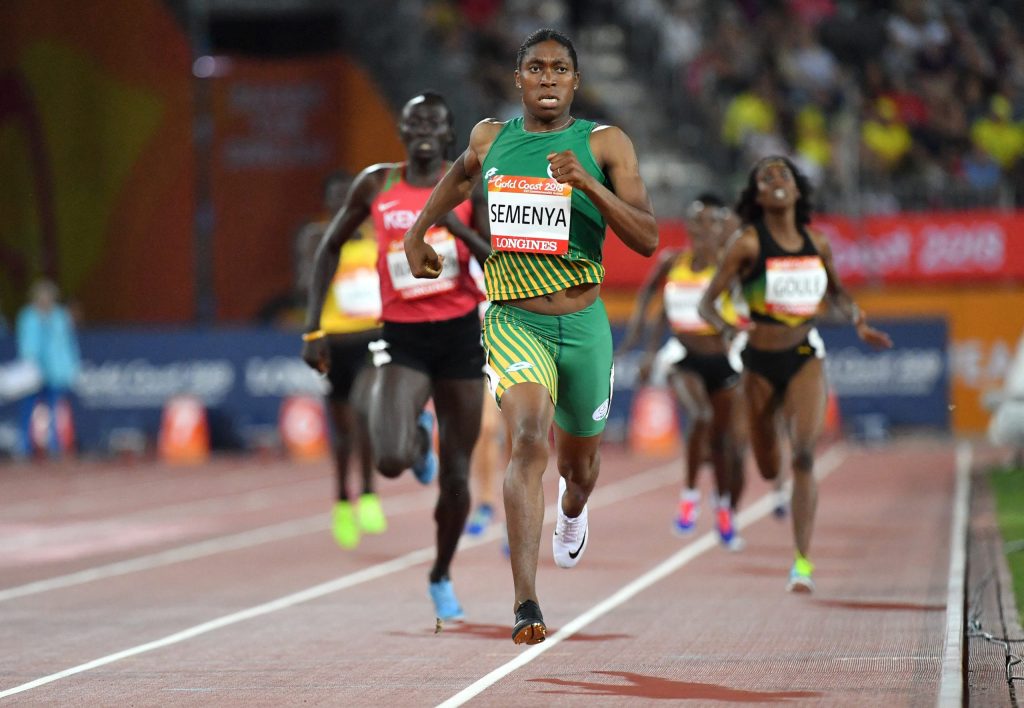
Despite the controversy, Semenya’s talent couldn’t be denied. The middle-distance specialist went on to claim Olympic 800m gold medals at both the 2012 London Olympics and 2016 Rio Olympics. Her London victory came after Russian winner Mariya Savinova was stripped of her title due to doping violations, while her Rio triumph was earned on the track.
The South African champion also dominated world championships, collecting gold medals in Berlin, Daegu, and London over her favorite 800m distance. But instead of celebrating her status as a middle-distance track queen, Semenya found herself fighting just for the right to compete.
Born with differences of sexual development (DSD), the 34 year old athlete became the focal point of World Athletics’ controversial regulations targeting female athletes with naturally elevated testosterone levels. The international governing body argued that athletes like Semenya possessed an unfair biological advantage due to higher testosterone, which increases muscle mass, strength, and endurance-enhancing hemoglobin.
The DSD controversy explained
The testosterone debate intensified when World Athletics demanded that DSD athletes take hormone-suppressing medication to compete in female categories. Semenya initially complied but described the experience as “hell” in interviews with South African media.
“When you are desperate to run, you will do anything to get what you want,” she explained. “The medication was not designed for my body because I am different. I am a woman who is different, I do not have a uterus, I do not have fallopian tubes. I was never happy taking the medication, it irritated me, I was not myself.”
When Semenya refused to continue taking testosterone-reducing drugs, World Athletics banned her from competing. The initial prohibition covered middle-distance races but eventually extended to all track events, effectively ending her competitive career and causing her to miss the 2024 Paris Olympics.
Taking on World Athletics: The legal journey
Determined to fight what she saw as discrimination, Semenya launched a series of legal challenges against World Athletics’ DSD regulations. Her first attempts at the Court of Arbitration for Sport (CAS) and Swiss Federal Tribunal (SFT) were unsuccessful, with both courts upholding the testosterone rules.
However, the European Court of Human Rights (ECHR) took a different view. In a narrow 4-3 majority decision, the court ruled that Semenya’s appeal had not received proper consideration in Switzerland, stating that “the applicant had not been afforded sufficient institutional and procedural safeguards to allow her to have her complaints examined effectively.”
World Athletics and the Swiss Federal Tribunal appealed this decision, leading to a two-year wait for the final ruling from the ECHR’s 17-judge Grand Chamber.
European Court victory: A human rights win
In a landmark decision, the ECHR Grand Chamber ruled in favor of the Olympic champion, dealing a significant blow to World Athletics’ gender eligibility regulations. The court’s decision represented more than just a legal victory for Semenya it was recognition of the human rights issues at the heart of the DSD debate.
“We need to respect athletes, we need to put their rights first,” Semenya said after the ruling. “It’s just a reminder to the leaders to say priorities lie in the protection of athletes.”
Throughout the legal proceedings, Semenya framed the fight as being about more than sport. She labeled World Athletics’ actions a “gross violation of human rights,” arguing that “what is at stake here is far more than the right to participate in a sport. Women’s bodies, their wellbeing, their ability to earn a livelihood, their very identity, their sense of safety and belonging in the world are being questioned.”
World Athletics has maintained its position throughout the controversy, stating that “DSD regulations are a necessary, reasonable and proportionate means of protecting fair competition in the female category.”
South Africa rallies behind their golden girl
The Caster Semenya case has united South Africa behind their Olympic champion, with both government officials and the public supporting her fight against what they see as discrimination. Former Sports Minister Tokozile Xasa captured the national sentiment when she said, “Our entire history of South Africa has been a struggle for human rights. These World Athletics rules have had a negative effect on our golden girl.”
While several South African athletes contacted about the issue declined to comment publicly, the overwhelming national support has provided Semenya with strength during her darkest moments. She credits her family her parents, three sisters, and one brother as her foundation throughout the ordeal.
“The relationship I have with my family is special,” the athlete said, highlighting the personal support system that has sustained her through years of legal battles and public scrutiny.
As the European Court victory opens new possibilities for her future in athletics, Caster Semenya’s transformation from unknown teenager to global human rights advocate demonstrates how sports controversies can transcend the track to address fundamental questions about fairness, identity, and human dignity.



You must be logged in to post a comment.