

Cape Town’s transport system is trapped in a web of fragmentation that’s draining economic productivity and preventing any meaningful progress toward solving the city’s mounting congestion crisis, according to logistics expert Prof Stephan Krygsman from Stellenbosch University.
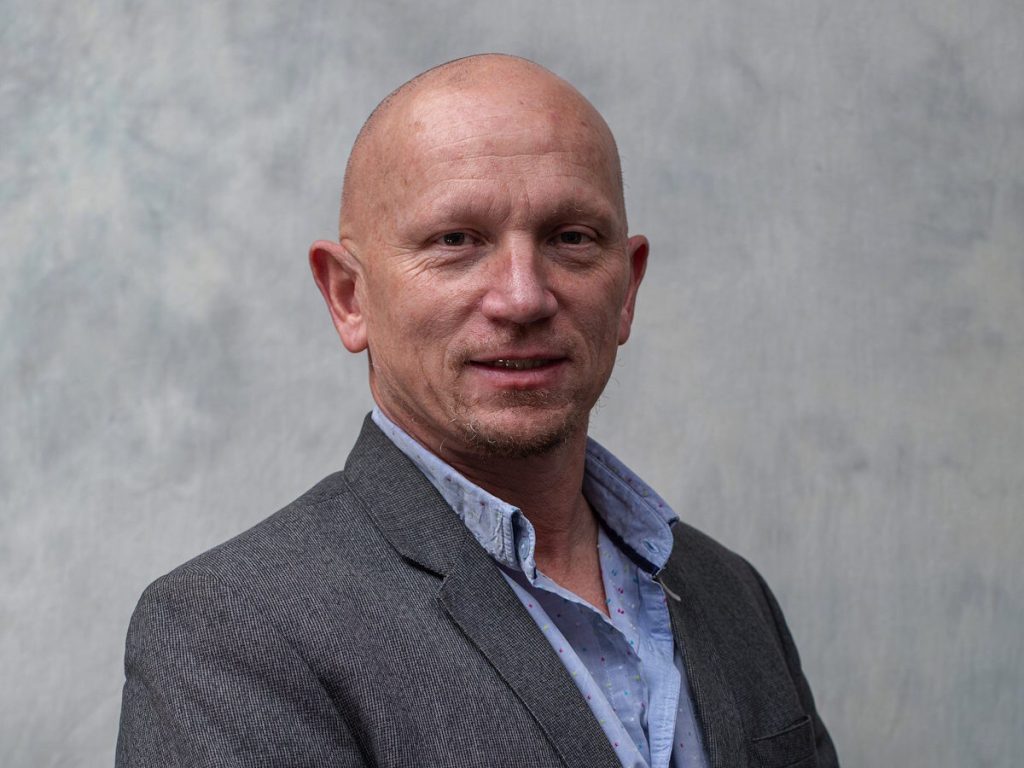
Krygsman, who was a panelist at a recent Cape Chamber Urban Mobility Strategic Dialogue Network event, delivered a stark assessment: if current approaches continue, “we will have the same discussion in five, 10 and 15 years” – as Cape Town hurtles toward an estimated 10 million residents by 2050.
The five-mode problem
Unlike successful cities worldwide that typically operate with two or three public transport modes, Cape Town is burdened with five competing modes: cars, Golden Arrow buses, Bus Rapid Transit (BRT/MyCiTi), rail, and minibus taxis. “This fragmentation prevents any single mode – especially rail – from reaching the critical mass needed for efficiency and lower unit costs,” Krygsman explained.
With an estimate of around four million passenger trips daily, the competing modes cannibalise each other’s market share rather than working toward an integrated system. Rail and BRT, which have inherent economies of scale that make them cheaper as ridership grows, are “probably operating far below optimum level and require significant subsidies,” while competing for much the same market segment.
Governance chaos
Perhaps more damaging than modal competition is what Krygsman describes as institutional fragmentation creating “a recipe for complete failure.”
Three tiers of government each control different transport elements: National government runs rail while collecting most taxes, provincial government subsidises buses, and municipal government plans BRT but relies on national funding. Meanwhile, taxis operate largely independently, and Sanral controls national roads.
ALSO READ: Sanral, City of Cape Town under pressure: Community demands better bridge plans
Within the City of Cape Town itself, three separate departments – Mobility, Urban Planning and Design, and Development Management – all handle transport-related responsibilities without effective coordination, Krygsman claims.
Economic productivity drain
The transport dysfunction extends far beyond commuter inconvenience, Krygsman argues, striking at the heart of Cape Town’s economic competitiveness.
“Companies have three major input costs: land, labour, and transport,” he noted.
Workers spend significant portions of disposable income on transport, while long commutes and uncomfortable travel options reduce productivity through worker fatigue and contribute to high employee turnover. “It leads to high churn in employment – workers continuously look for higher paying jobs or jobs closer to their home to overcome the burden of the long commute. This high churn causes losses in productivity and companies needing to train new workers.”
Even logistics companies – the backbone of freight movement – are relocating to city peripheries partly “because they want to be close to the workforce,” further entrenching spatial separation between residential and employment areas.
ALSO READ: Cape Town claims infrastructure investment lead over Gauteng metros
Spatial planning failures
Krygsman also criticises Cape Town’s continued separation of land uses. “We observe with ongoing urban sprawl and traditional planning approaches that residential areas, employment areas, industry, manufacturing etc. are all planned separately. This leads to very monotonous land uses… and of course this leads to the need to travel.”
He advocates for 15-minute city concepts with mixed-use development around transport nodes, allowing people to “balance home and work in close proximity, avoiding the need for long travel.”
“As people migrate to Cape Town, our only development option seems mostly to accommodate them on the periphery, and this leads to more travel as employment is in the CBD and some corridors,” he noted.
ALSO READ: Most against impact of Racecourse development on infrastructure, traffic
Missing revenue tools
Unlike international cities that fund public transport through congestion charges and developer contributions, Cape Town lacks essential revenue mechanisms.
“There is no other alternative to generate revenue for public transport other than implementing congestion taxes, developer contributions and privatising rail, stations, busses etc.,” Krygsman stated.
He suggests developers should conduct “housing impact studies” and make “significant contribution to public transport – not only roads and parking.”
The independence solution
Krygsman’s proposed remedy centers on creating an “Urban and Transport Development Authority” – stronger than a department with revenue-raising powers – that would coordinate planning, design, construction, regulation, and funding across all transport modes. Crucially, “these should not be political appointments and operate independent of the political parties.” This authority would focus heavily on integrated land-use planning, recognising that “transport is a derived demand” stemming from spatial separation of activities.
Geographic reality check
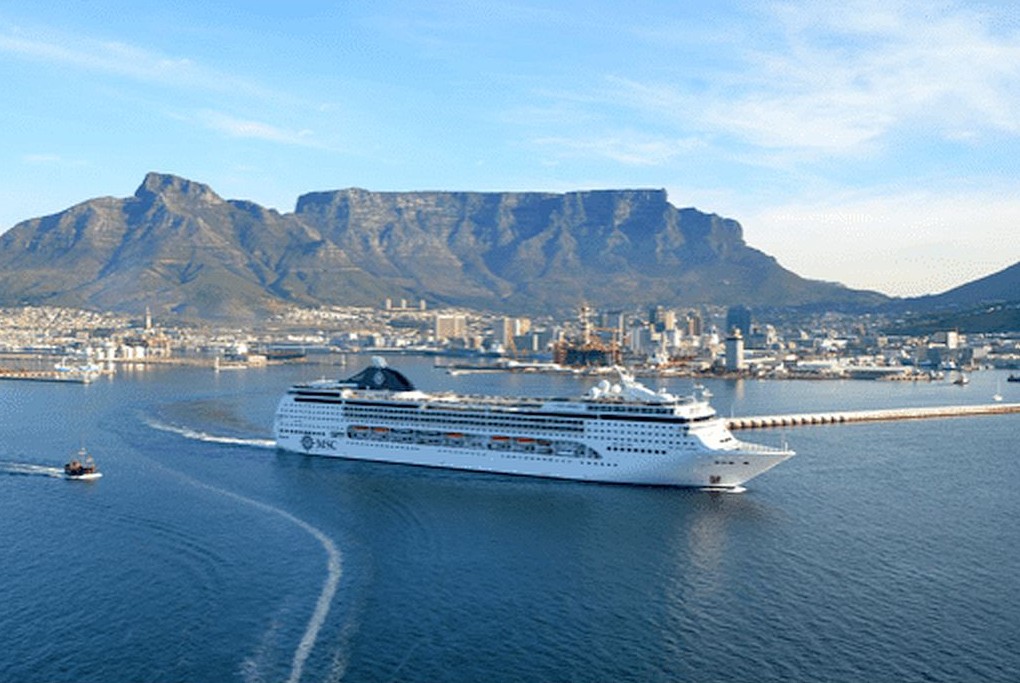
Contrary to common complaints about Cape Town being hemmed in by mountain and ocean, Krygsman views these as assets that “limit sprawl which is good” and provide recreational amenities and pollution control that make cities attractive. “Most successful cities in the world have either a sea or a mountain. Cape Town has both,” he noted, arguing that geographic constraints can force more efficient, concentrated development if properly managed.
City responds to critique
Approached for comment on some of Krygsman’s analysis, Mayco member for Urban Mobility Rob Quintas defended the City’s current transport approach.
Quintas acknowledged that “fractured governance arrangements are historic” but outlined the City’s vision for “an integrated interoperable public transport system where all modes of public transport…are integrated in terms of scheduling, and with one mode of payment.”
ALSO READ: Western Cape pioneers taxi driver registration system
He said the City is pursuing devolution of passenger rail services and working with the minibus taxi industry “towards a streamlined mobility ecosystem.”
ALSO READ: Cape Town plots rail revolution with ambitious takeover bid
On Krygsman’s governance criticism (institutional fragmentation), Quintas stated: “The City does not work in silos. All planning happens across City directorates.” He noted that departments collaborate on spatial development frameworks and all provide input on development applications.
On spatial planning, Quintas noted that underutilised sites like Wingfield and Ysterplaat “belongs to the national government, and the City has long advocated for national government to release these sites.” The City remains “committed to TOD [Transit-Oriented Development], this is one of our main goals,” he added.
No congestion charge in sight
On congestion charges, Quintas stated: “A congestion charge would not be considered, let alone implemented, unless public transport is the most reliable and effective travel option. That point has not yet been reached and remains a long-term goal.” He added: “Furthermore, there is currently no provision in national legislation that would enable any municipality to implement a congestion charge.”
Regarding developer contributions to public transport, Quintas outlined existing development charges calculated ”in accordance with the size and impact of the said development.” He noted that developers ”make an important contribution when their developments appropriately increase densities and mix of land uses, which support public transport viability.”
Quintas rejected Krygsman proposal for an independent transport authority, stating: “The City is not considering” it.
ALSO READ: Cape Town tests AI traffic cameras to catch seatbelt and mobile phone violations



You must be logged in to post a comment.