

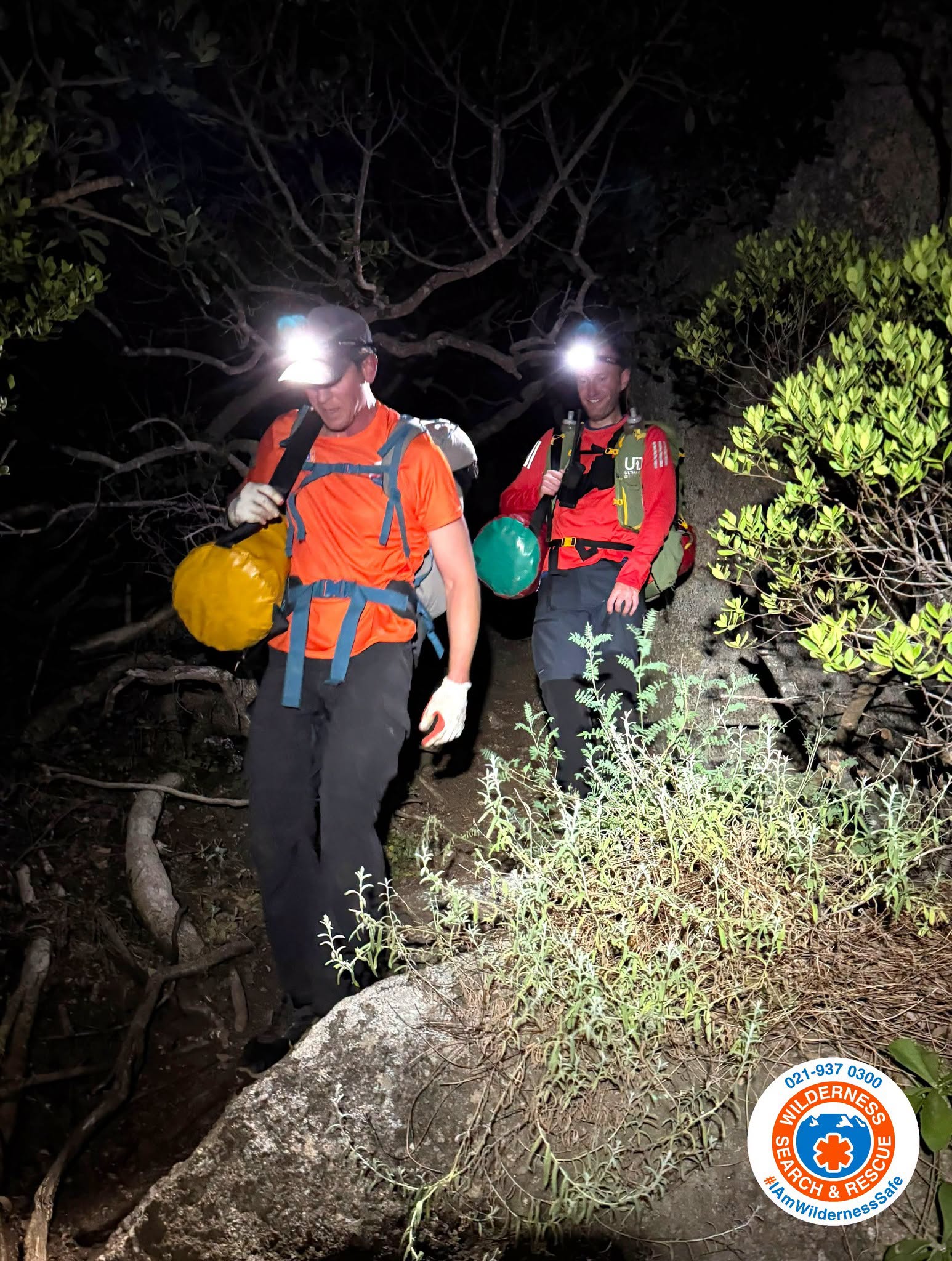
Wilderness Search and Rescue (WSAR) teams carried out two major operations over the weekend of 27 to 28 September, deploying a robotic exoskeleton for the first time in South Africa and conducting an overnight coastal rescue of two stranded foreign tourists.
Exoskeleton assists exhausted hiker on Table Mountain
On Saturday afternoon, a family hiking up Platteklip Gorge reached the summit to find the Table Mountain Aerial Cableway had closed for the day. With light fading and a long descent ahead, the family called WSAR’s emergency number to alert rescuers that they were beginning their descent and might need help.
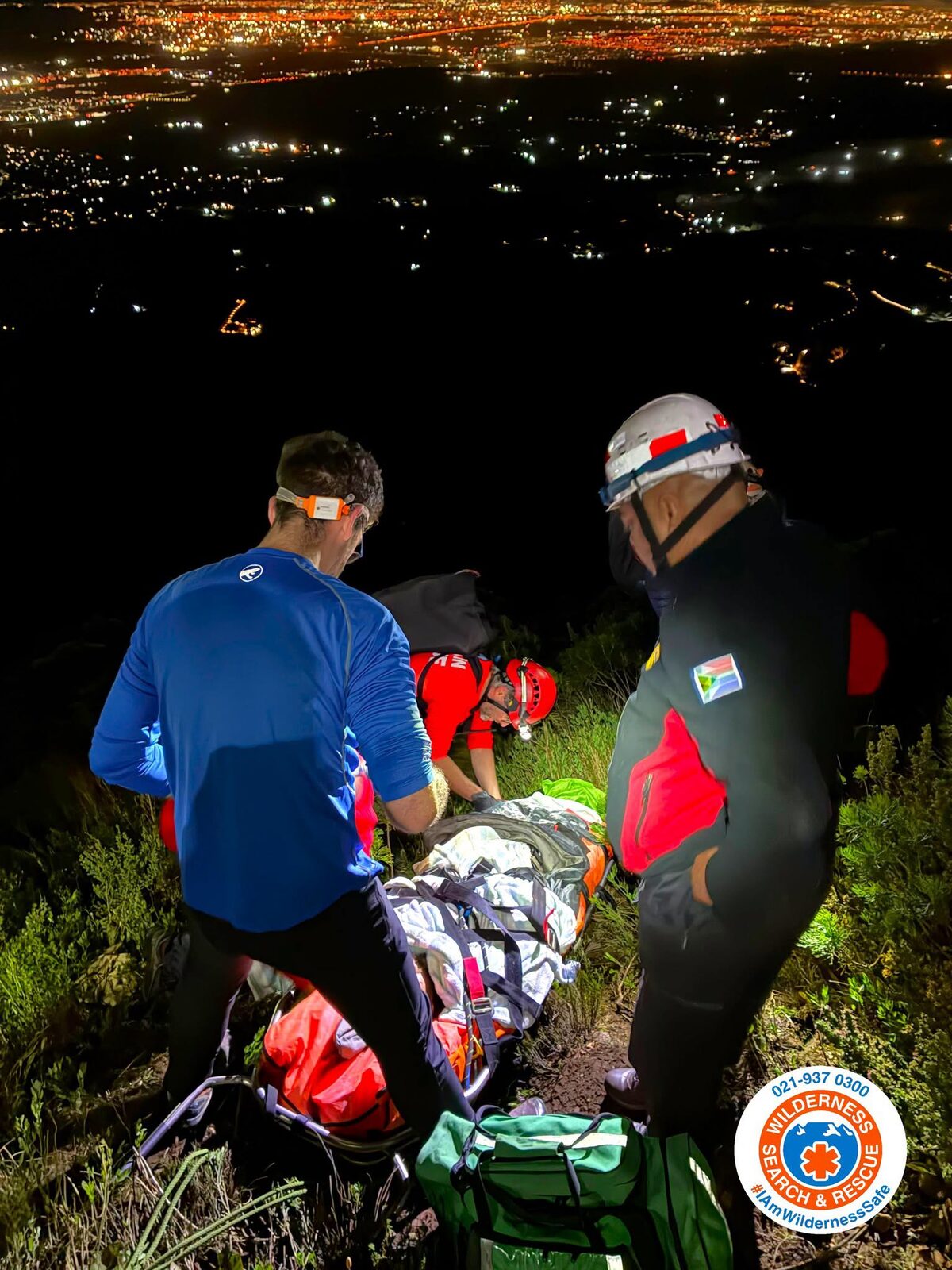
A team including a Western Cape Government Health and Wellness EMS paramedic met the family on the mountain. The 47-year-old mother was exhausted and struggling to continue the steep descent. Rescuers fitted her with a Hypershell exoskeleton – a lightweight, battery-powered device worn around the hips and thighs that provides powered assistance with each step.
With the device fitted, her steps steadied and her confidence grew. She was able to walk down the gorge under her own power, accompanied by the rescue team. The entire family was safely off the mountain shortly after 23:00.
The operation marked the first deployment of an exoskeleton in a rescue in South Africa. WSAR praised the family for calling early, before the situation escalated into an emergency, which allowed teams to reach them in time.
Overnight coastal rescue near Boss 400 wreck
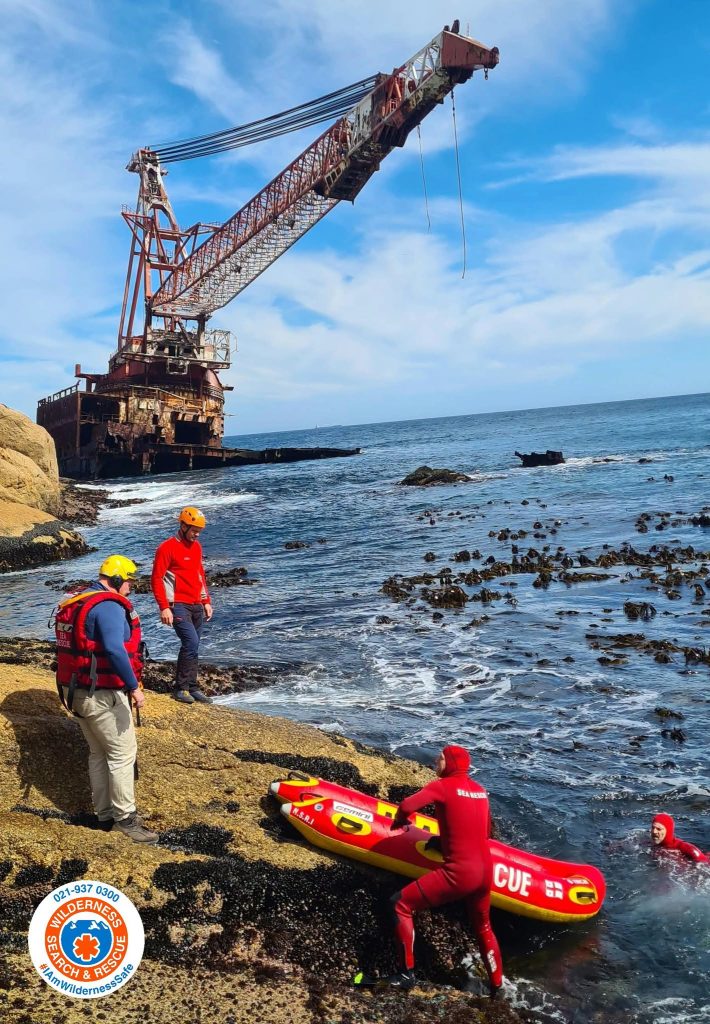
The following day, WSAR launched an overnight operation after two German tourists – a 38-year-old man and his partner – became stranded on the coastal trail between Llandudno and Hout Bay. The pair had been following an online navigation app that did not reflect the trail’s current hazardous and overgrown condition. After the man injured his ankle, they turned back towards Llandudno but encountered a particularly difficult section and called for help late on Sunday afternoon.
Teams including EMS paramedics, SANParks Table Mountain National Park SEAM rangers and WSAR personnel were deployed. With treacherous terrain, strong winds and fading light, rescuers decided to remain on scene with the hikers overnight. WSAR trail runners carried tents, sleeping bags, and equipment up the trail to sustain the team through the night.
ALSO READ: Tragic hiking death mars busy rescue weekend on Cape Peninsula
On Monday morning, a helicopter extraction was attempted but had to be aborted due to strong winds. The plan was immediately adapted: the injured hiker was lowered approximately 60 metres down granite slabs to the coastline, where National Sea Rescue Institute (NSRI) crews were waiting with rescue boats. NSRI teams floated both hikers, one at a time, in a small inflatable canoe out to the waiting boats before bringing them safely ashore in Hout Bay shortly after midday.
Shared theme: early calls save lives
Both incidents underscored the importance of early communication. The Platteklip Gorge family called before their situation became critical, allowing teams to respond proactively. WSAR spokesperson David Nel emphasised inter-agency collaboration as central to both operations and reiterated a strong advisory against hiking the Llandudno-to-Hout Bay coastal route, which he described as overgrown, virtually impassable and the site of several reported crimes.
ALSO READ: Trail runner helps save tourist on Platteklip Gorge





You must be logged in to post a comment.