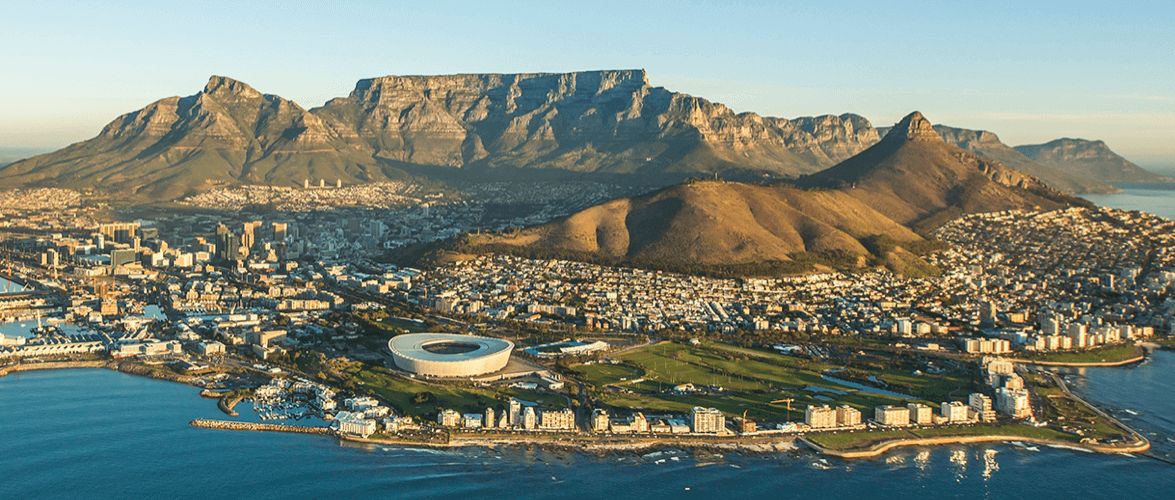
Cape Town’s Central Business District has been hailed as a “global role model for urban revitalisation” by international urban development experts, cementing its position as one of the world’s leading inner cities.
The accolades came from urban specialists, place makers and public-private partnership leaders who gathered in Cape Town earlier this year for the 2025 International Downtown Association (IDA) World Towns Leadership Summit. The event was hosted by the Cape Town Central City Improvement District (CCID), alongside the Voortrekker Road Corridor Improvement District and the Greater Tygerberg Partnership.
A living, breathing urban environment
Gary Holmes from New Zealand was particularly impressed by the CBD’s transformation, noting its success in reversing urban decay and attracting major investment through innovative public-private partnerships.
“It’s not just a 9-to-5 office park but it’s a real live-work-play environment with people everywhere, day and night,” Holmes said. “Plus, it’s become a huge hub for tech and business, attracting fintech and BPO companies; a big deal.”
Holmes identified Cape Town as well-positioned to become Africa’s digital economy hub, a sentiment echoed by other international delegates who praised the city’s technological advancement and business appeal.
Safety and cleanliness set global standard
David Downey, IDA president and CEO, highlighted the proactive safety measures that distinguish Cape Town’s CBD from other global cities. He specifically praised the role of safety ambassadors, whose visible presence “creates an immediate sense of security.”
Ojay McDonald, Chief Executive of the Association of Town & City Management from the UK, reinforced this assessment. “I was struck by how clean the CBD is and how safe it feels,” McDonald said. “Despite the challenges all big cities face, Cape Town compares favourably with global peers. I never felt less safe here than in any other major city.”
‘Africa’s Los Angeles’ with unique character
The international experts were particularly taken with Cape Town’s distinctive blend of business sophistication and lifestyle appeal. Downey described the CBD as “a world-class city centre that combines global relevance with a character that is uniquely its own.”
“It has the vibrancy of a major business hub, but what truly distinguishes it is the lifestyle appeal – a rare blend of outdoor and coastal culture, reminiscent of California,” Downey added.
Kris Larson, IDA chairperson and CEO of Houston’s Business Improvement District, went further, describing Cape Town as “Africa’s Los Angeles.”
“It is an economic and urban beacon to the continent, and among the most beautiful cities I’ve ever visited,” Larson said.
ALSO READ: Cape Town continues reign as world’s top travel destination
Cultural richness and global trends
The city’s cultural diversity and culinary scene also drew praise from international visitors. Taichi Goto, founder and MD at Region Works LLC in Japan, noted that “culture, history, landscape, food and hospitality are all the strengths of the city, which has evolved as a port city that connects different parts of the world.”
This recognition aligns with recent global rankings that saw Cape Town voted the best city in the world by both The Telegraph’s 20,000 international travellers and Time Out’s survey of 18,500 city residents.
Embracing urban innovation
The experts observed that Cape Town is successfully adapting to global urban trends, including the development of a “15-minute city” concept, where residents can access essential services within walking or cycling distance from home.
The rise of mixed-use developments is another trend shaping the CBD’s future, particularly relevant in the post-COVID era that has transformed work and commuting patterns.
“The mixed-use approach, where residents can live, work and shop all within walking or biking distance, has become particularly important in the wake of COVID-19,” Goto explained. “Downtown districts are adapting by creating more pedestrian-friendly streets, cycling infrastructure and flexible spaces.”
Holmes noted that the rise of hybrid work has fundamentally changed traditional office models. “Downtowns are responding by moving to mixed-use zoning, turning empty office buildings into apartments or new retail spaces,” he concluded.
A model for inclusive development
Downey highlighted an important lesson other cities could learn from Cape Town’s approach to social inclusion. “It is remarkable how some of society’s most vulnerable have been transformed from being a potential burden into contributors to the city’s success,” he said.
The 2025 IDA World Towns Leadership Summit provided Cape Town with a platform to exchange insights with global peers while reaffirming its commitment to inclusive urban development. The CCID continues to focus on leveraging these international perspectives to strengthen public-private collaboration and enhance the unique energy that defines Cape Town’s urban core.
As cities worldwide grapple with changing work patterns, urban densification, and various urban challenges, Cape Town’s CBD stands as a beacon of successful urban revitalisation, offering a blueprint for other cities seeking to create vibrant, safe, and economically robust inner-city environments.