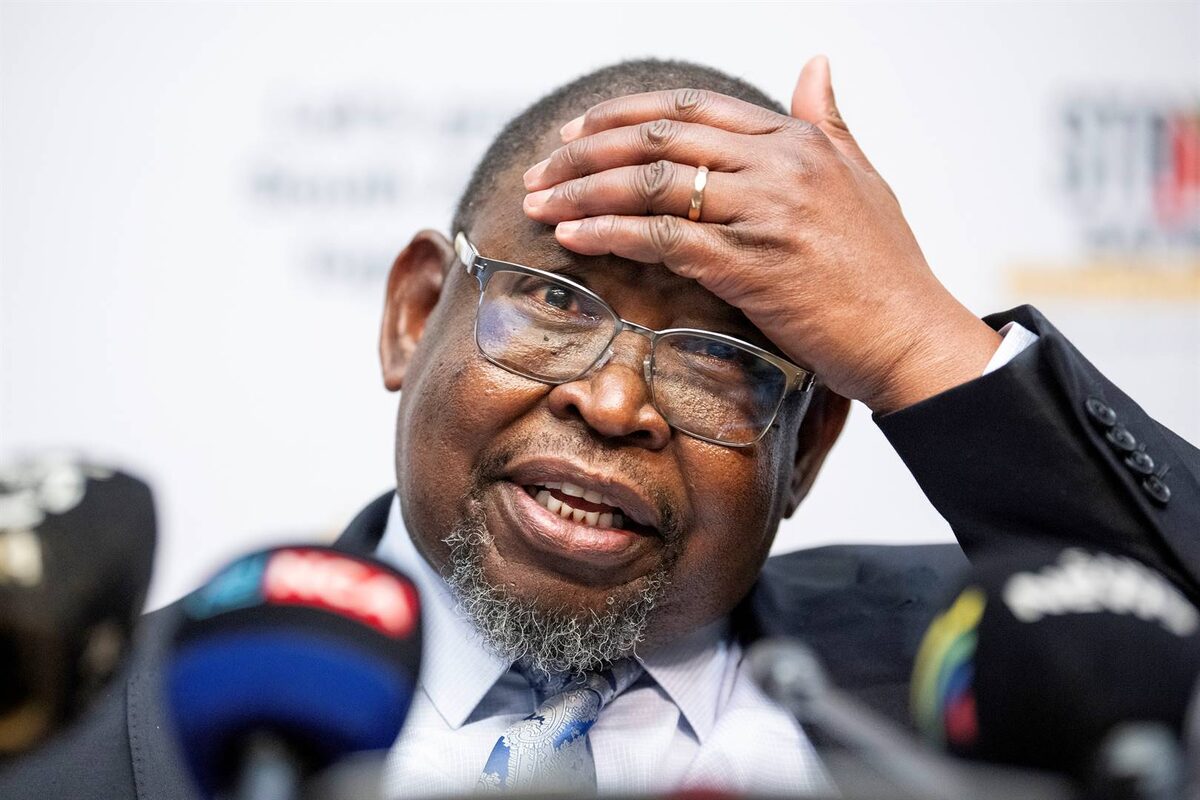
Finance Minister Enoch Godongwana announced a R2.67 trillion budget for the 2026/27 financial year on 25 February, delivering inflation-linked increases to social grants whilst avoiding broad-based tax hikes.
Relief for savers and taxpayers
The tax-free annual investment limit increases from R36 000 to R46 000, whilst the annual retirement fund deduction limit rises from R350 000 to R430 000 in measures aimed at encouraging household savings.
Personal income tax brackets and rebates will be adjusted fully in line with inflation, providing relief to taxpayers. Government withdrew a previously proposed R20 billion in tax increases.
Older persons selling small businesses benefit from an increased capital gains tax exemption, rising from R1.8 million to R2.7 million for businesses valued up to R15 million.
Social grants increase
Social grants totalling R292.8 billion will see above-inflation increases. Old-age, disability and care-dependency grants rise by R80 to R2 400 in April 2026, whilst the war veterans grant increases by R80 to R2 420.
The foster-care grant increases by R40 to R1 290 in April, with a further R10 increase to R1 300 in October. The child support grant and grant-in-aid rise by R20 to R580.
Social relief of distress continues in its current form. Government terminated nearly 35 000 incorrect or fraudulent grants following strengthened biometric and income verification systems.
Sin taxes and fuel levies rise
Excise duties on tobacco and alcohol increase above inflation. A pack of 20 cigarettes rises by 77 cents from R22.81 to R23.58, whilst a 750 ml bottle of spirits increases by R3.20.
A 340 ml can of beer or cider rises by eight cents, and a 750 ml bottle of wine increases by 15 cents.
The minister noted concerns about illicit trade, citing a major tobacco producer announcing closure of local operations with resulting job losses.
The general fuel levy on petrol increases by nine cents per litre, the carbon fuel levy rises by five cents per litre, and the Road Accident Fund levy increases by seven cents per litre.
READ THE FULL 2026 BUDGET SPEECH HERE.
Government spending breakdown
The R2.67 trillion budget splits into R951.7 billion for national government, R810.5 billion for provinces, and R182.3 billion for municipalities.
Education receives R632.8 billion, representing 23.7% of total spending. Basic education carry-through costs account for R22.7 billion, whilst the early childhood development grant receives an additional R12.8 billion over three years. The National School Nutrition Programme continues to provide meals for 9.9 million learners.
Health spending includes R26 billion to provinces for HIV/AIDS programmes and R21.3 billion over the medium term for doctor compensation and goods and services shortfalls.
Peace and security spending rises from R268.2 billion in 2025/26 to R291.2 billion by 2028/29. The Border Management Authority receives R990 million to fill 738 positions, whilst defence gets R2.7 billion including funding to maintain Air Force fighter capability.
Police services receive an additional R1 billion, with another R1 billion allocated to the South African National Defence Force through the Criminal Assets Recovery Account for organised crime operations.
The judiciary receives R883.8 million shifted from the Department of Justice to enable independent budgeting, plus R687 million for increased judicial capacity.
Infrastructure investment exceeds R1 trillion
Public-sector infrastructure spending over the medium term exceeds R1 trillion, with R577.4 billion allocated to state-owned companies and public entities, R217.8 billion to provinces, and R205.7 billion to municipalities.
Transport and logistics receives the largest share. The South African National Roads Agency maintains approximately 27 000 km of roads annually, resurfacing about 2 000 km. PRASA receives R5.8 billion for rolling stock renewal to boost commuter trips.
Water infrastructure priorities include bulk augmentation schemes and refurbishment of ageing systems. Metro trading services covering electricity, water, sanitation and solid waste receive R27.7 billion over the medium term through performance-linked reforms.
The Budget Facility for Infrastructure approved R21.9 billion for five major projects. Government raised an R11.8 billion infrastructure bond in 2025 to support these initiatives.
Six border-post projects and Gautrain procurement feature in the expanded public-private partnership pipeline.
Local government support
Municipalities receive R86.9 billion to support free basic services for 11.2 million households. Provincial roads maintenance grants increase by R1.5 billion for 2026/27.
The performance-linked metro trading services model aims to ring-fence utility revenue and ensure reinvestment into electricity services, reducing maintenance backlogs.
Fiscal position improves
The budget deficit for 2026/27 stands at 4% of GDP. Gross debt is projected at 78.9% of GDP in 2025/26, falling to 77.3% in 2026/27 and 76.5% by 2028/29.
Debt-service costs are declining, supporting improved fiscal sustainability.
Real GDP growth of 1.6% is projected for 2026, averaging 1.8% over the medium term and reaching 2% by 2028.
Employment and skills initiatives
The presidential employment initiative receives R319 million in additional provincial allocations. Infrastructure investment forms the foundation for job creation, with transport, water and energy projects expected to support construction employment.
Government is reforming the national skills ecosystem, exploring a dual-training system and artisanal training to equip jobseekers for the labour market.
Energy sector reforms
Regulatory reforms aim to unlock private investment and accelerate generation capacity including renewables. A Credit Guarantee Vehicle will mobilise investment in transmission infrastructure to improve reliability and lower supply constraints.
Targeted savings
Government identified R12 billion in targeted savings over the medium term, including R3 billion from enhanced targeting of social grants and R8.4 billion from scaling down the Public Transport Network Grant.
Savings are being reallocated to the judiciary, border management, defence and Statistics South Africa.
The VAT compulsory registration threshold increases from R1 million to R2.3 million to support small businesses.
A R5 billion contingency reserve has been set aside for recent disaster relief.
ALSO READ: Navigating the commodity boom: South Africa’s 2026 budget forecast