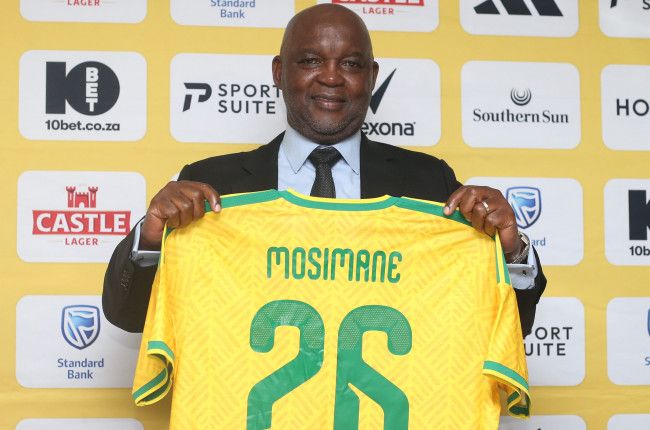
Pitso “Jingles” Mosimane walked into SAFA House on Tuesday morning carrying the weight of a nation’s expectations and walked out with a mandate that extends far beyond tactics, formations and match results.
The newly unveiled Bafana Bafana head coach made clear from his opening remarks that he understands exactly what he’s signed up for, and it’s considerably bigger than adding another trophy to a CV already groaning with silverware.
“I know this is not a coaching job; this is bigger than Pitso Mosimane, I understand what this team means to South Africa,” the 62-year-old declared, his words carrying the gravity of someone who’s spent a lifetime in South African football and knows precisely what wearing the national team colours represents.
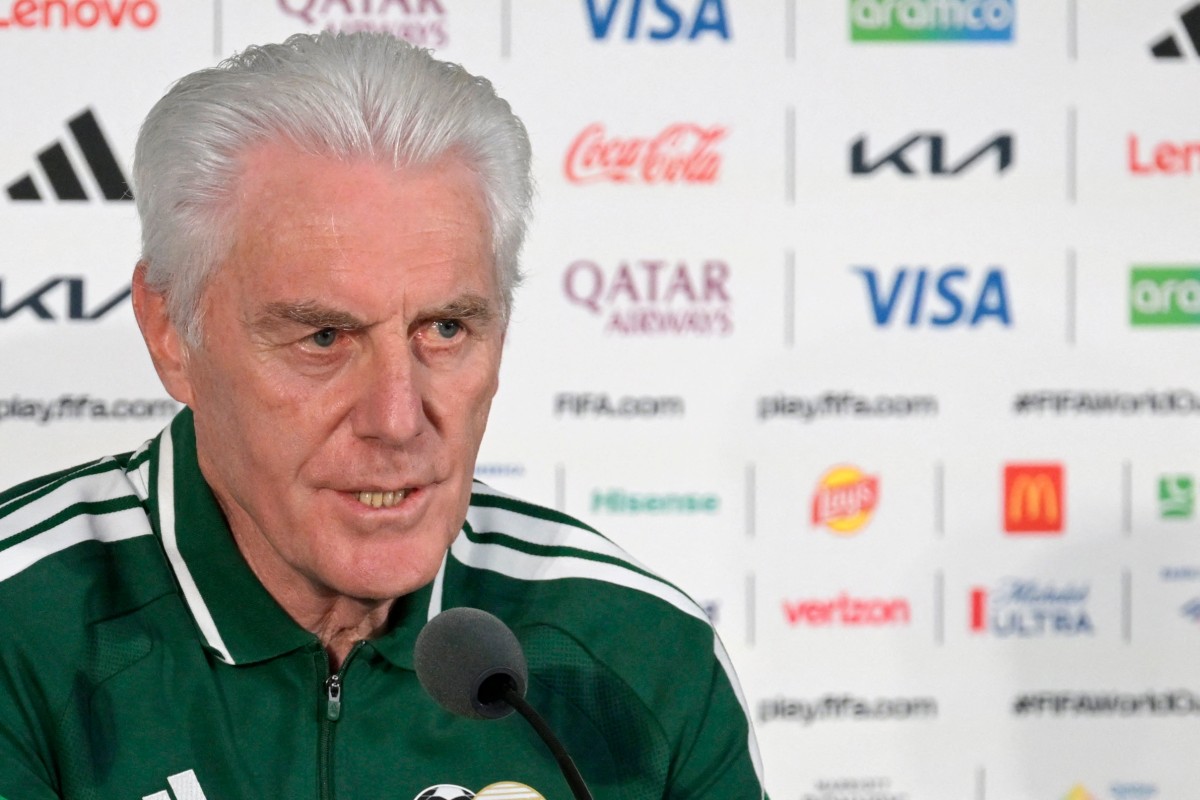
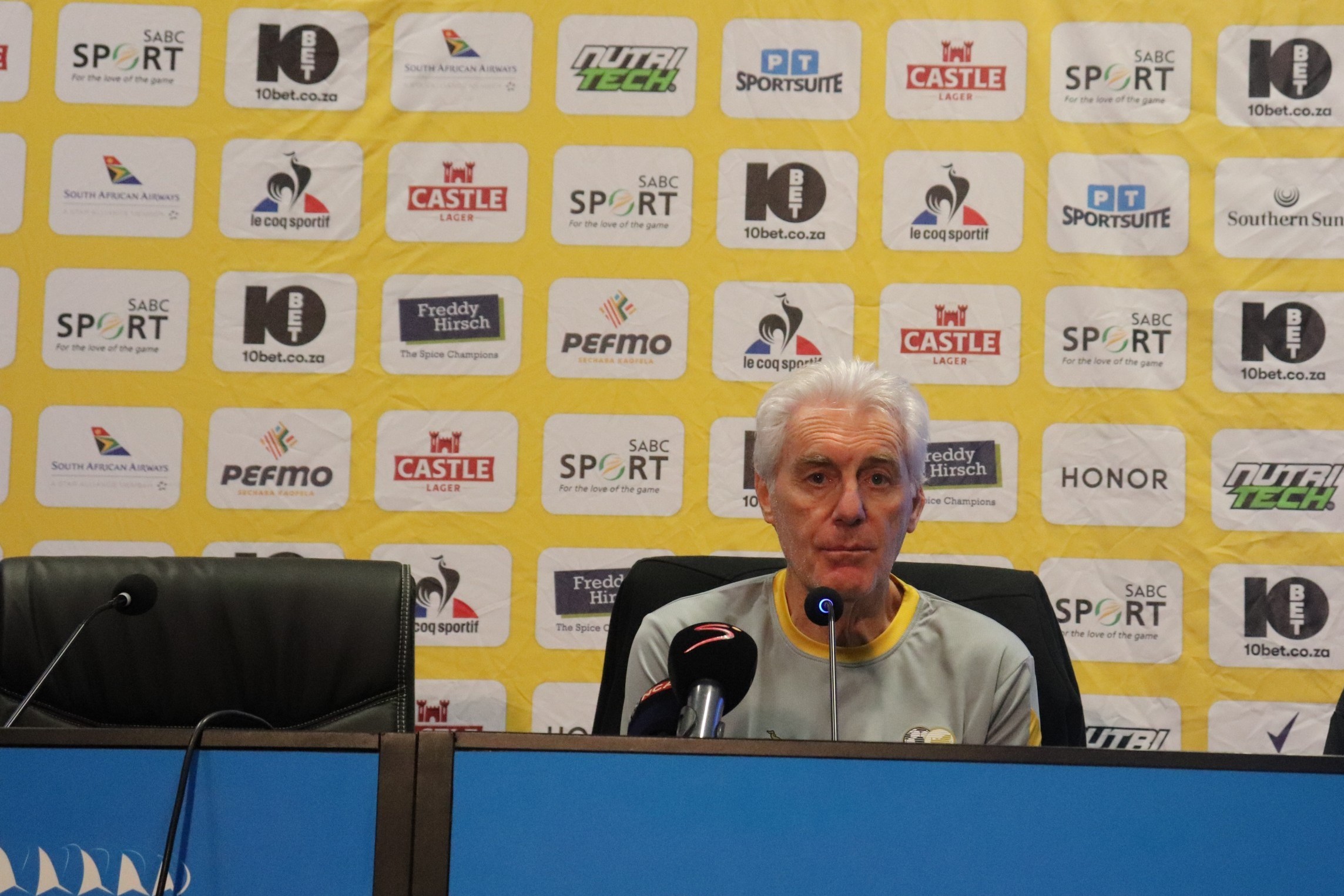
Mosimane takes over from Belgian Hugo Broos, who opted against renewing his contract following an initial five-year deal that delivered bronze at the 2023 Africa Cup of Nations and South Africa’s historic first-ever FIFA World Cup knockout stage appearance.
Those are massive shoes to fill. Mosimane knows it. SAFA knows it. The entire country knows it.
Accepting the challenge
The former Mamelodi Sundowns and Al Ahly mentor didn’t shy away from acknowledging the enormity of his task.
“I take this responsibility knowing I still have something to give in football,” Mosimane said, the statement carrying dual purpose, addressing both critics who question whether he’s the right man and supporters desperate to believe he is.
“I accept the challenge.”
Three simple words that commit him to a four-year journey attempting to maintain the upward trajectory Broos established whilst potentially taking Bafana to heights they haven’t reached since the 1996 AFCON triumph on home soil.
Also read: Byrne: What is missing with SA football compared to Springboks
Mosimane articulated what makes the national team job unique, why it transcends club football regardless of how successful those club campaigns might be.
“When you coach Bafana Bafana you represent your country… You carry the hopes of a nation,” he explained. “We know what it feels like when South Africa connects with the national team. We know the players, the children want to wear the [Bafana] jersey, the country comes to a standstill.”
“That is the special thing about a national team. When Bafana plays, the country stands together… It is who we are as South Africa. It is captured in our national anthems; it sounds the call to come together.”
It’s the kind of rhetoric that resonates beyond football supporters, tapping into something deeper about national identity and unity in a country that desperately needs both.
The Broos controversy
Mosimane’s appointment hasn’t come without controversy, though predictably it originated from outside South African borders rather than within.
Outgoing coach Hugo Broos allegedly told European media that appointing Mosimane would drag South African football “five years back in time” due to potential interference from club owners and agents, comments made to Belgian newspaper Het Nieuwsblad that created headlines but little genuine concern domestically.
Presented with the opportunity to engage in a public war of words, Mosimane refused the bait with the kind of measured response that suggests maturity earned through decades at football’s highest levels.
“I will answer the questions related to my job, which is coaching the team,” Jingles stated calmly during his SAFA House presentation. “I think way before, I have recognised and praised coach Hugo Broos for what he has done. He has laid very good foundations for us; he has done exceptionally well.”
“I’m not saying it today only; I’ve said it before. I said even before the World Cup that he has done exceptionally well. He has put a good foundation for me. I appreciate the work Broos has done, and everyone knows what he has done.”
Broos leaves behind a legitimate legacy. Bronze at AFCON 2023 represents South Africa’s best continental performance in years. Reaching the World Cup knockout stages broke a barrier that had seemed insurmountable. The foundation is solid.
Now Mosimane must build upon it rather than demolish and start again.
The immediate challenge
There’s no honeymoon period. Mosimane’s first assignments arrive thick and fast in less than a month as AFCON 2027 qualification kicks off.
South Africa faces a challenging path in Group D after being drawn alongside Guinea, Eritrea and tournament co-hosts Kenya. Because Kenya automatically qualifies as hosts, the margin for error is razor-thin, essentially a three-team group where only one can advance.
The pressure intensifies immediately with crucial back-to-back opening qualifiers against Guinea and Eritrea scheduled for September. Win both and Mosimane establishes immediate momentum. Stumble and questions about his appointment will intensify before he’s barely unpacked his SAFA House office.
The quality Jingles brings
What does Mosimane offer that justifies SAFA’s faith despite Broos’s dire warnings about regression?
Start with his trophy cabinet. Multiple PSL titles with Sundowns. Back-to-back CAF Champions League triumphs with Al Ahly. Success across different countries, different leagues, different tactical challenges.
He understands African football intimately, having competed and conquered across the continent. He knows South African players, their strengths and limitations, the tactical adjustments required to maximise talent that might not match European technical standards but possesses attributes that thrive in African conditions.
Most importantly, he’s South African. He understands what Bafana means beyond results and statistics. He’s lived through the highs of 1996 and the lows of failed qualification campaigns. He knows what unites the country when the national team succeeds and what divides it when they fail.