


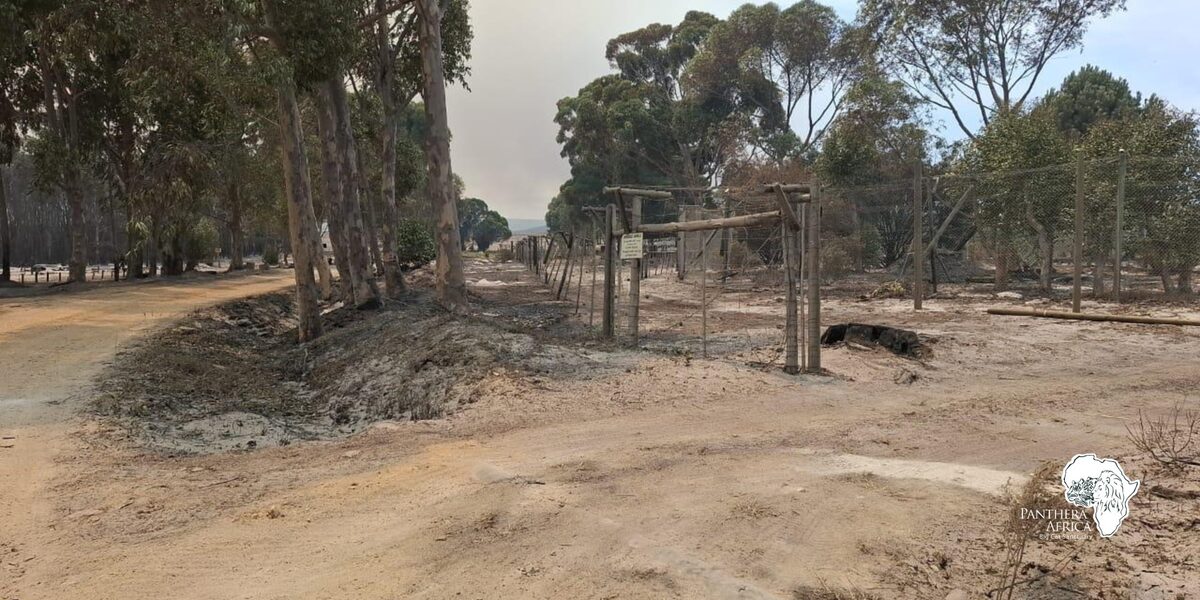
STANFORD – Panthera Africa Big Cat Sanctuary near Stanford has been severely impacted by the active wildfire that escalated on Thursday 8 January, placing their team, animals and infrastructure at serious risk.
In extremely challenging conditions, with thick smoke, near-zero visibility and flames spreading rapidly due to strong gusts of wind (up to 80km/h), the team worked urgently to move animals that were directly in the fire’s path to safety.
ALSO READ: Overstrand remains on high alert as wildfires persist
Despite these efforts, the dangerous and chaotic conditions made evacuations difficult. One of the sanctuary’s animals, a one-eyed tiger named Arabella, went into hiding inside her enclosure and could not immediately be located or moved.
After an intense and stressful search, she was eventually found and successfully moved to safety.
Firefighting efforts have continued around the sanctuary, with flare-ups remaining a concern. Although the fire threatening the property on Friday morning was brought under control, aerial support remains active and the team is on high alert as conditions can change rapidly.
Animals safe but one is in critical condition
All 26 animals at Panthera Africa are currently safe and under close observation following prolonged smoke exposure and extreme stress. While many are doing well, some sustained minor injuries and burns, and one animal remains in critical condition.
“A specialist big cat veterinarian is on site providing urgent care, particularly for the most seriously affected animals. Depending on their needs, animals are being housed in undamaged feeding camps, monitored at the on-site clinic after sedation and crating, or temporarily relocated to a nearby sanctuary. Further relocations may be required as assessments continue,” said co-founder, Lizaene Cornwall.
The evacuation and treatment process remains ongoing, and the sanctuary has appealed to the public to assist with urgently needed funding to cover high critical veterinary costs.
Extensive damage and urgent call for donations
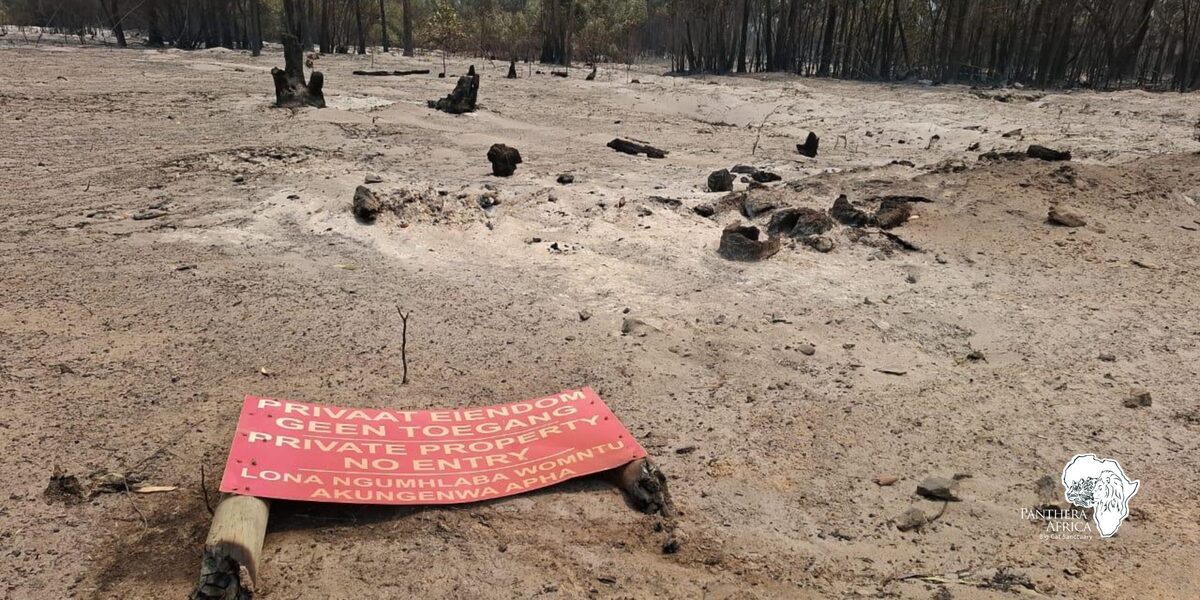
While the full extent of the damage is yet to be assessed, it is already clear that the sanctuary has suffered extensive structural losses.
Several enclosures and essential facilities have been destroyed, and some areas cannot be used until the damage is repaired or the enclosures are fully rebuilt. In some enclosures, the electric fencing is damaged and must be fixed to comply with government regulations requiring electrified enclosures for big cats.
“As a result of the wildfire, all visits to Panthera Africa have been cancelled for the coming week with immediate effect,” Cornwall said.
The sanctuary has stressed that uninvited visitors cannot be accommodated at this time due to ongoing fire safety risks, and because the sanctuary and the animals are not currently in a condition to receive visitors.
“The most meaningful support we currently need is urgent financial assistance to fund veterinary care, potential further relocations, cover the costs of aerial support (helicopters), and rebuild damaged infrastructure once it is safe to do so and after we have had time to determine exactly what is required.”
Donations can be made via the sanctuary’s website.
More about Panthera Africa
Panthera Africa is a registered non-profit company co-founded by Lizaene Cornwall and Cathrine Nyquist. The sanctuary’s name reflects the founders’ deep passion for the four great Panthera species: Panthera leo (lion), Panthera pardus (leopard), Panthera onca (jaguar) and Panthera tigris (tiger).
Panthera Africa provides a safe, environmentally conscious sanctuary for captive-bred big cats, offering them lifelong protection and the opportunity to thrive in a dignified, enriching environment.
A core focus of Panthera Africa is education. The sanctuary serves as a platform to raise awareness about the realities faced by big cats in captivity, highlighting the critical role that animal welfare, enrichment, and ethical care play in ensuring the best possible quality of life. It also educates the public about the cruel captive lion breeding industry in South Africa, which many other organisations and advocates, including Panthera Africa, have been urging the government to shut down, as captive-bred lions hold no conservation value.
The sanctuary also recognises the inseparable link between wildlife conservation and environmental responsibility, and is working towards becoming South Africa’s first “green” big cat sanctuary, powered entirely by solar energy.
Nestled on 40 hectares of pristine land, Panthera Africa offers a peaceful and natural haven for its animals, founders and volunteers. The property is rich with mature trees, a natural spring and breathtaking 180-degree mountain views, creating a truly remarkable home for the sanctuary and its residents.
Firefighters stretched as fires rage across SA
The crisis at Panthera Africa forms part of a wider national wildfire emergency, with fires burning across multiple provinces amid extreme heat, dry vegetation and strong winds.
Firefighters have been battling relentless blazes for days in regions including the Western Cape, Eastern Cape and Garden Route, with communities evacuated, roads closed and thousands of hectares scorched.
Emergency crews, volunteers and aerial firefighting teams have been pushed to their limits as fires repeatedly reignite, often spreading rapidly due to shifting wind conditions.
Authorities have warned that the fire season is far from over, urging the public to remain vigilant, heed evacuation notices and support relief efforts where possible.
ALSO READ: Western Cape spends R15m on aerial firefighting as fire season intensifies



You must be logged in to post a comment.