


EUROPE – At least 191 million people are forecast to endure temperatures of at least 35 °C on Sunday in Europe, with the heat particularly intense in Germany, the Czech Republic, Hungary and Poland, according to AFP estimates.
A total of 381 million people in Europe, excluding Turkey, will see temperatures surpass 30 °C, according to analysis based on forecasts from the German Meteorological Service and 2025 population projections from the Joint Research Centre collated by Austrian NGO Klimadashboard.
Almost all of Poland, Hungary and the Czech Republic are expected to see temperatures rise above 35 °C on Sunday, as are 42 million people across much of Germany, particularly in the Berlin area.
Slovakia, Serbia, Croatia, Italy, Austria and western Ukraine will also be affected.
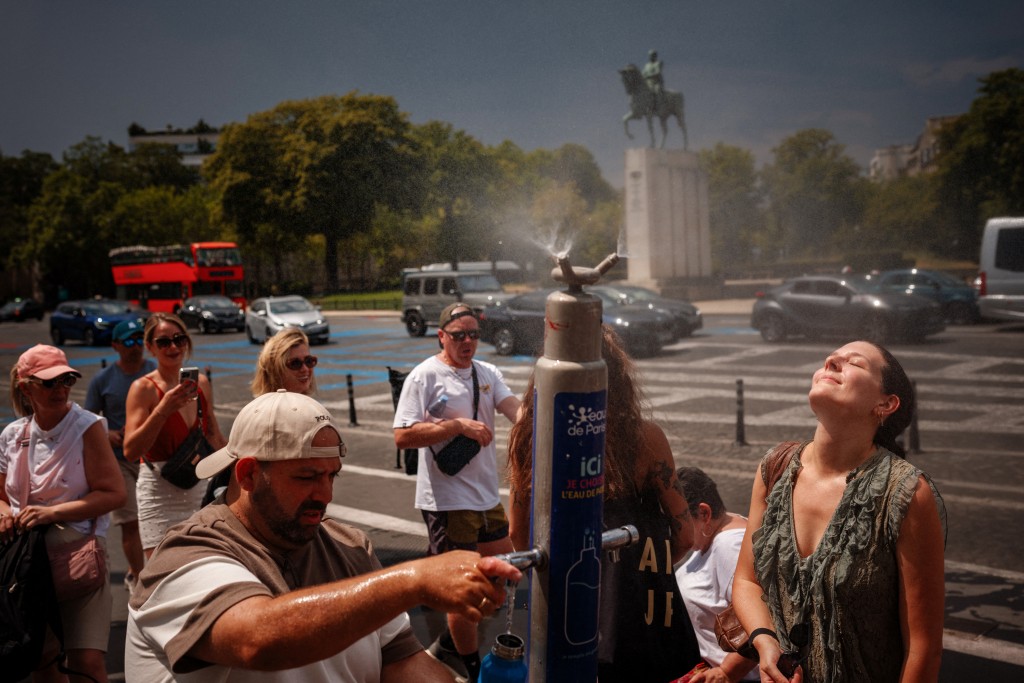
In mainland France, where red alerts were expected to be lifted on Sunday evening, some 11 million people will be affected.
In tabulating these figures, AFP used a method similar to that of Klimadashboard, cross-referencing the 0300 GMT weather forecast model from the German meteorological service (DWD), with population density data.
Residents of an area are counted if the model forecasts temperatures exceeding 30 °C or 35 °C at that location at any point.
As the model is accurate within a range of around 6.5 kilometres, it cannot fully reflect urban heat islands, David Jablonski of the NGO Klimadashboard told AFP.
Consequently, the analysis “probably underestimates the number of people affected in densely populated urban areas”, the organisation states on its European Heat Tracker website.
Scientists have shown that recurring heatwaves are a clear marker of global warming driven by humans burning fossil fuels, and warn they are set to become more frequent, longer and more intense.
France’s national health agency has recorded around 1,000 more deaths than usual since Wednesday 24 June as Europe continues to grapple with an intense heatwave, warning that the toll is expected to rise further. Many of the additional fatalities were among people aged 65 and older, with the agency reporting a 40% increase in the number of people dying at home.
The extreme temperatures have disrupted events and sparked controversy across the continent. In Paris, Louis Vuitton faced criticism after installing a giant artificial wave during its Men’s Fashion Week show, with social media users accusing the luxury brand of wasting water during the heatwave. Parent company LVMH responded by saying the water would be “re-injected into the sewerage system”.
Several major public events cancelled
Several major public events have also been cancelled or postponed. The 30th Garorock music festival in Marmande, south of Bordeaux, was called off after authorities issued a thunderstorm warning. Around 100,000 tickets had been sold, with organisers estimating financial losses of more than €3 million. Solidays, a music festival in Paris that raises funds for an Aids charity, was also cancelled, depriving the organisation of an estimated €3 million in revenue. Paris Pride was postponed after police said the event would place additional pressure on already stretched health services, although Munich Pride went ahead despite temperatures reaching about 36°C.
The heatwave has also shattered temperature records. Denmark recorded 37°C — its highest temperature since records began in 1874 — while Germany reached a record 41.5°C and the Czech Republic recorded an all-time high of 40.6°C. Sweltering conditions were expected to continue across parts of the Balkans, with temperatures of up to 39°C forecast for Serbia, North Macedonia, Bosnia and Montenegro through at least Monday. Romania’s weather agency has meanwhile issued a red heatwave warning covering almost the entire country from Monday to Wednesday.
ALSO READ: Europe heatwave intensifies as nearly 200 million face extreme temperatures



You must be logged in to post a comment.