


High in the French Alps, where mountain refuges have relied on glacial meltwater for generations, an unprecedented water crisis is unfolding just as the summer hiking season approaches. June’s intense heatwave has accelerated snow and glacier melting to such an extent that some mountain shelters may be forced to close their doors to tourists.
At 2 673 meters above sea level in the Ecrins mountain range, Noemie Dagan manages the Selle refuge, a 60-bed chalet that has become a stark symbol of the climate crisis affecting Alpine tourism. The snowfield that typically supplies her shelter with water already “looks a bit like what we would expect at the end of July or early August,” she explains.
“Everything has dried up,” Dagan said. “We are nearly a month early in terms of the snow’s melting.”
Her refuge, like many others in the region, lacks a water tank and depends entirely on streams flowing down from the mountain. When those streams run dry, closure becomes inevitable – a scenario that already forced her to shut down in mid-August 2023 and threatens to repeat itself this year.
Desperate measures
Faced with potential closure, Dagan has implemented increasingly desperate backup solutions. She has installed plastic pipes stretching over a kilometer to collect water from a nearby glacier close to the Pic de la Grave. But even this makeshift system faces challenges from the mountain’s steep, unstable slopes and the increasingly violent storms that now regularly batter the region.
“In the 15 years that I’ve worked in this sector, I’ve witnessed a metamorphosis of the mountains and glaciers that are our watertowers,” Dagan said. “We are basically the sentinels who have seen what is coming.”
The water crisis has caught even experienced mountain professionals off guard. Thomas Boillot, a local mountain guide, admits that water supply issues affecting mountain shelters had “never even crossed our minds” until recently.
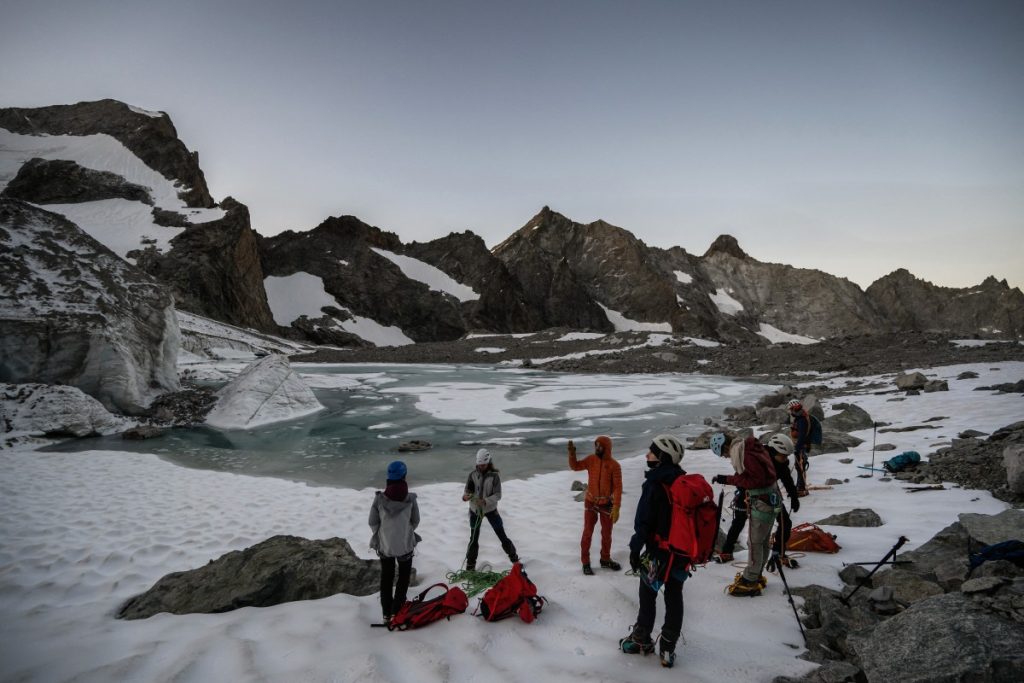
“But such cases have increased, and there will likely be more,” he warned.
Boillot describes a fundamental shift in how water reaches the mountain refuges. Where it once arrived “through gravity” from snow and ice reserves higher up, water will increasingly need to be pumped from below – a costly and logistically challenging solution.
The changes extend beyond water supply. Snowfields once considered eternal now melt completely during summer months, rainfall has become increasingly scarce, and glaciers are changing shape as they retreat – factors that combine to disrupt the entire ecosystem that mountain tourism depends upon.
Scientific warnings prove prophetic
The crisis unfolding in the Alps aligns with scientific predictions about climate change’s accelerated impact on mountain regions. Research shows that climate change affects the Alps nearly twice as severely as global averages, with scientists warning that only remnants of today’s glaciers are likely to exist by 2100 – if they survive at all.
The situation extends beyond France’s borders. In neighboring Switzerland, authorities report that accumulated snow and ice on the country’s 1 400 glaciers have melted five to six weeks earlier than usual this year.
Xavier Cailhol, an environmental science PhD student and mountain guide, witnessed firsthand the dramatic transformation during a recent expedition to Mont Blanc, western Europe’s highest peak.
“Brutal” is how he describes the heatwave’s impact. “I started ski-touring on Mont Blanc in June with 40 centimeters of powder snow. I ended up on glaciers that were completely bare, even as high up as the Midi Peak, at 3 700 meters altitude.”
The loss of snow cover creates a dangerous feedback loop, Cailhol explains. Snow helps protect underlying ice by reflecting sunlight, but once exposed, dark glacier surfaces absorb more heat and accelerate melting.
“Above 3 200 meters, it’s drier than anything we’ve seen before,” he said. “It’s quite concerning for the rest of the summer.”
Perhaps nowhere is the crisis more visible than at the Bossons Glacier, a massive tongue of ice on Mont Blanc that overlooks the Chamonix valley. What began as a small “patch of gravel” has grown larger, its dark color absorbing heat and accelerating the melting process.
The glacier’s retreat is clearly visible from Chamonix below, serving as a daily reminder of the broader transformation affecting glaciers throughout the Alps.
“It’s a symbol,” Cailhol said, of what climate change means for one of Europe’s most iconic mountain regions.



You must be logged in to post a comment.