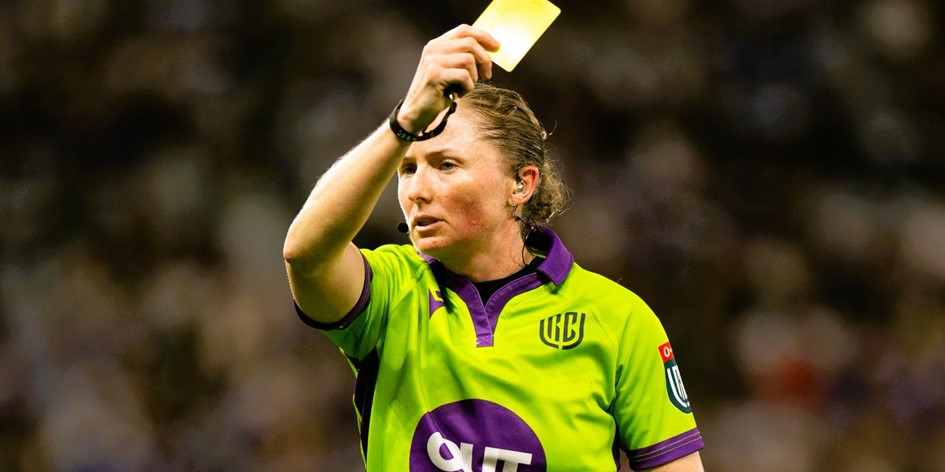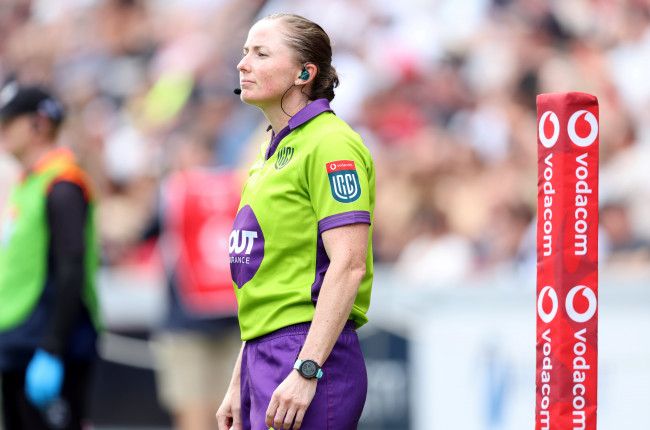
Record-breaking Test match referee Aimee Barrett-Theron has stepped down from officiating with immediate effect to concentrate on treatment for breast cancer, bringing a temporary halt to a groundbreaking career that has shattered barriers and redefined possibilities in rugby officiating.
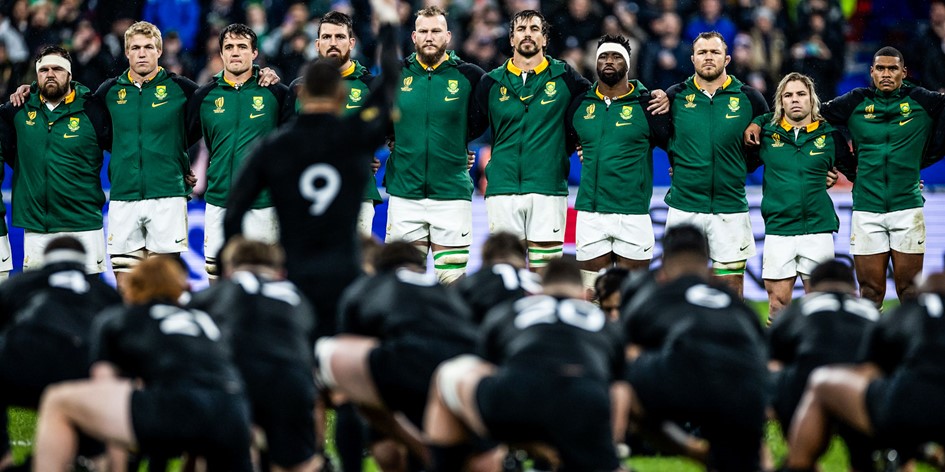
The Cape Town-based 39-year-old most recently took charge of June’s match between South Africa ‘A’ and Zimbabwe at the Nelson Mandela Bay Stadium, but has advised SA Rugby and World Rugby that she will be unavailable for the foreseeable future whilst focusing on her health battle. The former Springbok XVs and sevens player became the first woman to referee a men’s match in South Africa and currently holds the record as the most-capped female referee, having officiated 52 Tests.
Positive approach to treatable diagnosis
In a statement that showcased the same courage and determination that has defined her refereeing career, Barrett-Theron revealed her diagnosis whilst emphasising the positive prognosis and her absolute commitment to returning to the field.
“I wanted to share a personal update. I’ve recently been diagnosed with breast cancer,” she stated. “The good news is that it’s treatable, and I’m working with an incredible team of specialists who are fully aligned with the goal of getting me healthy and back on the field in a few months’ time.
“For now, I’ll be stepping away from refereeing while I focus on treatment and recovery.”
She is treating her cancer battle with the same strategic mindset that has served her so well on the field.
“I’m approaching this the same way I would approach any high-performance environment: with the right team around me, a clear plan, honest conversations, and full commitment to the process,” she explained.
Refereeing resilience applied to recovery
The parallels between her professional achievements and the challenge ahead were not lost on Barrett-Theron, who drew explicit connections between the skills honed through refereeing and the mindset required for her recovery journey.
“Refereeing has taught me a lot about resilience, discipline, pressure, and backing yourself when things get tough. Being South African probably helps too!” she said with characteristic determination. “I was determined to make it through the ranks as a referee and now, I’m even more determined to get through this and return to the field stronger.”
That determination saw her break through countless barriers to reach the pinnacle of rugby officiating, becoming the first woman to referee a men’s Test match in South Africa. According to KickOff.com, the 52 Tests she has officiated represent not just numbers on a CV but 52 occasions where she proved beyond doubt that excellence transcends gender.
Vital health message for all
Crucially, Barrett-Theron used her platform to deliver an important public health message about the importance of self-examination, revealing that she discovered the cancer herself through routine checking.
“I found this through a self-check, so please let this be your reminder: check yourself, listen to your body, and don’t delay getting anything unusual looked at,” she urged, her words carrying the weight of lived experience that could potentially save lives.
SA Rugby pledges full support
Mark Alexander, president of the South African Rugby Union, paid tribute to Barrett-Theron’s pioneering career whilst expressing confidence in her ability to overcome this latest challenge with the same determination that has characterised her professional journey.
“Aimee has been a resolute and focused trail-blazer on the field and we know she will approach her treatment with the same determination and single-mindedness,” Alexander stated. “She has had to overcome many, many barriers to reach the level of refereeing she has, and we know she will take this next challenge in her stride. We wish her Godspeed in her recovery and look forward to seeing her back on the field at some point in the future.”
Alexander’s words reflect not just organisational support but genuine admiration for a referee who has expanded possibilities for women in rugby officiating through sheer excellence and unwavering commitment to her craft.
Barrett-Theron’s absence will be felt across international rugby, where her presence has become synonymous with high standards, fair officiating and the breaking down of gender barriers that once seemed insurmountable.
For now, the whistle falls silent. But if Barrett-Theron’s track record of overcoming obstacles is any guide, it will sound again before long, backed by the same authority and excellence that has defined her remarkable career.