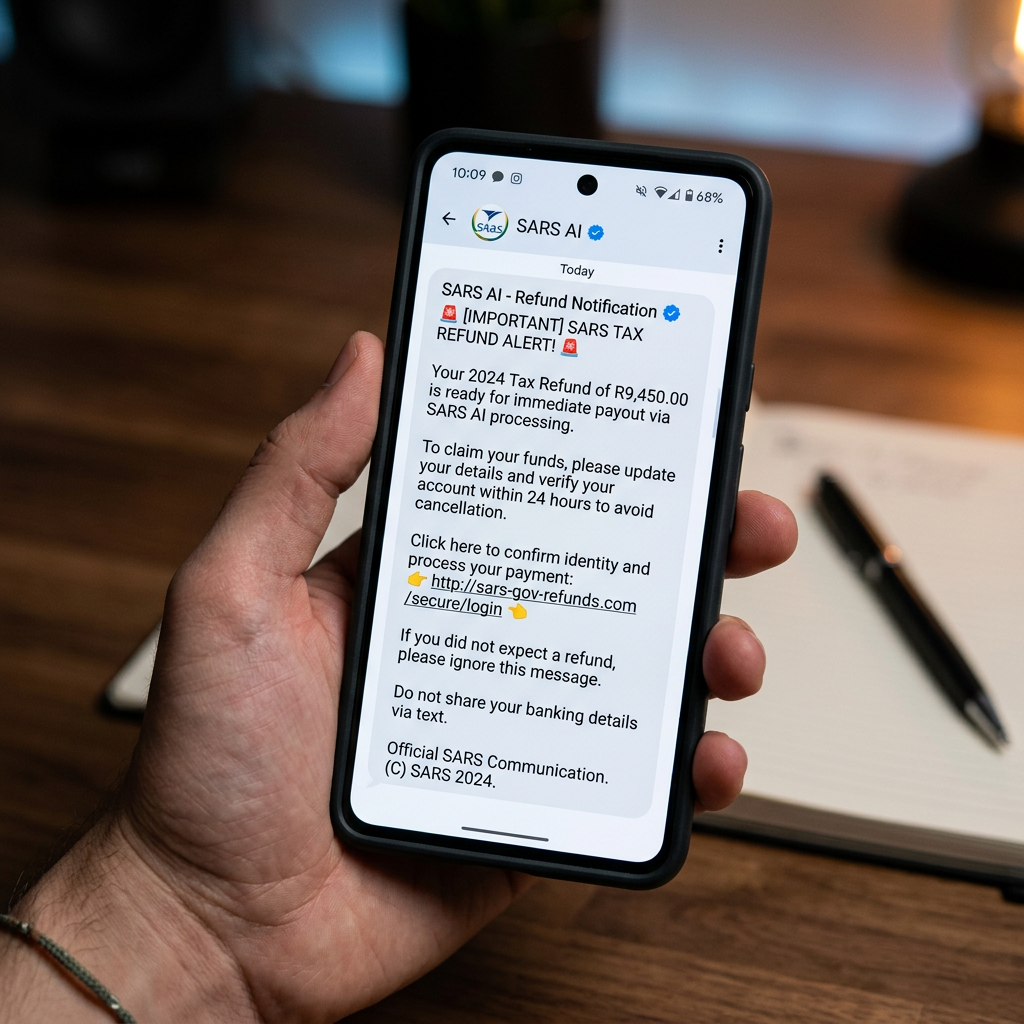
Taxpayers are being warned about a sophisticated new wave of scams using artificial intelligence to create convincing fake emails and SMS messages claiming recipients are owed tax refunds.
The South African Revenue Service (SARS) has flagged the increasing use of AI technology by criminals to generate professional-looking communications that are harder to identify as fraudulent. In one case, scammers told a recipient they were owed a refund of R48 900 and directed them to a fake website to claim it.
The warning comes during peak tax season when millions of South Africans are filing returns and expecting refunds. SARS said it has noted with concern that the scammers’ use of AI has made the fraudulent emails appear more legitimate, mimicking official SARS branding, formatting and language.
How the scam works
The scam typically begins with an SMS or email notification claiming the recipient is eligible for a tax refund. The message includes a link directing the person to a fraudulent website designed to look like the official SARS eFiling platform.
Once on the fake site, victims are asked to provide sensitive information including eFiling login credentials, banking details, passwords and PINs. Other variations of the scam claim the recipient is subject to an outstanding penalty, tax audit or settlement demand.
SARS has made it clear that it cannot recover funds or reverse unauthorised profile changes once a taxpayer has been compromised by these scams.
Red flags to watch for
The revenue service has provided clear guidelines on how to identify fraudulent communications. SARS will never send hyperlinks to other websites in emails or SMS messages. It will also never ask for banking details, passwords, PINs or credit card information via SMS or email.
Taxpayers should only access SARS services by typing the official address www.sars.gov.za directly into their browser, rather than clicking on links in messages.
What to do if you receive a suspicious message
Anyone who receives a suspicious communication should immediately delete the message and block the sender. The scam should be reported to the SARS IT security team at phishing@sars.gov.za.
SARS has also set up a fraud and anti-corruption hotline at 0800 00 2870. Taxpayers can visit the scams and phishing webpage on the official SARS website to see examples of the latest scams.
If someone has already provided their credentials to scammers, they should immediately contact their bank’s fraud unit to stop potential unauthorised transactions.
The broader threat
The use of AI in phishing scams is not unique to South Africa. Tax authorities worldwide have reported a surge in AI-generated fraud during the 2025 and 2026 tax seasons. The technology allows scammers to create error-free, convincing messages at scale, making it harder for the average person to distinguish between genuine and fake communications.
The United States Internal Revenue Service reported over 600 instances of social media impersonators during its fiscal year 2025, while the FBI noted a 26% increase in complaints regarding identity theft connected to tax returns.
SARS has emphasised that taxpayers should remain vigilant and verify any unexpected communications directly with the revenue service through official channels before taking any action.