

The audacious question hangs over African football like never before, can the continent’s long wait for World Cup glory finally end in North America?
Four years after Morocco’s mesmerising run to the semi-finals in Qatar sent shockwaves through the football world, Africa stands at a crossroads. With 10 nations qualified for the expanded 48-team tournament across the United States, Canada and Mexico, the debate rages, was 2022 a tantalising glimpse of what’s possible, or merely a glorious outlier?
Two African legends have taken opposing corners in this fascinating debate, and their contrasting views encapsulate the hope and realism swirling around the continent’s World Cup aspirations.
Diouf: “Africa is going there to win”
Former Liverpool and Senegal striker El Hadji Diouf doesn’t deal in half-measures. When asked by AFP whether an African captain could lift the trophy at MetLife Stadium near New York on 19 July, his response crackled with conviction.
“Why not?” the outspoken forward fired back. “Take my own country. We have amazing players like Sadio (Mane), Idrissa (Gueye) and Edouard (Mendy).
“They can match stars from any country. The 2026 World Cup , Africa is going there to win the tournament.”
It’s the kind of bullish declaration that divides opinion, but Diouf isn’t alone in his optimism. CAF president Patrice Motsepe, the 64-year-old South African billionaire who transformed from Mamelodi Sundowns chairman to continental football supremo, shares that unshakeable belief.
“We are confident that the 10 African national teams at the 2026 World Cup will make us proud and that an African nation will be champions,” Motsepe told AFP.
“What we lacked in the past was self-belief. Morocco changed that in Qatar four years ago. We can match the best in the world.
“I will work relentlessly until I see the captain of an African nation lifting the greatest football prize.”
Okocha urges caution
But midfield maestro Jay-Jay Okocha, who graced several World Cups in Nigeria’s famous green and white, strikes a more measured tone. The former Bolton Wanderers wizard, who experienced the unique atmosphere of the 1994 tournament in the United States, sees stumbling blocks ahead.
“My abiding memory of 1994 was the amazing atmosphere. Add the fact that it was the first World Cup appearance by Nigeria and it was special,” he told reporters.
“Regarding the 2026 tournament, I am concerned about the chances of an African team going all the way.
“We talk a lot about the title contenders from Europe and South America, but what about the North Americans and Asians? They are improving rapidly.
“I will be very happy to be proven wrong. African footballers have shocked the world before. Let us hope it happens again.”
The Atlas Lions set the standard
Morocco’s barnstorming campaign in Qatar remains the benchmark. The Atlas Lions dismissed Spain on penalties before stunning Portugal 1-0, becoming the first African nation to reach the World Cup semi-finals. Only France, the eventual runners-up, could halt their remarkable journey.
That seismic achievement shattered the glass ceiling. No longer could doubters claim African teams couldn’t compete when the stakes reached their zenith.
Now, Achraf Hakimi’s Morocco find themselves in Group C alongside five-time world champions Brazil, Scotland and Haiti. Finishing second at minimum seems a realistic target for a side ranked eighth in the world.
But if Morocco are the continent’s standard-bearers, Senegal aren’t far behind.
Controversy clouds Senegal’s preparations
The Teranga Lions, ranked 14th globally, face a brutal Group I assignment against France, Norway and Iraq. It’s considered amongst the toughest of the 12 mini-leagues, and the fixture against France carries particular historical weight.
Current coach Pape Thiaw was on the bench when Senegal stunned defending champions France 1-0 in the opening match of the 2002 World Cup in Seoul, arguably African football’s greatest single result.
“That (2002) is history. We know the current French team well. It is going to be a special match and let us hope we win again,” Thiaw said in Dakar.
However, Senegal’s preparations have been overshadowed by unprecedented controversy.
Also Read: Morocco awarded AFCON title after Senegal’s controversial walkoff
Africa’s 10 gladiators
The continental representation spans the spectrum from debutants to seasoned campaigners, from genuine contenders to rank outsiders.
MOROCCO lead the charge, their semi-final heroics in Qatar transforming expectations. Coach Mohamed Ouahbi inherits a squad brimming with European-based talent and genuine self-belief.
SENEGAL boast perhaps Africa’s most talented squad, with Sadio Mané orchestrating attacks and a defensive unit hardened by Champions League experience.
ALGERIA, ranked 28th globally, face a nightmare opening fixture against Argentina but possess genuine quality in winger Riyad Mahrez and a squad managed by experienced Swiss coach Vladimir Petkovic.
EGYPT pin their hopes on Mohamed Salah producing the magic that’s made him a Premier League icon, whilst IVORY COAST and GHANA arrive with proud World Cup pedigrees but questions over current form.
SOUTH AFRICA, kicking off proceedings against Mexico on 11 June, seek to improve on three consecutive first-round exits, whilst TUNISIA chase a maiden knockout-stage appearance after six attempts.
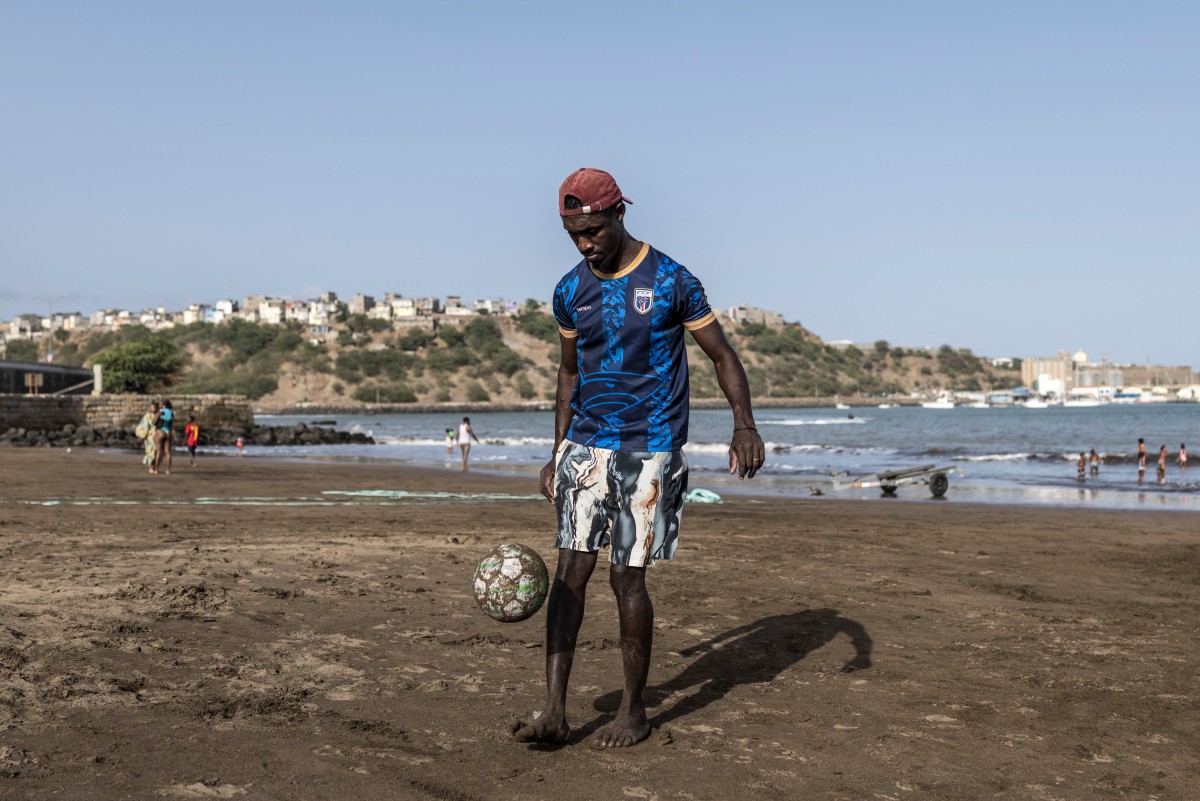
Then there are the intriguing wildcards. DR CONGO return after a 52-year absence, CAPE VERDE make their World Cup bow, and all arrive dreaming of creating their own slice of history.
Can Africa win the 2026 World Cup? The honest answer lies somewhere between Diouf’s unshakeable optimism and Okocha’s cautious realism.
What seems certain is this: Africa will arrive in North America with 10 teams, unprecedented representation, and genuine belief that the impossible might just be possible.

