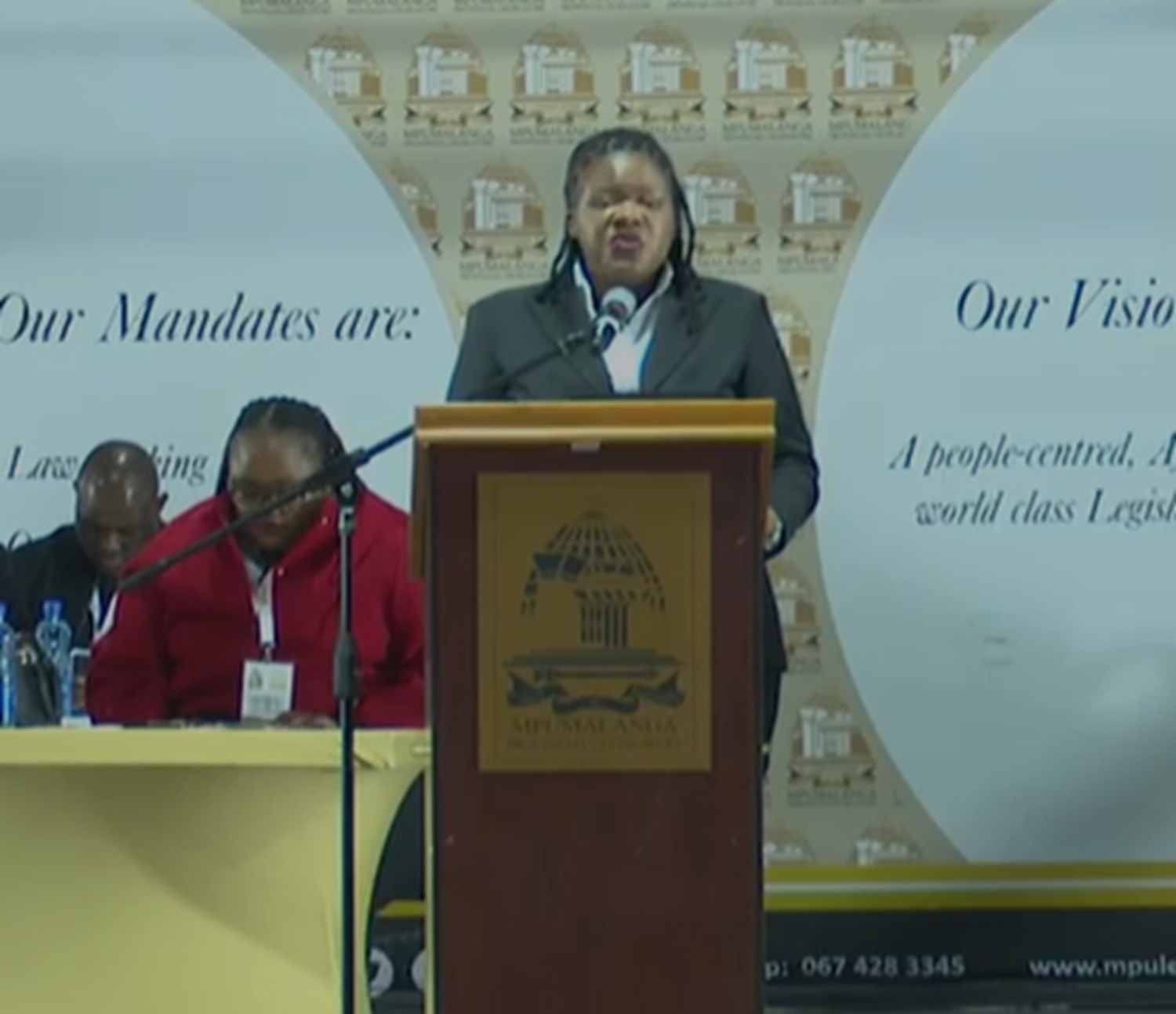
The South African government has announced five large-scale youth empowerment projects that will directly affect more than 737 000 young people. The news came from Deputy Minister in The Presidency, Nonceba Mhlauli, at the Mpumalanga Provincial Youth Parliament on Monday. She also urged young South Africans to register and vote in the upcoming 2026 Local Government Elections.
The 1976 generation and today’s youth
The gathering took place during Youth Month, marking 50 years since the 16 June 1976 uprisings, in which thousands of young people took to the streets to fight against an unjust system. Deputy Minister Mhlauli drew a clear line between what that generation fought for and what today’s generation must now do.
“The youth of 1976 fought for freedom. The youth of 2026 must use that freedom to build prosperous communities, strengthen democratic institutions, hold leaders accountable and create opportunities for future generations,” she said.
She added that the true legacy of the 1976 generation lies not only in what they opposed, but in what they stood for: dignity, equality, access to education, and the right of young people to have a say in their country’s future.
A call to vote
With the 2026 Local Government Elections drawing closer, the Deputy Minister acknowledged that many young South Africans feel let down by slow progress in their communities and question whether their vote still makes a real difference. She said these feelings should not be brushed aside, but warned against stepping away from the democratic process altogether.
She stressed that decisions, budgets, and development priorities continue to be set regardless of whether citizens participate — and that staying away means those choices are made without the input of the people most affected by them.
She made a direct appeal to young people to register, check their details on the voters’ roll, and use online registration platforms. She also made clear that signing up is only the beginning.
“A democracy cannot be strengthened by people who are registered but absent on Election Day. The true power of citizenship lies not only in having the right to vote, but in exercising that right,” she said.
Beyond the ballot box
The Deputy Minister called on young people to stay engaged in government between elections, not only during campaign season. She urged them to attend ward meetings, take part in public consultations, follow municipal planning processes, and hold government to account on commitments made about housing, roads, water, sports facilities, and libraries.
She was specific about what young people in Mpumalanga should demand. They should push for the Office of the Premier to improve the Youth Fund, monitor whether government departments are setting aside 30% of their buying for youth-owned businesses, lobby for at least 30% of provincial mining rights to go to local mining committees for the benefit of youth, and ensure the Department of Economic Development and Tourism holds at least three training workshops per district for youth-owned businesses in the 2026/27 financial year.
“Accountability does not begin when a project is launched. Accountability begins when citizens demand evidence that implementation is taking place,” she said.
Five projects to shift the landscape
The government announced five large projects designed to change the economic landscape for young South Africans. Together, Phase 1 of these projects will directly affect more than 737 000 young lives.
Presidential Youth Employment Intervention and National Youth Service
The government is calling on 100 000 young South Africans to join this programme. Participants will serve in community roles covering education, public health, infrastructure, and social development, while receiving formal training, mentorship, practical work experience, and a monthly stipend.
Young people can also register on SAYouth.Mobi — a data-free platform that connects unemployed youth aged 15 to 34 with jobs, learning opportunities, volunteering, and business options. Since the initiative began, it has facilitated access to more than 2 360 000 earning opportunities, with over 70% taken up by young women.
iamtheCODE
This programme targets 600 000 young people, deliberately focusing on young women in rural and disadvantaged communities. Through a 12-week blended course covering Science, Technology, Engineering, Arts, Mathematics, and Design (STEAMD), it offers digital skills training, online courses, and global mentorship to help bridge the digital divide.
CSIR Cybersecurity
With cybercrime costing South Africa billions each year, this project will train unemployed graduates in Computer Science and Mathematics, with the aim of launching 2 000 youth-owned cybersecurity businesses — turning a national weakness into an employment opportunity.
GRIT Lab Africa
This artificial intelligence and technology programme will take in 10 000 unemployed graduates over three years. It will also deploy an “AI Instructors Brigade” to teach coding and robotics in under-resourced public schools, and will provide AI tools to youth-owned small and medium businesses to help them grow and create further jobs.
South African National Service Initiative (SANSI)
Focused on goat and sheep farming, this programme takes in groups of 5 000 graduates, trains them for 18 months, and provides each with a starter pack of 52 animals along with state veterinary support. Through local hubs, it aims to absorb 50 000 young recruits annually, giving them direct ownership in the agricultural sector.
The power of working together
The Deputy Minister closed with a call for young people to organise collectively around shared goals, including education, business, community development, volunteering, environmental care, and innovation.
“The youth of 1976 did not have a cellphone, a TikTok, Facebook, Instagram or X account, nor did they have NYDA or SMME funding, they had a conviction and a song. Under those circumstances, they managed to put their country on a course for total liberation for me and you to [be] here today,” she said.
She reminded young South Africans that the future they seek will not be delivered by others.
“The question before us is therefore not whether young people have the power to shape South Africa’s future. The question is whether they are prepared to use that power,” she said.
ALSO READ: Mitchells Plain youth redefine safety narrative for international research