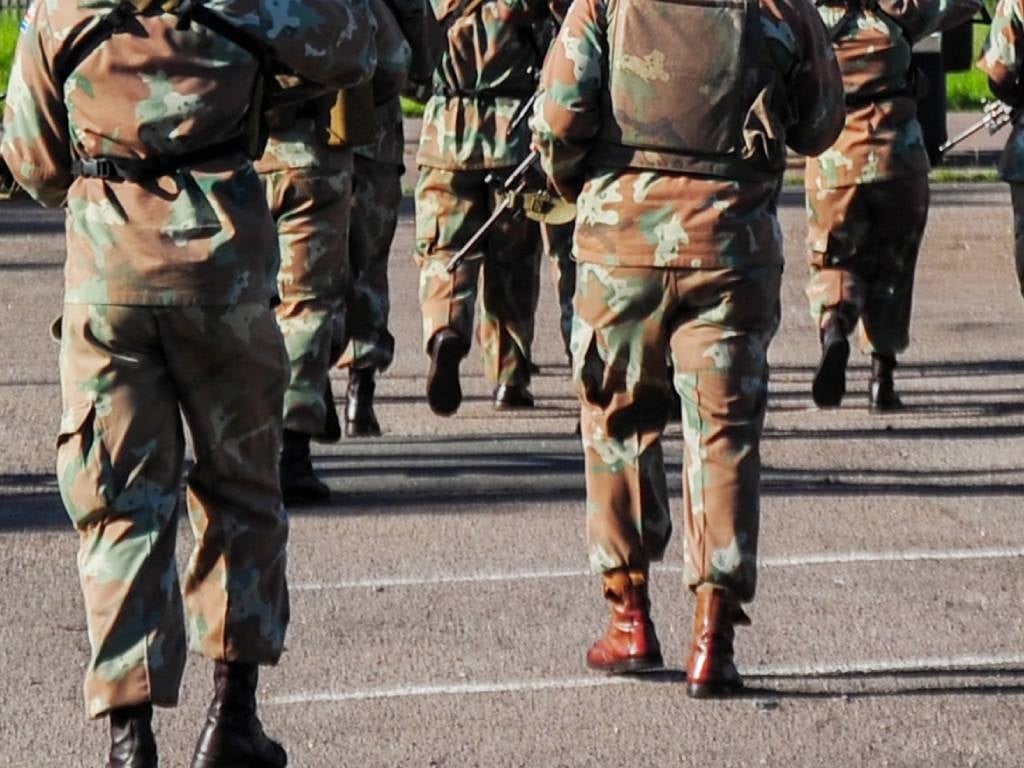
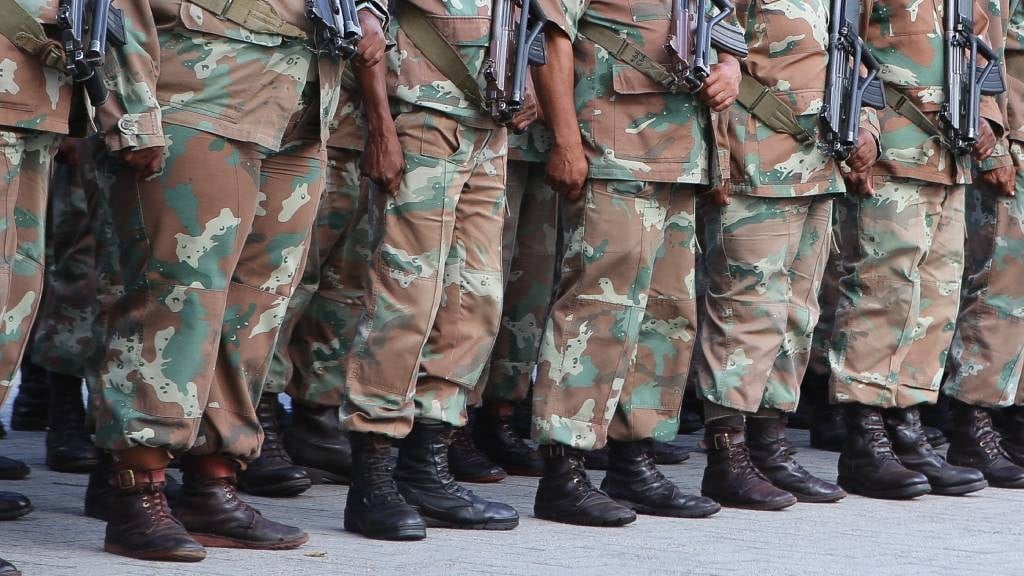
The South African National Defence Force and South African Police Service have begun preparatory operations in Cape Town ahead of military deployment to tackle gang violence in identified crime hotspots.
A select contingent of SAPS officials and SANDF members conducted an operational scanning exercise on Wednesday and Thursday (18 and 19 March), involving air and ground presence of limited forces at various identified locations across the city.
Brigadier Novela Potelwa, spokesperson for Western Cape police, said the exercise should not be mistaken for the actual commencement of deployment of the SANDF and described it as essential preparation for the integrated forces ahead of the actual deployment.
Potelwa urged members of the public to respect the operational space these forces require and refrain from speculating about their presence in the targeted areas.
The preparatory operations follow President Cyril Ramaphosa’s announcement during the State of the Nation Address on 12 February that SANDF members would be deployed to support the SAPS in addressing gang violence and illicit mining at identified crime hotspots.
The operational scanning exercise represents the final preparatory phase before the formal military deployment commences in the Western Cape’s most troubled areas. SAPS in the Western Cape has indicated that SANDF members could be deployed in the province by 1 April 2026.
Marais calls for intelligence-driven approach
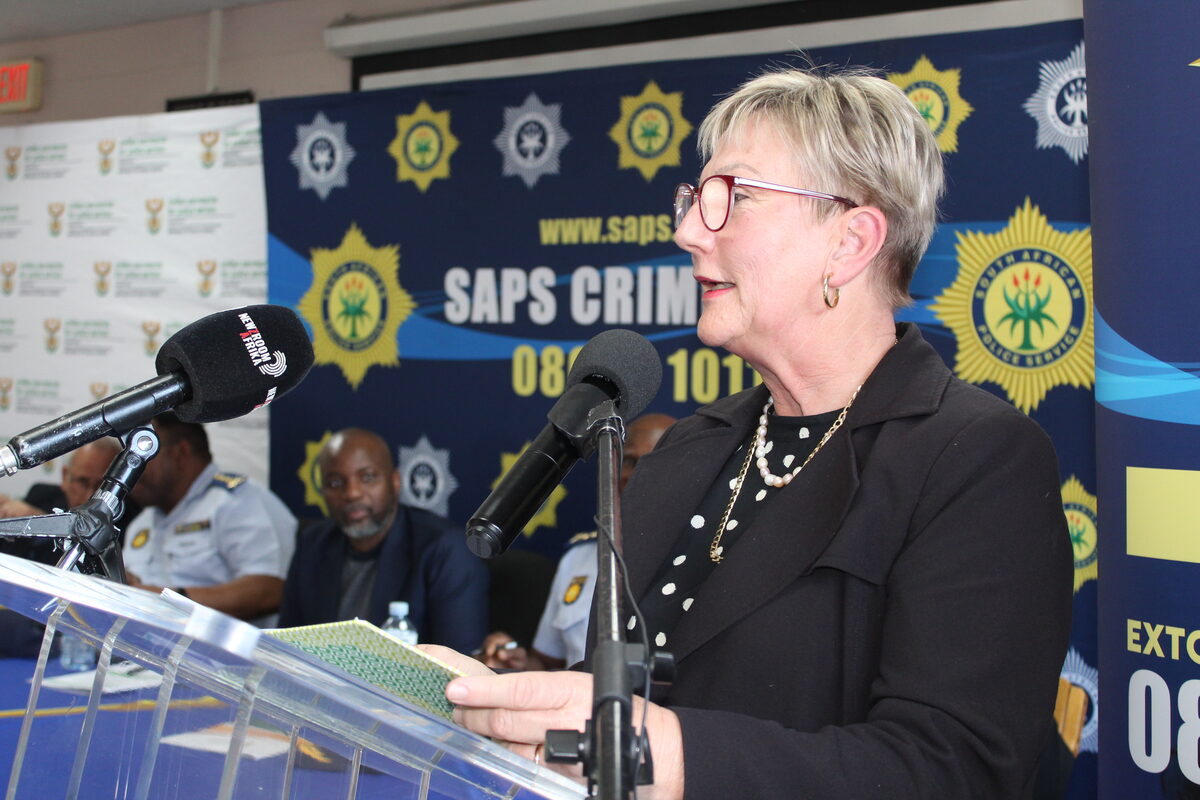
Western Cape Minister of Police Oversight and Community Safety, Anroux Marais, welcomed the indication that deployment could begin by 1 April, saying it brings much-needed clarity on timelines.
Marais said whilst increased visibility of law enforcement is important in stabilising communities, this deployment must go far beyond a show of force.
“This intervention must be collaborative, intelligence-led, data-driven, and operationally focused. We need coordinated plans that will actively dismantle criminal networks, gangs, and extortion groupings that continue to terrorise our communities. Equally as important is the need to include all local law enforcement structures to ensure a fully coordinated approach to break the back of organised crime and gangs,” Marais said.
She called on SAPS to fully utilise this opportunity to ensure that operations lead not only to arrests but also to successful prosecutions.
“We must ensure that those responsible for violence, extortion, and organised crime are removed from our communities permanently through effective investigation and prosecution,” she added.
Marais also urged residents across the Western Cape to play an active role in supporting law enforcement efforts.
“Our communities are critical partners in the fight against crime. We urge residents to come forward with information. To report where illegal firearms are being hidden, identify those responsible for shootings, and point out drug and gang houses, and other criminal activities. This information is vital in ensuring that operations target the root of criminal networks,” Marais said.
DA demands accountability amid corruption concerns
The Democratic Alliance has welcomed the short-term deployment of the SANDF to support SAPS in combating illegal mining and gang violence, whilst raising concerns about transparency and accountability.
DA NCOP Member on Security and Justice, Nicholas Gotsell, said communities urgently need this intervention and it should already have been fully operational.
Gotsell said given that the deployment was announced on 12 February, one would have expected that the necessary planning, training, and command structures were already in place, particularly if proper consultation had occurred with the relevant security agencies prior to the president’s announcement. Yet, this was far from the actual reality.
He said in three subsequent parliamentary meetings, no clear information was provided on the training of deployed members, command and control structures, joint operational coordination, or the criteria that will be used to determine which areas qualify to be served by Operation Prosper.
“As recently as last Friday’s Joint Standing Committee on Defence meeting, the SANDF was still unable to provide these assurances to Parliament. Yet, by Sunday, both the Chief SANDF and National Commissioner of the SAPS were ready to hold a joint media briefing announcing the deployment. The question is clear: what changed within 48 hours and why was Parliament not informed?” Gotsell said.
He said this lack of transparency is deeply concerning, particularly as this deployment places R823 million in public funds in the hands of a department currently under extensive investigation by the Hawks and the SIU, involving between R2.1 billion and R2.5 billion in suspected corruption.
These include the R217 million Cuban Interferon procurement of a so-called Covid drug, where almost the entire stock was unusable, R273.5 million in irregular PPE contracts involving inflated pricing and collusion during the same period, and hundreds of millions of rands spent on systems and equipment that were never used.
Gotsell said the Auditor-General has repeatedly flagged the department for persistent procurement failures, weak controls, and a lack of consequence management. This is evident from SANDF generals’ continuous purchasing of luxury vehicles, flashy refurbishment of state houses, and their minister being abroad every time she is meant to account to Parliament.
“Whilst one cannot place a price tag on our communities’ safety, the DA will on Friday, when the Joint Standing Committee on Defence meets to discuss the president’s letter of employment, exercise strict oversight over this deployment to ensure that it does not become another avenue for large-scale looting. Our troops deserve to be properly supported, properly resourced and properly led — and South Africans deserve the assurance that every rand allocated is spent as intended,” Gotsell said.
Long-term solutions needed
DA spokesperson on police, Lisa Schickerling, previously said the SANDF cannot replace SAPS’s investigative and intelligence functions or those of the Directorate for Priority Crime Investigation. She said deployments will not dismantle drug networks, build racketeering cases or secure convictions and will only calm hotspots in the short term.
The DA has called for structural reforms including the devolution of policing powers to provinces, particularly to allow the City of Cape Town to strengthen law-enforcement capacity, and expanded policing powers for capable metros within the constitution.
The party has also demanded a dramatic expansion and permanent resourcing of the Anti-Gang Unit, dedicated national extortion task teams with investigative and prosecutorial support, a shift to intelligence-driven operations to dismantle leadership and financial networks, proper protection for witnesses and whistleblowers, and emergency inter-provincial coordination structures to disrupt cross-border organised crime.
In January, Schickerling criticised Police Minister Firoz Cachalia’s admission that SAPS is “not equipped” to fight gangs, describing it as evidence of underfunded specialised units, weak intelligence capacity and poor prosecution outcomes.
ALSO READ: Army deployment in South Africa crime hotspots to last a year