

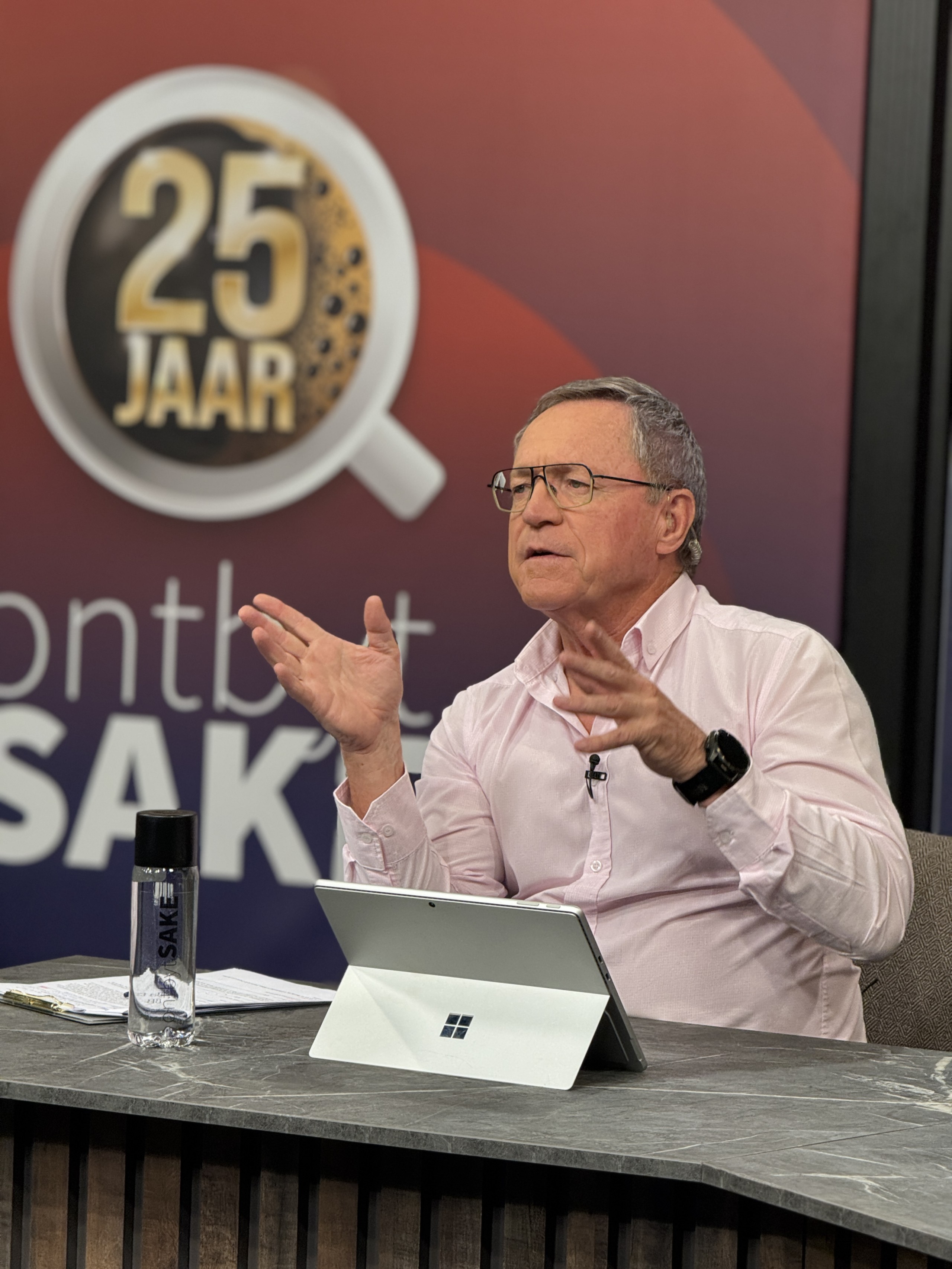
Economist Dawie Roodt has criticised South Africa’s state expenditure priorities, telling a business conference in Hermanus that civil servant salaries account for a third of total government spending and roughly 13% of the entire economy.
Speaking at the BizNews Conference in Hermanus, Efficient Group chief economist Roodt said the country employs 1,2 million civil servants, excluding those in state-owned enterprises, with an average salary exceeding R50 000 per month.
“We have become a parasitic state,” Roodt said. “We need a political leader to stand up and say they will create a civil service that actually serves the people of South Africa.”
He contrasted recent salary increases, noting that civil service pay rises were set at 4,4% over three years, whilst social grants increased by only 3,8%. The old age grant stands at approximately R2 400, and child support at around R600, with 27,5 million people out of a population of 65 million receiving state grants.
Roodt outlined state expenditure priorities, identifying education as the largest budget item, followed by social expenditure and interest on state debt competing for second place. Civil service salaries ranked as the third major category.
He described South Africa’s tax base as “exceptionally narrow”, with very few individuals paying almost all taxes. VAT contributes approximately 30% of revenue and is the only tax that could potentially be increased, whilst personal income and corporate taxes have already exceeded the Laffer curve threshold. About 1 000 companies pay 80% of company taxes, he said.
The economist criticised executive pay at state-owned enterprises, noting that Eskom’s chief executive receives R13 million per year and Transnet’s head R8 million, despite these entities’ operational failures. Eskom prices will increase by between 9% and 12% whilst the inflation target is 3%, he said.
Roodt questioned government policy direction, comparing South African commercial farmers who “feed most of sub-Saharan Africa” with subsistence farmers he encountered whilst cycling through Tanzania and Kenya. He attributed current policy failures to four factors: ideology, wrong policies, cadre deployment, and corruption.
He noted two positive economic developments: South Africa’s removal from the Financial Action Task Force grey list and the decision to reduce the inflation target from a range of 3% to 6% to a fixed 3%. However, he said obstacles like failing local authorities and expropriation policies prevented these gains from fully benefiting the real economy.
Economic growth for 2025 reached only 1,1%, meaning per capita GDP has returned to levels last seen 20 years ago. The debt-to-GDP ratio is likely to exceed 80% this financial year, he said.
PSA rejects claims
The Public Servants Association responded with “extreme concern” to Roodt’s statements, particularly his description of South Africa as a “parasitic state” and claims about public servants.
“These statements are unfounded and highly offensive to the country’s hundreds of thousands of hardworking public servants who serve citizens with dedication,” the PSA said.
The union rejected labelling all public servants as “parasitic” or “state capturers” as a dangerous generalisation demonstrating a lack of understanding of the realities under which public servants work, including difficult conditions, limited resources, and enormous pressure to deliver essential services.
“Public servants are not the enemy of the public. They are the people who serve the public. They are the nurses in hospitals, teachers in schools, police officers on the streets, and administrative staff who ensure that government institutions continue to function,” the PSA said.
The union strongly objected to claims that public servants are overpaid, saying this assertion is not grounded in reality. Public servants have financial obligations including supporting families, paying loans, and coping with rising living costs like all South Africans, it said.
The PSA questioned Roodt’s claims regarding the average salary of public servants, saying assumptions “are so far removed from the truth that it raises serious questions about the source of his information”.
Salaries and benefits in the public service are determined through formal collective bargaining processes where trade unions have the legitimate mandate to negotiate on behalf of their members for increases that are fair, reasonable, and sustainable, the PSA said.
“The PSA will not allow public servants to be unfairly stigmatised or used as scapegoats for broader economic challenges. Public servants are at the core of service delivery in South Africa. They deserve respect, not unfounded malicious accusations,” the union said.


