

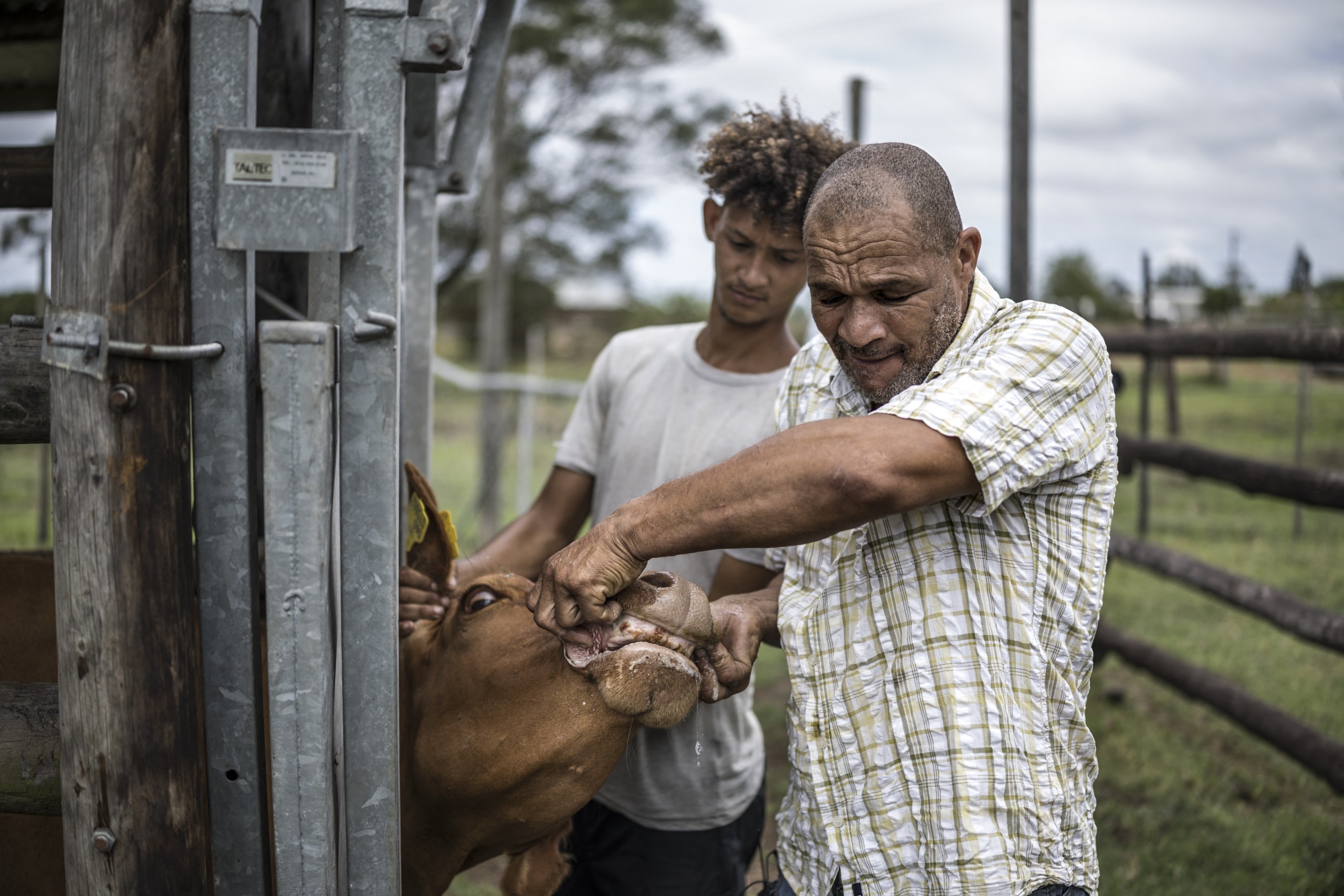
HUMANSDORP – Pointing at a calf lying motionless in a green field in South Africa’s Eastern Cape province, farmer Igsahn Felix let out a heavy sigh. “That one is not going to make it,” he said.
Home to more than two head of cattle per person, the province is the centre of South Africa’s livestock industry.
But its expanses have been severely affected since an outbreak of highly contagious foot-and-mouth disease, which was declared a national disaster in February.
The government in January rolled out a 10-year drive to vaccinate nearly 20 million cattle against the highly contagious and sometimes deadly viral infection.
But farmers like Felix, who is based near Humansdorp, accused the government of allowing the crisis to escalate until it had gone too far.
Nearly 1 000 outbreaks have been reported in South Africa, affecting all nine provinces. The disease has also been reported in neighbouring Botswana, Eswatini and Zimbabwe in recent months.
On the side of a dirt road near Felix’s farm, a large signpost warned: “Foot-and-mouth disease control area”.
Every passing vehicle had to be sprayed with a chemical solution to stop the spread of the virus, which can remain up to six months in cow dung.
Of the 245 animals belonging to the farmers’ cooperative of which Felix is a member, 128 have fallen ill and 14 did not survive.
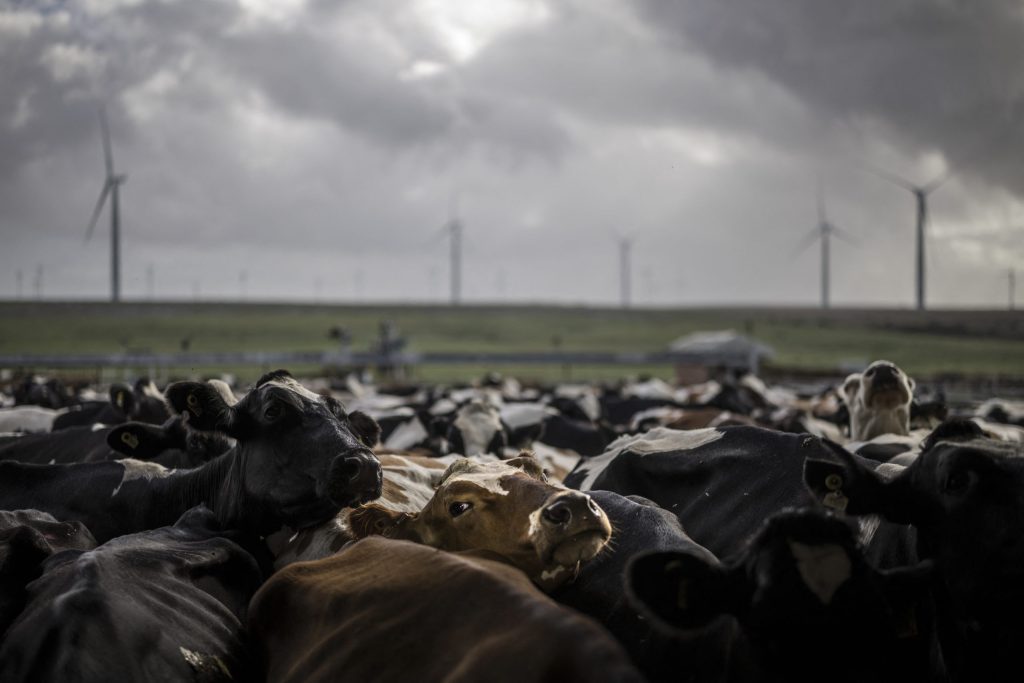
Foot-and-mouth causes fever and blisters near the hoof and in the mouth that prevent animals from feeding, as seen in the emaciated survivors.
For several weeks the area, about 100km from Gqeberha, formerly called Port Elizabeth, has been under a quarantine prohibiting any sale or slaughter of meat.
High costs
Felix’s group of 22 subsistence farmers earn about R540 000 in a normal year. Their losses from foot-and-mouth have already cost them R180 000.
“If we were vaccinated early enough, the disease wouldn’t have been here and we would have not lost that much money,” Felix said.
Adding to the costs was the expensive fodder that farmers had to buy while their herds were unable to graze in the open fields.
Except for the state-sponsored vaccinations, farmers have to carry the financial burden of the outbreak themselves, said cattle breeder Doane Kaizer, who has about 60 cows.
“Sanitisation has a cost too,” he said. “I am sure the government can do more. Things need to step up a bit.”
The outbreak has led South African beef to be banned in Zambia and China, a key importer.
It was also the reason given by agriculture minister John Steenhuisen in February when he announced he would not seek re-election as leader of the second-largest party, the centre-right Democratic Alliance.
“My next chapter must be to eradicate this devastating disease from our shores once and for all,” said Steenhuisen, whose handling of the crisis has been sharply criticised.
The outbreak put Steenhuisen and his party, which draws significant support from farmers, in “a weak position”, said political analyst Susan Booysen, with local government elections later this year.
“He might even lose his cabinet status,” she said.
Vaccination drive
South Africa lost its status as a foot-and-mouth-free country in 2019, with outbreaks from 2021 spreading across the country.
It finally received 2.5 million imported vaccine doses in late February for the virus strains currently spreading.
“This is going to be our test because this vaccine has never been used in this country before,” said veterinarian Anthony Davis, a member of a dedicated government vaccination task force.
Humansdorp already suffered heavy losses during the previous foot-and-mouth crisis in 2024, which cost between five and seven million rand for every 1 000 dairy cows, said Rufus Dreyer, one of the farmers severely affected.
ALSO READ: Steenhuisen unveils 10-year strategy to combat devastating foot-and-mouth crisis
The blow comes as farmers in the Eastern Cape recover from months of severe drought.
There are fears the virus will spread to the country’s third-largest dairy, Woodlands Dairy, also located in Humansdorp.
The dairy employs more than 1 000 people and the economic impact of an outbreak would be significant, warned deputy mayor Timothy Jantjes.
With the easily spread virus even carried by the wind, the Eastern Cape, which has over four million head of cattle, more than any other province, faces continued concern.


You must be logged in to post a comment.