

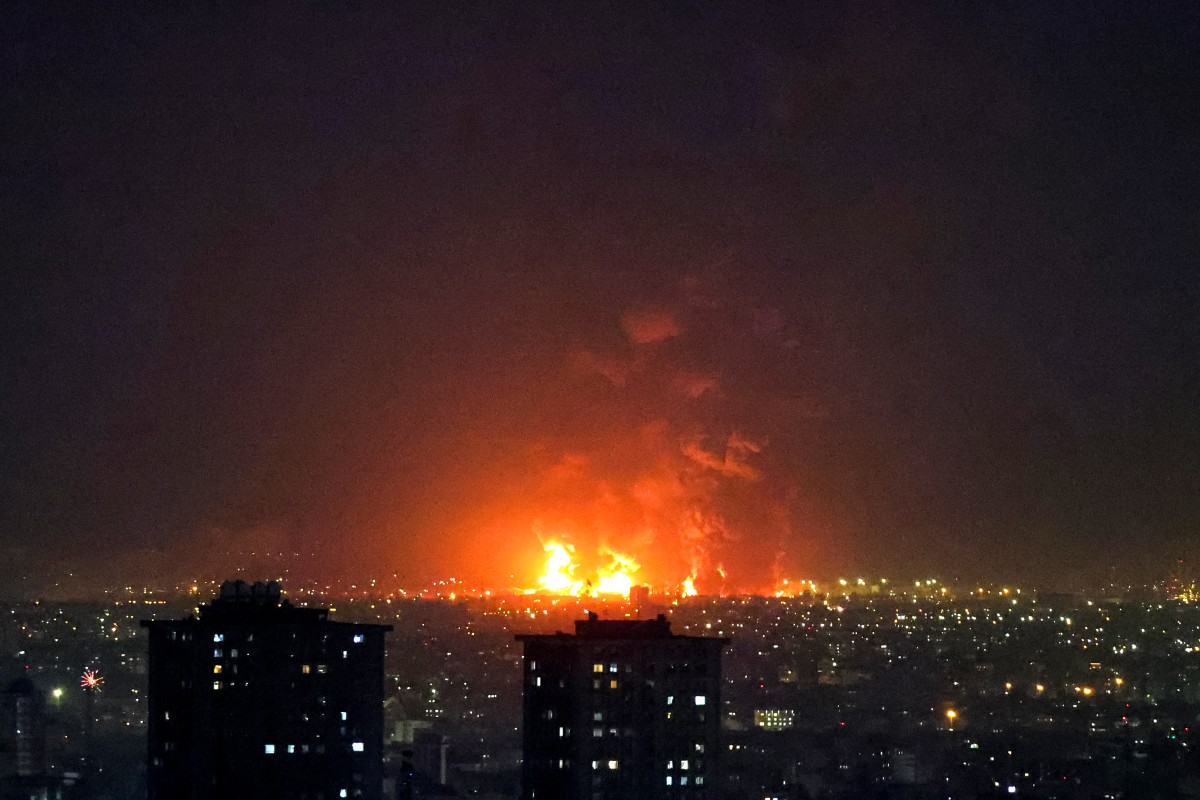
US and Israeli strikes hit an oil depot in Tehran on Saturday, Iranian state media said, marking the first reported attack on the Islamic republic’s oil infrastructure.
“An oil depot in southern Tehran was targeted by the US and Zionist regime,” the official IRNA news agency said.
The depot was in an area close to a key oil refinery but the ILNA news agency reported that the refinery’s facilities “were not damaged in the military attacks”.
Strikes hit another oil depot in northwestern Tehran, according to an AFP journalist who saw flames and smoke rising from the site.
Effect on fuel prices goes global within first week of war
In the past week, various countries have put measures in place to mitigate the expected effects of the Middle East war and citizens have already felt the strain on their day to day life.
Philippines shifts to four-day work week
Oil-poor Philippines is to shift to a four-day work week with fuel prices set to rocket up amid the Iran war, President Ferdinand Marcos said Friday.
Marcos announced the shift, set to start at all government offices on Monday, among measures aimed at easing the economic impact of the armed conflict involving Iran, Israel and the United States.
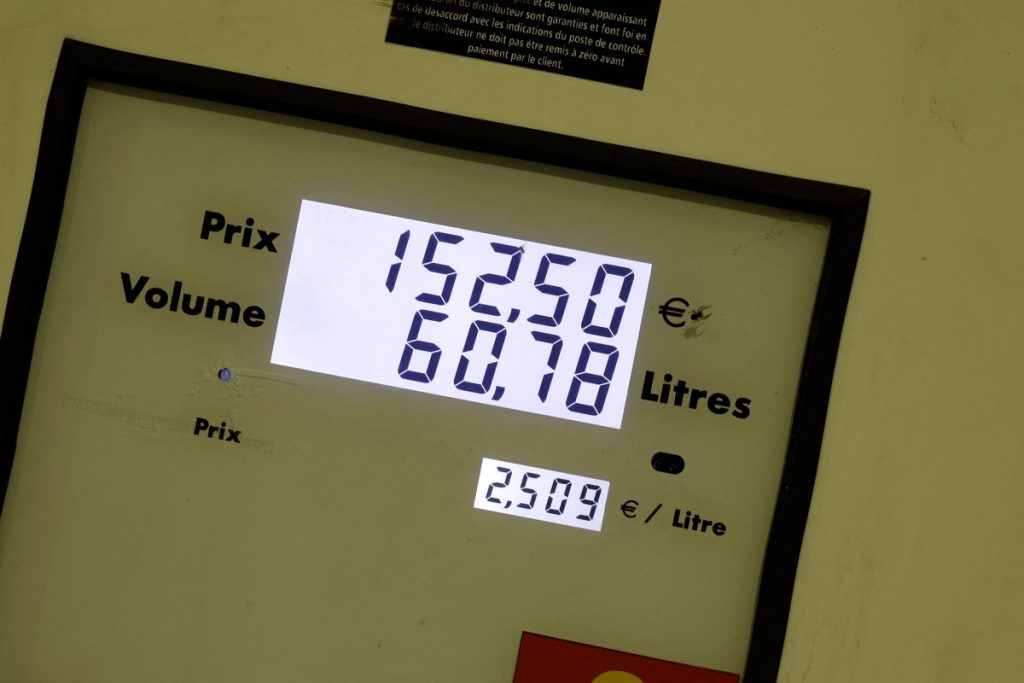
He warned the effective closure of the Strait of Hormuz, through which a fifth of the world’s oil supply transits, would increase local pump prices next week by 7.48 pesos per litre for gasoline, 17.28 pesos for diesel, and 32.35 pesos for kerosene (13-55 US cents).
“We are victims of a war that is not of our choosing,” Marcos said in a statement, adding it was uncertain when it would end.
“But we control how we will protect the Filipino.”
The Philippines imports most of its crude oil from the Middle East and still relies on oil-fired power plants to generate electricity.
The war also threatens the safety and job security of more than two million Filipinos working in the Middle East.
Marcos also ordered all government agencies to cut their fuel and power consumption by 10-20 percent, banned government study tours and team-building activities, as well as “meetings that can be done online”.
He urged Congress to authorise him to reduce excise taxes on petroleum products if the price of crude oil breached $80 per barrel, as well as to amend a biofuels law so cheaper bioethanol can be used for blending with petroleum products.
The government will also provide fuel subsidies and cash transfers to affected sectors, he said without giving details.
Marcos said the four-day workweek will be “temporary” but gave no end date.
Frontline services, police, and firemen are exempt from the four-day workweek, he added.
Myanmar curbs car use to save fuel
Myanmar’s junta announced last week that half of private vehicles would be ordered off the roads each day from later this week, to preserve oil stocks depleted by conflict in the Middle East.
Beginning on Saturday, cars with licence plates starting with even numbers will only be permitted to drive on even-numbered calendar days, leaving the odd-numbered days for vehicles with odd-numbered plates, a junta statement said.
The joint US-Israel attacks on Iran over the weekend and wider war across the Middle East have hampered oil supplies from the resource-rich region and sent global prices rocketing.
Myanmar imports 90 percent of its fuel oil, the junta said in 2024.
“Due to current global political conditions and military conflicts in the Middle East, there are ongoing blockades and disruptions along the maritime trade routes used by oil tankers,” the junta statement said.
Drivers must heed the rules “to ensure the systematic distribution and security of fuel”, it added.
Electric vehicles, buses, taxis, cargo vehicles, emergency services and garbage trucks will be exempt.
It was not immediately clear how the rules will be policed or how long they will remain in force, but the junta said any violation would “result in legal action”.
It also warned that “fuel business owners and the general public are strictly prohibited from hoarding fuel or reselling it at inflated prices”.
Myanmar has been ruled by the military since it staged a 2021 coup, sparking a civil war which has seen opposition factions wrest swathes of the country away from the control of the armed forces.
Rebels running parallel administrations in their territories have not announced measures to preserve fuel, meaning any enforcement will likely be limited only to military-held areas.
The country has long suffered from erratic imports and energy supplies amidst the conflict, which frequently sees roads cut and border crossings closed.


You must be logged in to post a comment.