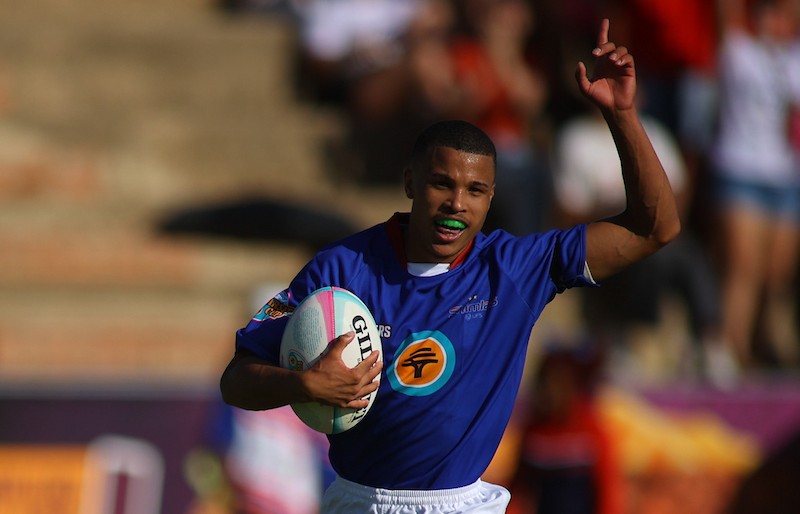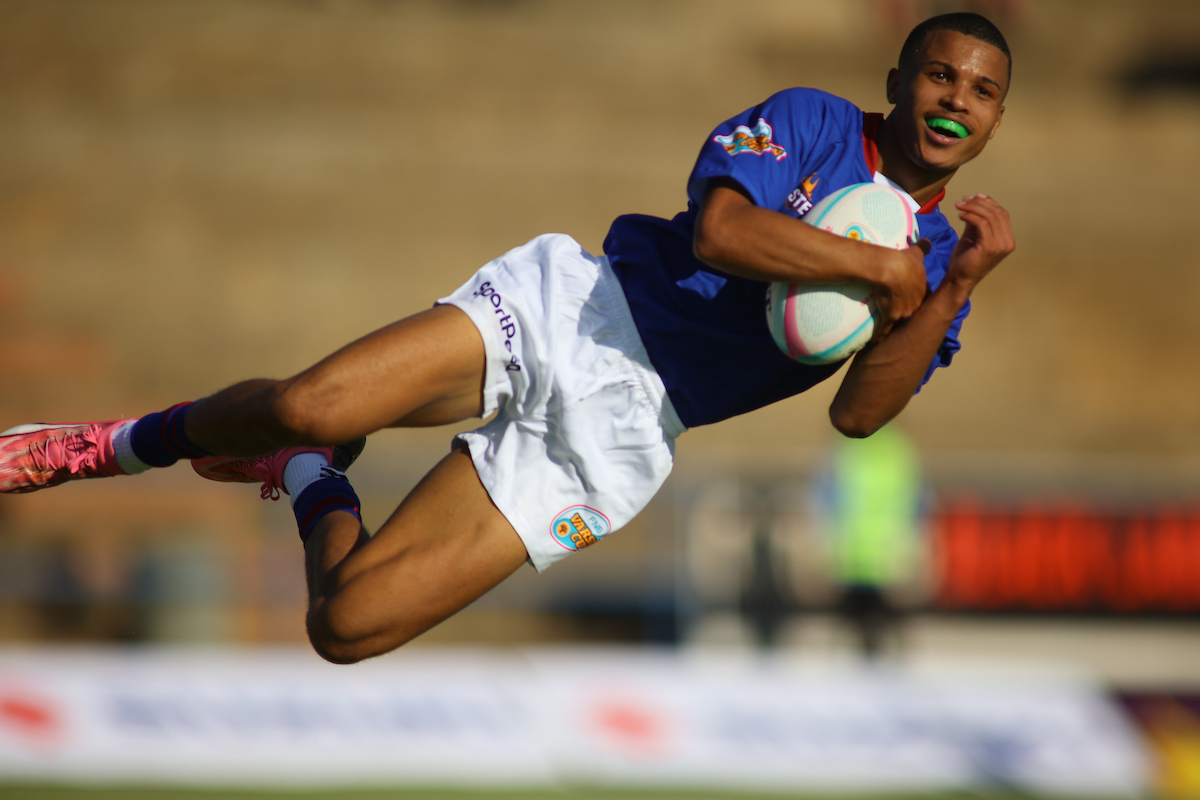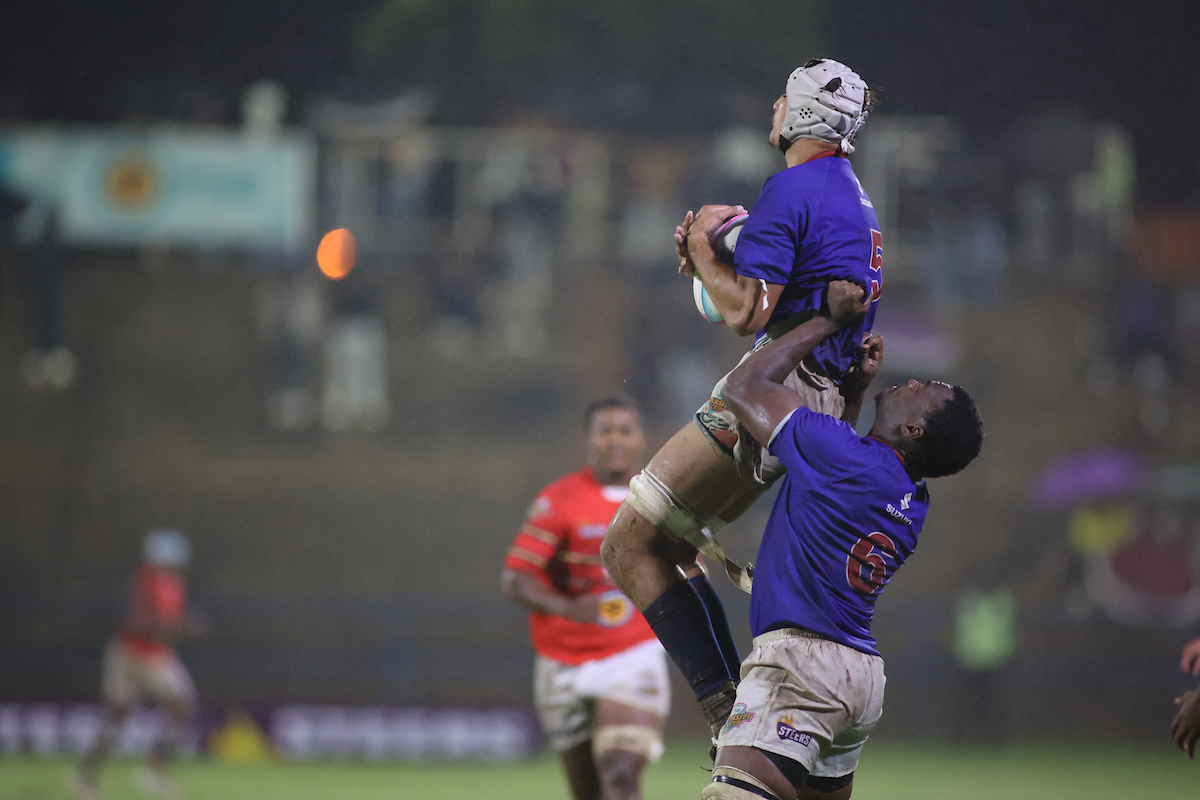
FNB UP-Tuks made it back-to-back Varsity Cup victories with a gritty 38-22 triumph over FNB UFS Shimlas at a rain-drenched Shimla Park, where the heavens opened and turned this Bloemfontein clash into a brutal examination of forward power and tactical discipline. This wasn’t pretty rugby, it was war in the trenches, and Tuks emerged as the superior force when the conditions demanded character over flair.
The relentless downpour transformed the playing surface into a quagmire more befitting a muddy European battleground than the Free State veld. Expansive rugby became a pipe dream as handling errors multiplied and the contest evolved into a punishing test of forward dominance, tactical kicking, and mental fortitude.
Forward battle takes centre stage
With the ball resembling a bar of soap and the turf treacherous underfoot, both sides quickly recognised that this match would be won and lost up front. The set-piece became paramount, maul defence crucial, and every ruck a collision of wills as the heavyweight packs slugged it out in the driving rain.
FNB UFS Shimlas struck first blood through tighthead prop Ongeziwe Mobo, who powered over from close range following sustained pressure near the Tuks line. The big man’s try showcased exactly the kind of grunt work required in these brutal conditions, no fancy footwork, just raw power and determination. Shimla Park erupted, and the hosts had drawn first blood in front of their passionate home support.
But the lead proved fleeting. FNB UP-Tuks responded with wave after wave of forward-dominated phases, they battered away at the Shimlas defensive line until Chad-Lee Valentine found the gap and barged over. The conversion levelled matters, and the tone was set for a genuine arm-wrestle.
Injury blow disrupts Shimlas’s rhythm
The pivotal moment arrived when Shimlas captain and flyhalf Bradley Giddy was forced from the field with an injury. Losing your general in these conditions, where tactical kicking and game management become paramount, represents a hammer blow that’s difficult to overcome.
Giddy’s departure visibly disrupted Shimlas’ rhythm and decision-making. The hosts struggled to maintain their structure without their on-field leader, and the absence of his boot from hand proved costly as territory became the ultimate currency in the wet-weather lottery.
Du Toit’s boot proves decisive
Enter Divan du Toit, who produced a tactical kicking masterclass that ultimately decided this contest. The Tuks pivot slotted three long-range penalties through the swirling wind and rain, strikes that required immense technique and composure under pressure. Each kick was a thing of beauty given the conditions, the ball sailing true despite the elements conspiring against accuracy.
Those nine points gave Tuks a 16-7 halftime advantage and reflected the clinical nature of their approach.
“He controlled the game for us nicely, a calm head on his shoulders and then the boot. a younger Pollard,” Dewy Swartbooi, head coach of Tuks said about his playmaker.
When opportunities presented themselves, the visitors took them without hesitation. Du Toit’s ability to find the posts from distance kept the scoreboard ticking and sustained pressure on Shimlas throughout the opening stanza.
Critically, FNB Shimlas failed to match that ruthlessness. Despite earning entries into Tuks’ 22, they opted against taking kickable points on offer, a decision that would haunt them as the match wore on. In wet conditions where scoring becomes increasingly difficult, refusing three points represents a gamble that rarely pays dividends.
Second-half surge seals victory
The rain refused to relent, but the second half opened up slightly as both sides found a rhythm despite the treacherous surface. For Tuks, this proved the perfect scenario to deliver the knockout blows.
Captain Dillon Smith led from the front, crossing the whitewash to extend the advantage.
Barnard Nortjé added his name to the scoresheet soon after, exploiting gaps in Shimlas’ tiring defence as the hosts’ legs began to feel the effects of chasing the game in energy-sapping conditions. Akhona Kunene then delivered the coup de grâce, effectively putting the contest beyond Shimlas’ reach and confirming back-to-back victories for the Striped Generation.
“As coaches we have to adapt our plans better to the conditions. we had chances that we didn’t use. The players fought till the end,” André Tredoux, head coach of Shimlas said.
The wet ball and slippery surface continued to thwart attacking ambitions, ensuring that composure and patience remained the defining characteristics of success.
Clinical execution seperates the sides
The final scoreline of 38-22 reflected one fundamental truth: FNB UP-Tuks were far more clinical inside the opposition 22. When they earned entries into scoring territory, they converted pressure into points with ruthless efficiency. Shimlas, by contrast, left points on the field.
Du Toit’s tactical kicking kept Tuks in the right areas throughout, his boot from hand finding grass and his goal-kicking maintaining scoreboard pressure. In wet-weather rugby, the flyhalf who controls territory generally wins the match, and Du Toit dominated that particular battle comprehensively.
Looking ahead
Back-to-back victories have FNB UP-Tuks building serious momentum in the Varsity Cup race. This triumph demonstrated their versatility, they can play champagne rugby when conditions permit, but they can also dig deep and win ugly when the weather intervene. That adaptability marks them as genuine title contenders.
For FNB UFS Shimlas, the challenge is to bounce back quickly. Losing Giddy to injury proved costly, and their failure to take points when available ultimately cost them the match. In conditions like these, every opportunity must be grasped with both hands.