

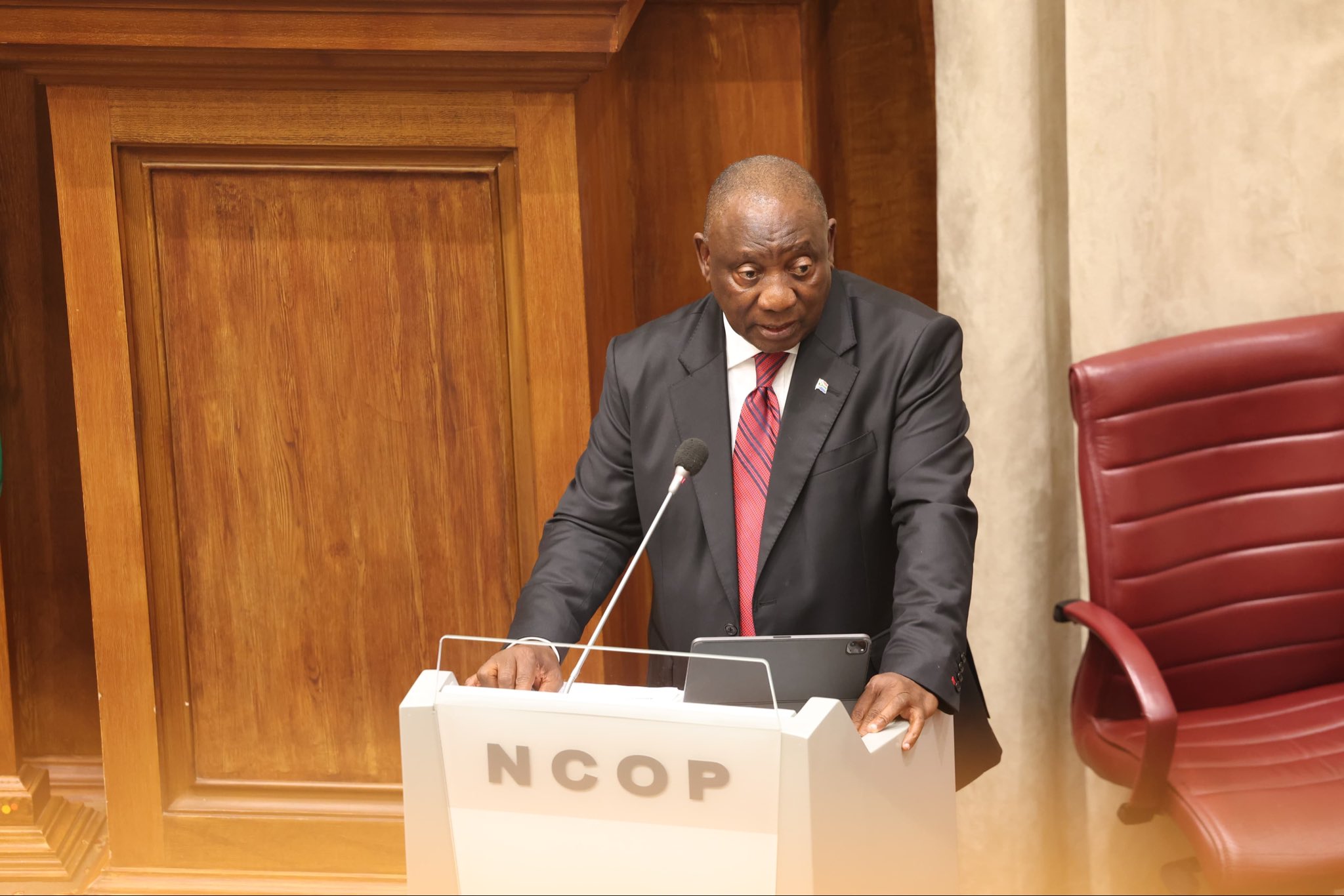
President Cyril Ramaphosa has announced the establishment of a National Water Crisis Committee, to be chaired by himself, as part of government’s response to what he described as the single most important issue facing many South Africans after crime.
Speaking during his State of the Nation Address last week, Ramaphosa said the committee will deploy technical experts and resources from national government to municipalities facing water challenges and coordinate all water supply interventions across the country.
“In addition to crime, water is now the single most important issue for many people in South Africa, from large cities like Johannesburg to smaller towns like Knysna and rural areas like Giyani,” the President said.
The announcement comes as Johannesburg continues to experience a major water crisis, with residents facing severe shortages and frequent outages that have sparked widespread protests.
However, the real challenge lies not in the availability of water, but in getting water to people’s taps.
The presidency stated that the committee will exercise powers contained in the Constitution and Water Services Act to step in where municipal authorities are not performing.
According to the presidency, government has already laid criminal charges against 56 municipalities that have failed to meet their water obligations, with plans to charge municipal managers personally for violating the National Water Act.
Ramaphosa explained that poor planning and inadequate maintenance of water systems by municipalities are the main causes of current problems. “There is no silver bullet to address this challenge, which has its roots in systemic failures and many years of neglecting infrastructure,” he said.
READ MORE: Desperate measures — Joburg residents pushed to the brink after days and even weeks without water
The President has directed the Minister of Water and Sanitation, her deputy, and the Minister of Cooperative Governance and Traditional Affairs to immediately attend to water shortage problems and engage with affected communities.
Beyond those immediate interventions, government has committed more than R156 billion in public funding for water and sanitation infrastructure over the next three years. A new R54 billion incentive has been introduced for metros to reform their water, sanitation and electricity services.
“To ensure water security in the long term, we are building new dams and upgrading existing infrastructure. We have committed more than R156 billion in public funding for water and sanitation infrastructure alone over the next 3 years.”
— The Presidency 🇿🇦 (@PresidencyZA) February 12, 2026
~ President @CyrilRamaphosa #SONA2026 pic.twitter.com/xO7TUOtLbY
“However, the real challenge lies not in the availability of water, but in getting water to people’s taps,” Ramaphosa noted.
The government is also in final stages of establishing a National Water Resource Infrastructure Agency to manage water infrastructure and mobilise funding, while Parliament will finalise the Water Services Amendment Bill to hold service providers accountable.
Under the this approach, municipalities unable to provide water services to residents will have this responsibility removed and assigned to other structures capable of delivering.
Construction of major projects including the Lesotho Highlands Water Project and the Ntabelanga Dam in the Eastern Cape continues as part of long-term water security measures.
ALSO READ: Water bankruptcy is not a too distant threat for South Africa

