

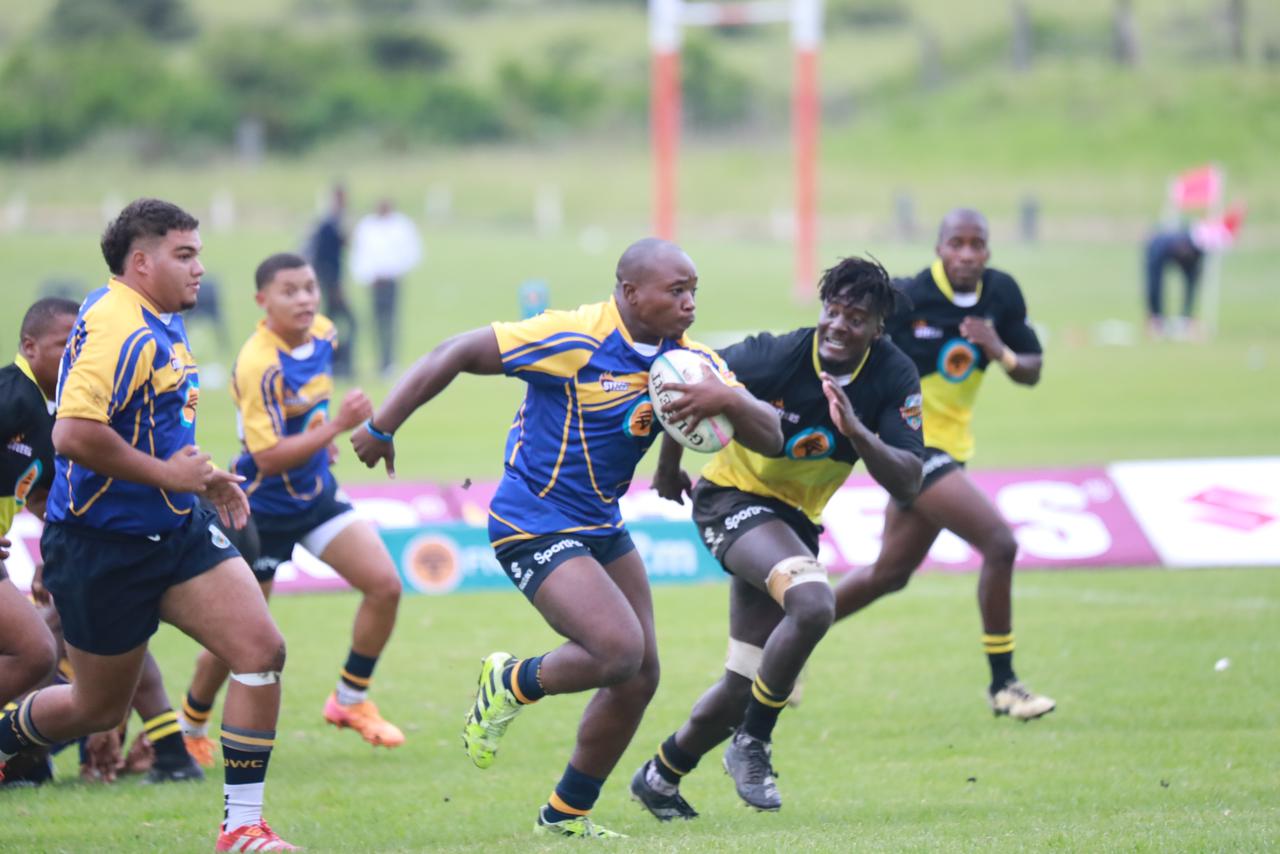
When the University of the Western Cape (UWC) arrived for Friday’s Varsity Shield encounter, they brought intent, precision, and an attacking game plan that the University of Fort Hare (UFH) simply couldn’t contain. In a match that promised fireworks from the opening whistle, the visitors delivered a masterclass in clinical rugby, running out convincing 12-38 victors despite playing the final quarter with 13 men.
UWC controlled territory, capitalised ruthlessly on UFH errors, and showed the kind of composure that separates contenders from pretenders.
Early aggression meets clinical execution
UFH came out swinging, bringing physicality to the collisions and testing UWC’s defensive resolve from the outset. But rugby isn’t won on aggression alone, you need accuracy, and that’s where the visitors excelled.
Just four minutes in, UWC demonstrated their intent. From a well-controlled scrum inside the UFH 22, the visitors’ pack provided the platform, and Leighton Damon did the rest, dotting down for the opening try. Aaron Swartz slotted the conversion, and suddenly UFH were chasing the game at 0-7.
The hosts needed to respond, but UWC weren’t about to let them settle.
Post-strategy break blitz
After the strategy break, the tempo shifted up several gears. UWC’s backline, sharp and purposeful throughout, began finding gaps in the UFH defensive line with alarming regularity.
In the 30th minute, they struck again. Slick handling and quick ball movement created space out wide, and Juma Amisi needed no second invitation, finishing expertly to stretch the lead to 0-14.
UFH’s frustrations boiled over moments later when they were reduced to 14 men following a yellow card and UWC were about to make them pay.
From a loose ball, Nhlamulo Shilubane showed razor-sharp awareness, pouncing on the error and racing away to score. At 0-21, the halftime deficit looked insurmountable.
UFH fight back, but Forbes finds another gear
Whatever was said in the UFH changing room at halftime clearly had an effect. The hosts emerged with renewed purpose, applying sustained pressure inside the UWC 22 and showing the kind of intensity that had been missing in the opening 40 minutes.
Their persistence paid off when Ukho Nomsatha capitalised on a loose ball to crash over, with Abongile Yeye adding the extras. At 7-21, UFH had a glimmer of hope.
That hope lasted approximately five minutes.
Marciano Forbes, who had been a constant threat all afternoon, decided to take matters into his own hands. Slicing through the UFH defence with pace and footwork, he dotted down for UWC’s bonus-point try. Swartz converted, and the gap was out to 7-28.
Forbes wasn’t done. In a performance that will have Varsity Shield scouts taking notice, he grabbed his second, showcasing the patience and precision that had characterised UWC’s display. The visitors’ ability to carve open the hosts’ defence at will was becoming embarrassing.
UWC cruise home despite numerical disadvantage
UWC continued to pile on the points through powerful build-up play, including a maul try that epitomised their forward dominance. At 12-38, the game was well and truly over as a contest.
Things got spicy in the dying stages. Juma Amisi saw yellow, followed by Syster Keith, before Skyle February received his marching orders with a red card. UWC were down to 13 men, and UFH finally had the numerical advantage they desperately needed.
Chris Gqobhoka did manage to cross for UFH’s second try, but by then the damage was done. UWC had built an unassailable lead, and even with two men in the sin bin and one off permanently, they controlled proceedings to the final whistle.
UWC dominated both periods, controlling tempo, territory, and the scoreboard with clinical efficiency. Their ability to exploit space, capitalise on errors, and maintain composure when down to 13 men speaks volumes about their quality and game management.
Forbes was the standout performer, grabbing a brace and consistently threatening the UFH defensive line. His performance, combined with sharp work from Damon, Amisi, and Shilubane, showcased UWC’s attacking depth.
For UFH, there were flashes of quality but discipline issues and defensive frailties proved costly. You can’t concede 21 points in the first half and expect to compete at this level.

