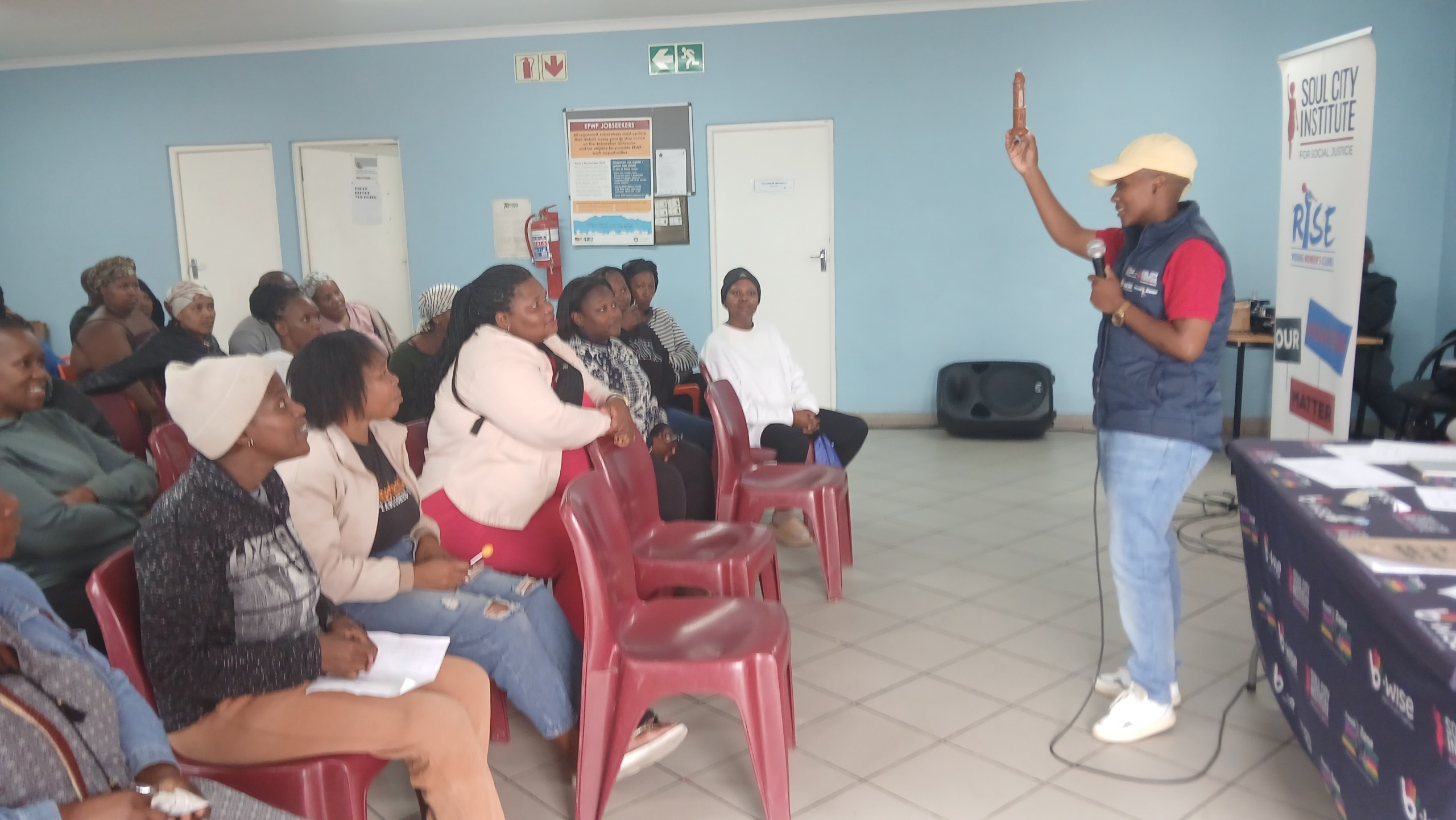
Having unprotected sex knowing that you have a sexually transmitted infection (STI) without informing the person you are being intimate with can land you in prison.
Seeing that it is STI/Condom awareness week from 9 to 15 February and amid Valentine’s Day ahead, some maybe trying to prove their love to one another. It is necessary to keep in mind that it is better to be safe than sorry.
Researchers attached to Centre for HIV and STIs of the National Institute for Communicable Diseases (NICD) and the School of Public Health of University of the Witwatersrand conducted research on sexually transmitted infection syndromes in South Africa from 2021 to 2024. During this time 3 265 people took part in the surveillance of which 71.3% were male.
Research findings on STI
The following findings were made during the surveillance: “Significant proportions of subjects reported high-risk sexual behaviours, such as having sex with a casual/non-regular sexual partner in the preceding three months (34%), having two or more sexual partners in the preceding three months (39.1%), and having sex with someone living in a different province (11%) or another country (9.9%) in the preceding three months. Almost 20% reported being treated for at least one STI syndrome in the preceding 12 months.”
Researchers also found that 3 088 of the participants were well informed about their HIV status, while 634 of this informed group reporting that they have been diagnosed with HIV.
“Of those self-reporting as living with HIV, 557 reported ever taking ARVs, with 548 taking ARVs in the preceding three days. Most male atsubjects (1 591) were circumcised with almost two-thirds of those having been circumcised medically (1 015).”
In total 2113 males were diagnosed with male urethritis syndrome, which is an inflammatory condition of the urethra in men as a result of an STI. From these males it was found that 93.2% of them had one or more STIs.
These percentages remain a great concern, especially when it comes to safe sex among South Africans.
The spread of STIs can be curbed if safe sex is applied and limited to one sexual partner.
Man sentenced for infecting woman
In 2010 Mphikeleli Lovers Phiri, who was a HIV counsellor at the time, had consensual unprotected sex with his new girlfriend.
At the time he was aware that he tested positive for HIV, while his girlfriend tested negative.
However, Phiri decided not to inform her about his status and she tested positive shortly after being intimate with him, while she went for a medical check-up.
After finding out about her status and confronting Phiri, she opened a criminal case against him.
Phiri was charged with attempted murder and sentenced to six years in prison. He appealed to the High Court of Gauteng, but his appeal failed. According to the charge sheet the girlfriend had asked Phiri on more than one occasion to use a condom and every time, while being fully informed about his HIV-status, he declined.
Taking everything into consideration the High Court dismissed Phiri’s appeal.
In the meantime the Western Cape Department of Health and Wellness continues to encourage people to practice safe sex.
Resources available at local medical facilities
Sandra Maritz, a spokesperson for the department in the Cape Winelands, says they and the partners they work closely with continue to provide various health services and support to the community in the Drakenstein.
“We provide health education in health facilities and also when we do outreach in the communities, so that people are informed about safe family planning, and methods to prevent sexually transmitted infections.”
According to Maritz they focus especially on preventive services, such as making condoms available and informing patients about the different options for preventing pregnancies.
“It is important that you always use a condom when you have sex, because it prevents the transmission of sexually transmitted infections.
“In addition to using a condom, it is also essential that you always use a contraceptive when you have sex, so that you can have a baby when you are ready.”
Maritz encourage people to visit their nearest medical facility where well-trained health workers will be able to assist with condoms, family planning and even male circumcision.