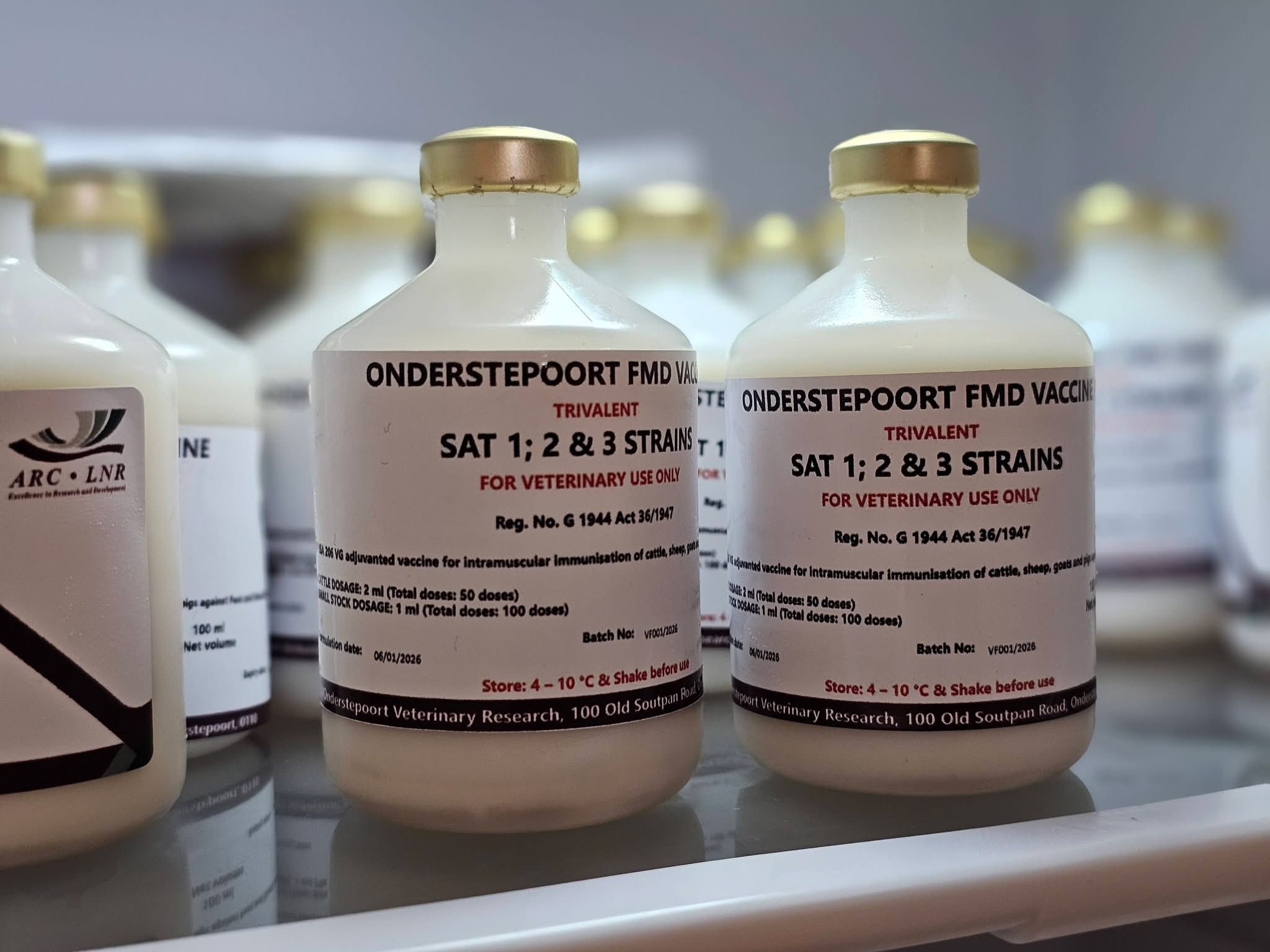
South Africa has resumed production of foot-and-mouth disease vaccines for the first time in more than two decades, as the country battles one of its worst outbreaks of the livestock disease in recent history.
The Agricultural Research Council’s Onderstepoort Veterinary Research campus has begun producing the first batches of vaccine since operations ceased 21 years ago.
The restart comes as foot-and-mouth disease continues to spread across the country, with the outbreak ongoing since 2019. By the end of January this year, two million animals had been vaccinated against the disease.
Desiree van der Walt, DA member on the Portfolio Committee on Agriculture, described the production restart as “a remarkable step forward for South Africa” and welcomed the development under Agriculture Minister John Steenhuisen.
The DA called for foot-and-mouth disease to be declared a national disaster under the Disaster Management Act.
Decades of production challenges
Vaccine production in South Africa has been plagued by institutional difficulties spanning more than 20 years. Both the Agricultural Research Council and Onderstepoort Biological Products faced governance instability, declining production capacity, deteriorating infrastructure, financial strain, and loss of technical expertise, according to the press release.
In 2010, the ARC presented National Treasury with a business plan for a new state-of-the-art vaccine production facility. Treasury allocated R492 million in the 2011/2012 financial year, with a further R400 million provided in 2019 to cover shortfalls.
However, the project was halted in 2021 after irregularities with subcontractors were revealed, despite 56% of the project budget already being spent.
The production gap forced South Africa to rely on imported vaccines, which Van der Walt said had been “one of the major constraints to addressing the disease”.
Current response measures
Steenhuisen has implemented several measures to control the outbreak, including tightened movement controls, enforced Disease Management Areas, activated rapid response teams, strengthened quarantine and slaughter protocols, and gazetted new regulations in June 2025.
The locally produced vaccines are intended to bridge supply gaps until imported vaccines arrive in the country.
Foot-and-mouth disease is a highly contagious viral disease affecting cattle, pigs, sheep, goats and other cloven-hoofed animals. While rarely fatal to adult animals, it causes severe production losses and restricts international trade in livestock and animal products.