


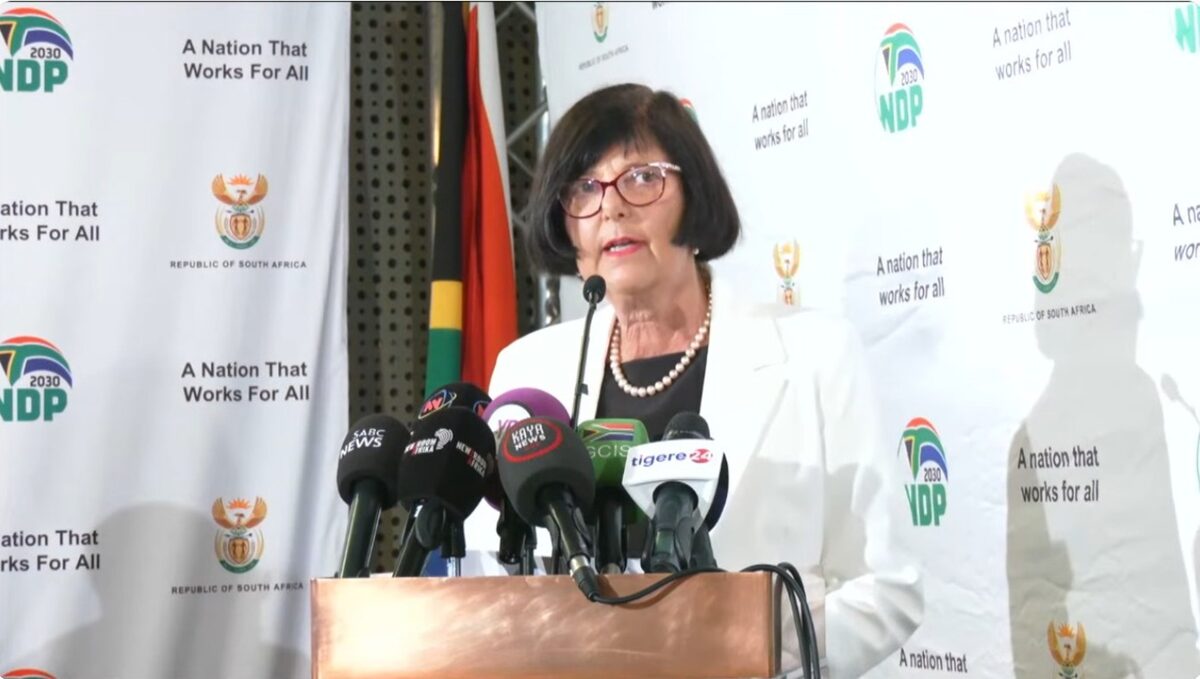
The Department of Transport is moving to implement a total ban on drinking and driving whilst breathalysers are set to be installed in taxi vehicles to prevent intoxicated drivers from operating their vehicles.
Transport Minister Barbara Creecy announced plans to amend Section 65 of the National Road Traffic Act to introduce a zero-tolerance policy that would prohibit any alcohol consumption before driving.
“The time has come for us to amend the law so we have a clear-cut, easy-to-understand and unambiguous policy that says drinking and driving is not allowed,” Creecy said at a media briefing on the 2025/26 festive season road safety performance.
Before a taxi driver takes a trip, they must complete a breathalyser test which will be linked to the vehicle.
The minister described the current law, which allows regular drivers up to 0.05g per 100ml of blood and professional drivers up to 0.02g, as “totally unacceptable”.
“Our driving and drinking policy was formulated almost 30 years ago. In today’s South Africa it is totally unacceptable that there is a law that allows people to drink and then drive,” Creecy stated.
“I have never understood this, I cannot explain this to anyone who has lost a parent, a brother, a sister, a child as a result of a road accident.”
Breathalysers for taxi industry
The South African National Taxi Council (Santaco) President Abnar Tsebe announced that breathalysers are to be installed in taxi vehicles “immediately”, with the focus on long-distance taxis “for now”, especially ahead of the Easter holidays.
Before a taxi driver takes a trip, they must complete a breathalyser test which will be linked to the vehicle. If it shows the driver has been drinking alcohol, the vehicle will not start.
Tsebe said drivers must complete another breathalyser test after driving a certain number of kilometres and there are camera systems in vehicles “so we are able to monitor that they are doing the right thing”.
He added that whilst it will take a lengthy period to install breathalysers in all taxi vehicles, Santaco will be starting at the taxi ranks with its marshalls in collaboration with its taxi associations.
Festive season statistics reveal alarming trends
Preliminary data indicates a 5% reduction in fatalities and accidents during the latest festive season compared to the previous year, with 1 427 fatalities recorded from 1 172 road accidents.
Those factors tell us that these were not travellers who were moving to a long distance destination. These were party revellers who had accidents, serious accidents that resulted in several deaths
However, roadblocks during the festive season revealed concerning statistics. Officers conducted 1 632 roadblocks and checked 1.8 million vehicles, with 173 695 drivers tested for alcohol consumption. Of these, 8 561 tested positive, marking a 144% increase from the same period the previous year.
The highest recorded blood-alcohol reading was in KwaZulu-Natal, where one driver tested 14 times above the legal limit.
Creecy noted that 40% of accidents occurred between 15 and 28 December and involved private vehicles on back routes in the evenings.
“Those factors tell us that these were not travellers who were moving to a long distance destination. These were party revellers who had accidents, serious accidents that resulted in several deaths,” she explained.
Support for policy changes
The proposed changes have received backing from various quarters. Kashifa Ancer, campaign manager of the Rethink Your Drink campaign, welcomed the announcement.
“This is a long-overdue policy shift. Alcohol-related road deaths are predictable, and treating them as inevitable has cost lives,” Ancer said.
The campaign noted that each unit of alcohol consumed within an hour raises blood alcohol concentration by about 0.02g%, with additional units consumed quickly further increasing injury risk.
GOOD councillor and mayco member for economic development and spatial planning in Tshwane, Sarah Mabotsa, also expressed support for the proposed amendment.
“GOOD supports the call from the national minister of transport to amend Section 65 of the National Road Traffic Act so that driving after any drinking of alcohol is totally prohibited,” Mabotsa said.
“Alcohol is proven to slow down perception and response times for drivers, making the roads unsafe for drivers who drink, and unsafe for their passengers, other drivers, and pedestrians.”
The majority of accidents were private citizens travelling on minor roads after partying
Mabotsa highlighted that with 11 418 road deaths in 2025 and over 8 500 drivers testing positive for alcohol during the festive season, stronger measures are needed.
“This amendment would bring South Africa’s road safety standards in line with those of Australia and many other countries where driving under the influence of alcohol is totally prohibited,” she added.
Road to implementation
The zero-tolerance policy proposal builds on previous efforts. In 2020, former transport minister Fikile Mbalula introduced the National Road Traffic Amendment Bill to Parliament, which included measures to eliminate blood-alcohol limits entirely. However, despite parliamentary debate and consultations, the bill has not yet become law.
Creecy emphasised that taxis are not responsible for the majority of accidents, with only 7% of accidents involving taxis, although there is a likelihood of multiple deaths in taxi accidents.
“The majority of accidents were private citizens travelling on minor roads after partying,” she said.
The Rethink Your Drink campaign stressed that zero tolerance must be part of broader alcohol reform, including progress on the Draft Liquor Amendment Bill and stronger pricing and availability policies.

