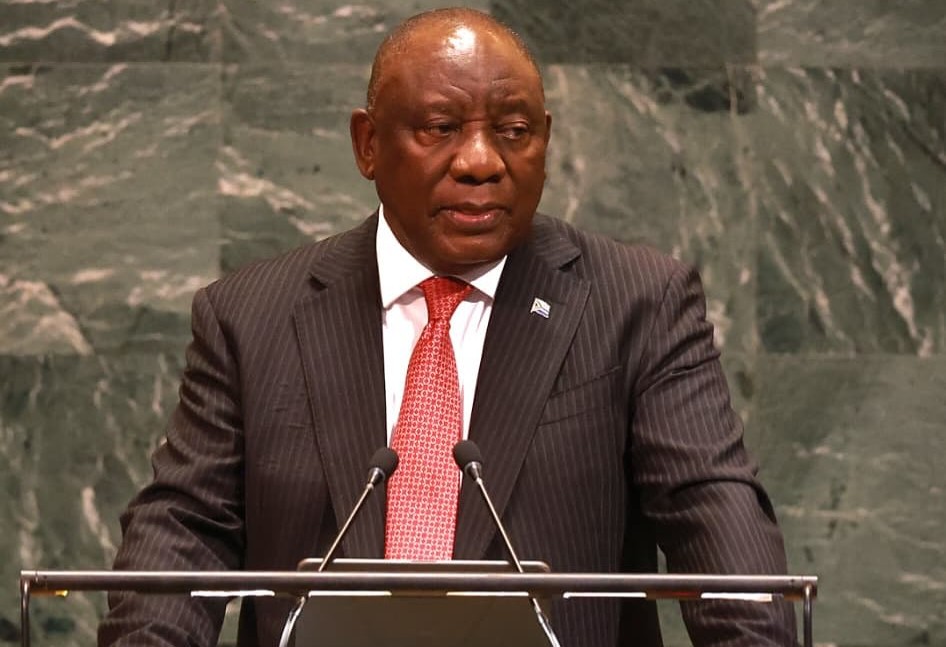
The question of Western Cape break-away from the Republic of South Africa has emerged as a contentious political issue, centring around President Cyril Ramaphosa’s categorical rejection of holding any referendum on regional independence. This stance has sparked fierce debate about democratic consultation, constitutional interpretation, and the future of South Africa’s unity.
Ramaphosa has made his position very clear: there will be no referendum on the secession of any part of South Africa under his administration. Responding to parliamentary questions recently from EFF MP Thapelo Mogale, who specifically asked about testing public opinion on Western Cape independence, Afrikaner Volkstaat creation, and regional secession, Ramaphosa grounded his response firmly in constitutional principle.
“The founding provisions of our Constitution state that the Republic of South Africa is one, sovereign, democratic state,” Ramaphosa said, emphasising his constitutional obligation to defend the supreme law of the country and promote national unity.
The President’s stance reflects a strict constitutional interpretation, arguing that his role requires upholding the Constitution as supreme law while promoting national cohesion. “In line with the constitutional responsibility of the president to uphold, defend, and respect the Constitution as the supreme law of the Republic and to promote the unity of the nation, I have no intention of considering a proposal or holding a referendum on the secession of any part of the country,” he stated definitively.
Ramaphosa also revealed that no component of the Government of National Unity has lobbied him on this matter, suggesting the issue remains outside mainstream coalition politics despite its growing public discourse.
Cape independence movement’s fierce rebuttal
The Cape Independence Party (CAPEXIT) has responded with sharp criticism, characterising Ramaphosa’s rejection as fundamentally undemocratic and reflective of a “centralising mindset” that has systematically failed South African citizens, particularly those in the Western Cape.
Their condemnation centers on several key arguments that challenge the President’s constitutional interpretation and democratic credentials.
The movement argues that Cape Independence represents a legitimate constitutional and democratic response to chronic government failure. They point to escalating crime rates, collapsing national infrastructure, deepening corruption, failing border controls, and eroding public trust as evidence that the central government has abdicated its basic responsibilities to serve and protect citizens.
Particularly galling to independence advocates is the economic paradox facing the Western Cape: the province carries a disproportionate economic burden for national failures while exercising minimal control over critical areas including policing, rail infrastructure, ports, electricity generation, and immigration policy.
The democratic consultation argument
Cape Independence proponents strongly dispute Ramaphosa’s constitutional interpretation, arguing that referendums are both lawful and fundamentally democratic. They contend that existing legislation permits provincial premiers to call provincial referendums on matters affecting regional voters, making a Cape Independence referendum legally permissible, transparent, and democratically consistent.
Crucially, they emphasise that such a referendum would not automatically create independence but would establish a public mandate carrying significant political weight in potential negotiations.
The movement also invokes international law, noting South Africa’s signatory status to instruments recognising peoples’ right to self-determination. While not automatically meaning secession, this principle acknowledges communities’ rights to express political will and seek appropriate self-government forms.
Independent Victory Research polling data supports the movement’s democratic claims, repeatedly showing majority Western Cape resident support for holding an independence referendum, with backing for independence itself continuing to grow. This polling suggests the issue transcends fringe politics, representing genuine democratic expression.
This debate ultimately concerns democratic societies’ fundamental obligations: Do governments have the right to silence regional populations seeking political alternatives when central authority consistently fails?