

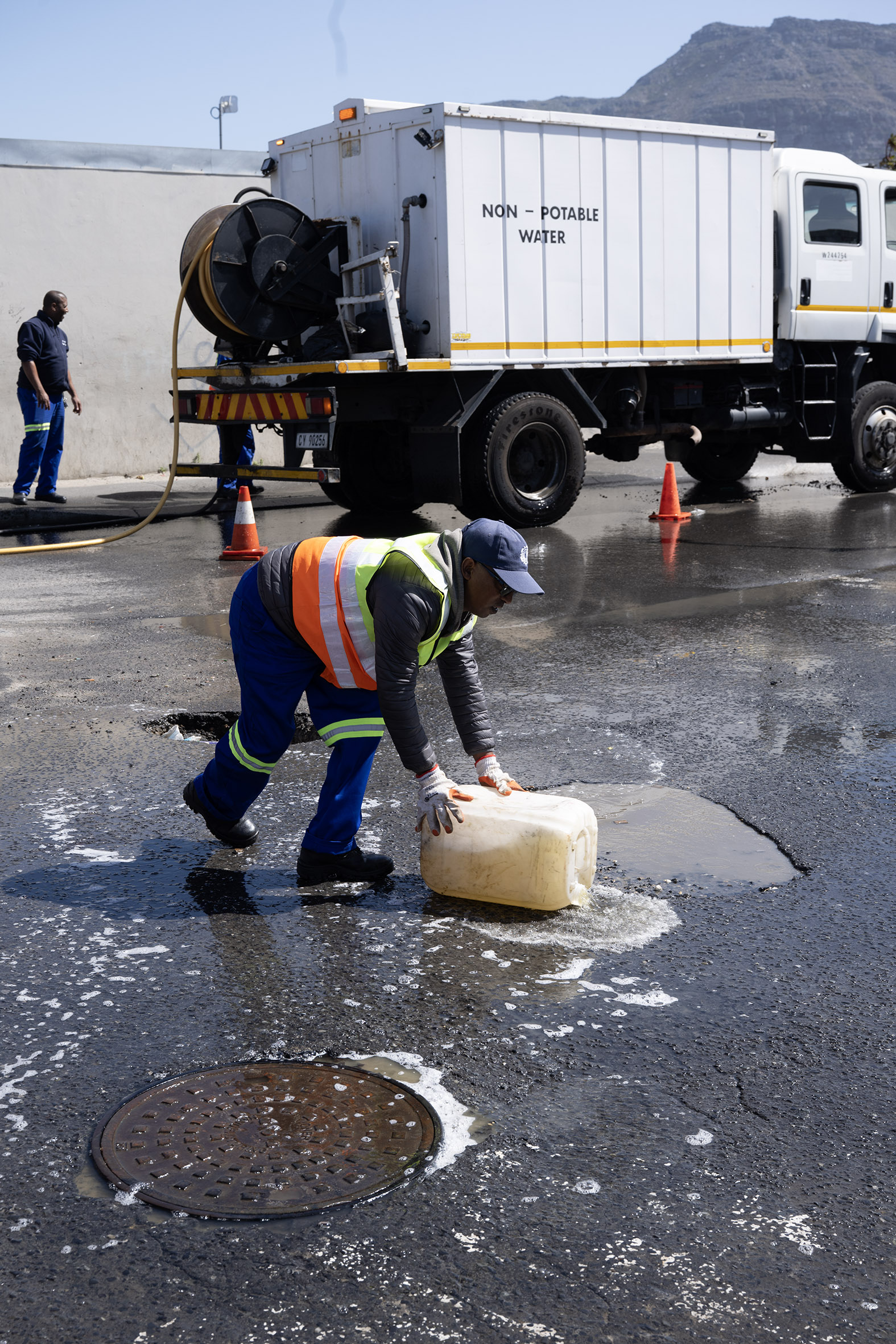
Cape Town’s sewer system is under siege from illegal dumping and misuse, with the city clearing 110,598 blockages across its 9 000 km network during the 2024/2025 financial year at a staggering cost of R228 million.
The Water and Sanitation Directorate responds to preventable sewer blockages at an alarming rate of one every eight minutes, with 60% of all incidents caused by foreign objects including wet wipes, rags, building materials, fats and oils that should never enter the system.
Of the massive maintenance bill, R137 million – approximately R11.4 million monthly or R376,000 daily – was spent clearing preventable blockages alone. The remaining R91 million addressed blockages from natural causes such as sand infiltration and tree roots.
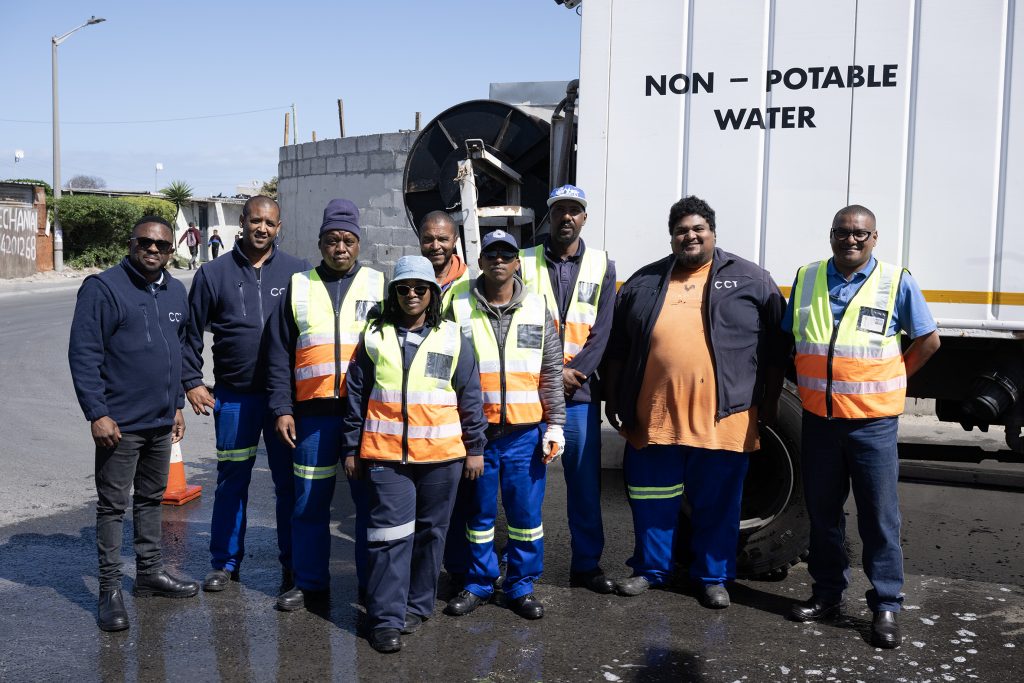
“Every time someone flushes or dumps wet wipes, rags, rubble, and other items that don’t belong in the sewer, it places an exorbitant burden on our resources,” said Councillor Zahid Badroodien, Mayoral Committee Member for Water and Sanitation.
Each callout costs around R2,000 for basic repairs, excluding cases requiring specialised equipment like jetting or vacuum tankers, cleaning, disinfection and additional security in high-risk areas – costs that can escalate significantly.
“It is especially frustrating when incidents take place repeatedly and the City is obligated to respond to an avoidable problem,” Badroodien added.
The crisis peaks during winter months, with July 2024 recording the highest number of incidents at 12,195, followed by August with 10,486 cases. Stormwater ingress during the rainy season compounds the problem between June and August.
ALSO READ: Municipality appeals – do not throw shopping trolleys in manholes
The most affected areas include Gugulethu, Strand, Delft, Philippi, and Bonteheuwel, with the top 20 communities also encompassing Lotus River, Nyanga, Manenberg, Bishop Lavis, and Langa.
Monthly breakdowns show consistent pressure on the system, with the lowest incidents recorded in February 2025 (7,701) and the highest in July 2024 (12,195).
“Toilets and manholes should not be used as dustbins,” Badroodien emphasised. “We need residents to assist us in reducing these costs by treating all components of the sewer system with care. Each act of misuse costs money which could be better spent upgrading and improving infrastructure.”
The councillor appealed to residents to change their habits, noting that “we need to turn this situation around and stop money from literally going down the drain.”
The City has made available a “Bin it, don’t block it” information pamphlet to educate residents on proper household waste disposal methods.






You must be logged in to post a comment.