

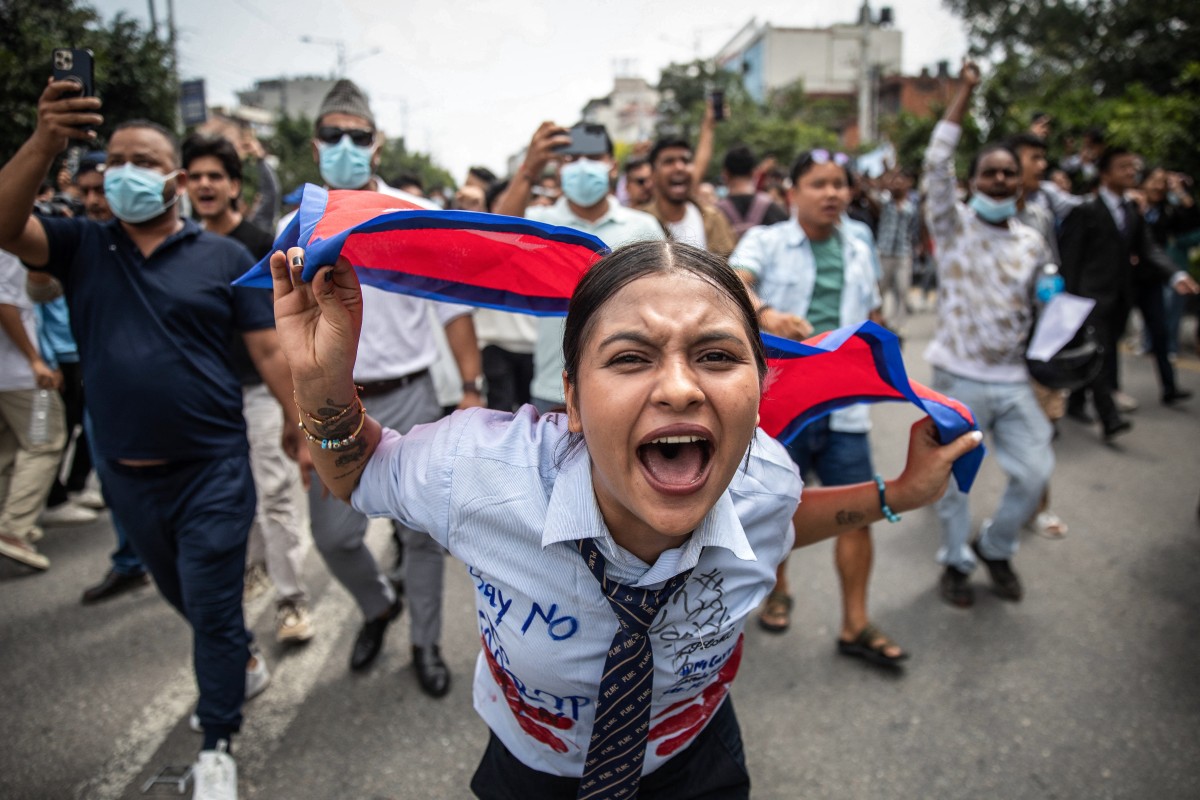
KATHMANDU, Nepal – Nepal reversed its controversial social media ban on Tuesday following deadly protests that claimed at least 19 lives and injured over 400 people, marking one of the country’s bloodiest crackdowns on demonstrators in recent years.
All major social media platforms, including Facebook, YouTube, and X, were restored across the Himalayan nation of 30 million people after widespread youth-led demonstrations demanding digital freedom and government accountability on corruption.
“The social media platforms have been opened, which was among the Gen Z’s demands,” Communication Minister Prithvi Subba Gurung told AFP. “We are open to talk with the protesters.”
The violence erupted Monday when police clashed with protesters who had pushed through barbed wire barriers and attempted to storm restricted areas near parliament in Kathmandu. Seventeen people were killed in the capital, with two additional deaths reported in the eastern district of Sunsari, according to police and local media reports.
Amnesty International confirmed that live ammunition was used against protesters, while the United Nations demanded a swift and transparent investigation into the violence. Police spokesman Shekhar Khanal said approximately 400 people were injured, including more than 100 police officers.
Prime Minister KP Sharma Oli, 73, expressed deep sadness over the deaths in an overnight letter issued following an emergency cabinet meeting that saw the interior minister resign. “The government was not in favour of stopping the use of social media and will ensure an environment for its use,” Oli wrote, ordering an investigation committee to probe the violence.
The social media restrictions, which began Friday when Nepal blocked 26 unregistered platforms, had sparked widespread fury particularly among younger generations who rely heavily on these applications for communication, business, and entertainment. The ban intensified existing frustrations in a country where unemployment hovers around 10 percent and GDP per capita stands at just $1,447, according to World Bank data.
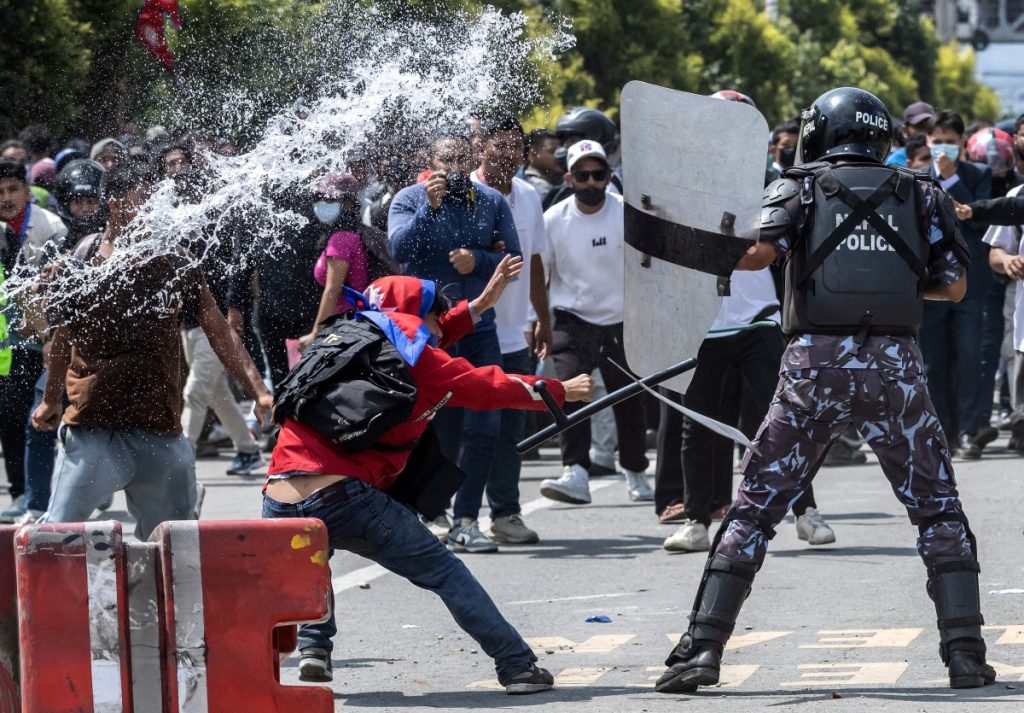
Despite curfews imposed Tuesday morning in several cities, angry groups continued demonstrations, targeting politicians’ properties and government buildings. Others burned tires while shouting slogans demanding accountability from authorities.
“Nearly 20 people were murdered by the state – that shows the scale of police brutality,” said 23-year-old student Yujan Rajbhandari, who participated in Monday’s protests. “The government have to take responsibility for the lives that were lost.”
The chaos overwhelmed local hospitals, with medical staff struggling to treat the wounded. “Tear gas entered the hospital area as well, making it difficult for doctors to work,” said Ranjana Nepal, information officer at Civil Hospital, describing scenes she called the most disturbing she had ever witnessed.
Since Friday, videos contrasting the struggles of ordinary Nepalis with politicians’ children flaunting luxury goods and expensive vacations had gone viral on TikTok, which remained unblocked during the restrictions. These viral posts further fueled anger against government corruption and inequality.
Popular platforms such as Instagram have millions of users in Nepal who depend on them for entertainment, news, and business opportunities. The Kathmandu Post newspaper captured the broader significance of the protests, writing: “This isn’t just about social media – it’s about trust, corruption, and a generation that refuses to stay silent.”
The newspaper continued: “Gen Z grew up with smartphones, global trends, and promises of a federal, prosperous Nepal. For them, digital freedom is personal freedom. Cutting off access feels like silencing an entire generation.”
Nepal has previously restricted access to popular online platforms, including a ban on Telegram in July citing rising online fraud concerns. The country lifted a nine-month ban on TikTok last year only after the platform agreed to comply with Nepali regulations.
The crisis represents a pivotal moment for Nepal’s democracy, as the government faces mounting pressure to address both digital rights and the systemic corruption that has long plagued the nation. The restoration of social media access marks a significant victory for the country’s digitally-connected youth, though questions remain about the government’s commitment to broader democratic reforms and accountability for the deadly violence.


You must be logged in to post a comment.