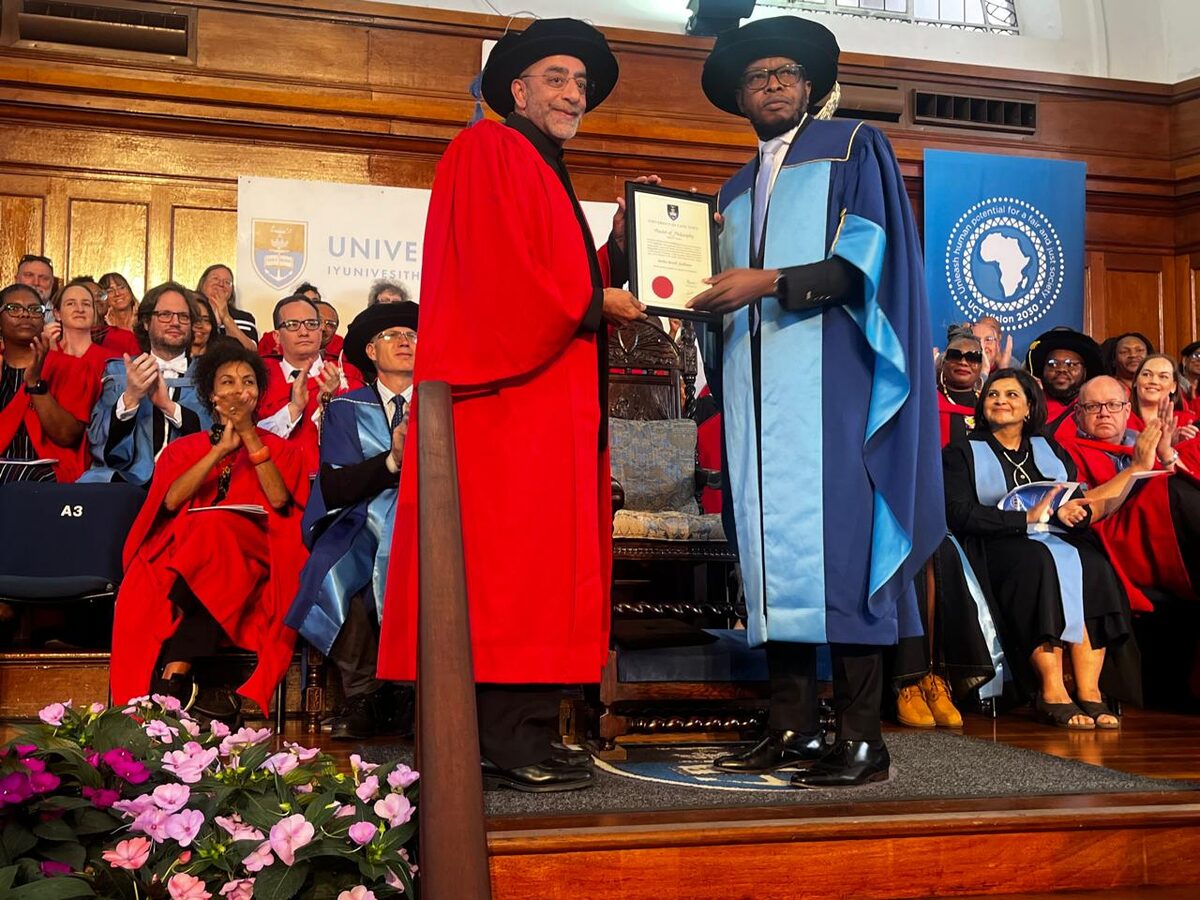
When 84-year-old Mavuso Msimang stepped up to receive his honorary doctorate at the University of the Witwatersrand yesterday, 15 July, he didn’t deliver the typical feel-good graduation speech. Instead, the struggle veteran gave South Africa a sobering report card – and the grades weren’t pretty.
A harsh assessment
Speaking to graduates at the Faculty of Commerce, Law and Management ceremony, Msimang used the 1955 Freedom Charter as his measuring stick, rating the country’s progress on a scale of 1 to 5. His most damning verdicts? Education, wealth distribution, and job security all scored a dismal 1 out of 5.
“At the current rate, the future governance of South Africa will be determined by the rich, mainly by those who have been exposed to private education,” Msimang warned, pointing to a public education system that has desperately needed an overhaul for over two decades.
The statistics he shared painted a stark picture of inequality: 64% of Africans live in poverty, compared to just 1% of whites. This disparity, he argued, makes a mockery of the Freedom Charter’s promise that “The People Shall Share in the Country’s Wealth.”
Land and housing: Still unfulfilled promises
Msimang was equally critical of land reform efforts, giving a score of 2 out of 5 to both “The Land Shall Be Shared Among Those Who Work It” and “There Shall Be Houses, Security and Comfort.” He criticised the lack of strategic thinking in land cultivation, saying current approaches have turned these noble ideals into empty promises.
The few bright spots
Not everything earned failing grades. Msimang gave higher marks to democratic governance, equal rights, and equality before the law – acknowledgments that some of the Freedom Charter’s core political promises have been achieved.
Who Is Mavuso Msimang?
The man delivering these hard truths has earned the right to speak them. Born in 1941 in Edendale, outside Pietermaritzburg, Msimang’s life reads like a condensed history of South Africa’s struggle for freedom.
At just 20 years old, his activism at Fort Hare University caught the attention of security police. In May 1963, he was among six students advised by ANC leadership to leave the country, beginning a 30-year exile that would shape both his character and his country’s future.
Years of service in exile
During exile, Msimang wasn’t just waiting for freedom – he was building the skills to help create it. He underwent military training, established radio communications in Zambia, and served as secretary to ANC president Oliver Tambo from 1969 to 1972.
But Msimang also recognized that liberation would require more than political struggle. He earned degrees in biochemistry and entomology from the University of Zambia, and later an MBA from California. He worked for international development agencies including CARE-CANADA, the World Food Programme, and UNICEF, gaining expertise in emergency aid and logistics that would prove invaluable.
Building a new nation
When Msimang returned to South Africa in 1993, he chose a different path from many struggle veterans. Instead of pursuing high-profile political office, he focused on transforming failing state institutions into viable, professional organizations.
His CV reads like a master class in public service: CEO of South African Tourism, Tourism KwaZulu-Natal, SANParks, and the State IT Agency (SITA). As Director-General at Home Affairs from 2007-2010, he led reforms that earned the department a UN award for improved use of technology in public service.
A life of continued service
Now in retirement, Msimang continues his commitment to public service. He serves on boards including WWF South Africa, has chaired Corruption Watch, and was a founding member of African Parks. In 2018, he received the WWF South Africa Living Planet Award, and last year was elected deputy president of the ANC Veterans’ League.
Wits University honored Msimang for his “remarkable, lifelong contribution of outstanding public service, his efforts to secure a lasting natural heritage for South Africa, and his work to advance ethical governance and leadership.”
But perhaps more importantly, they recognized someone who has never stopped fighting for the ideals that drove him into exile as a young man.
A challenge to the next generation
Msimang’s message to yesterday’s graduates was both a challenge and a call to action. “Yours is the task of restoring its spirit in a digital, globalized world,” he told them, referring to the Freedom Charter’s vision.
“You must insist on ethical leadership, you must challenge injustice in whatever form it appears, and you must never accept mediocrity as the norm.”
The uncomfortable questions
Speaking at what he called “a critical time in our country” marked by high levels of corruption and complacency, Msimang’s speech posed uncomfortable questions about how far South Africa has come – and how far it still needs to go.
His assessment might have been harsh, but it came from someone who has dedicated his entire life to the struggle for justice and equality. As the graduates filed out of the Great Hall with their degrees, they carried with them not just their qualifications, but the challenge of a man who has never stopped believing that South Africa can do better.
For Mavuso Msimang, the struggle continues – and he’s passing the torch to a new generation to carry it forward.