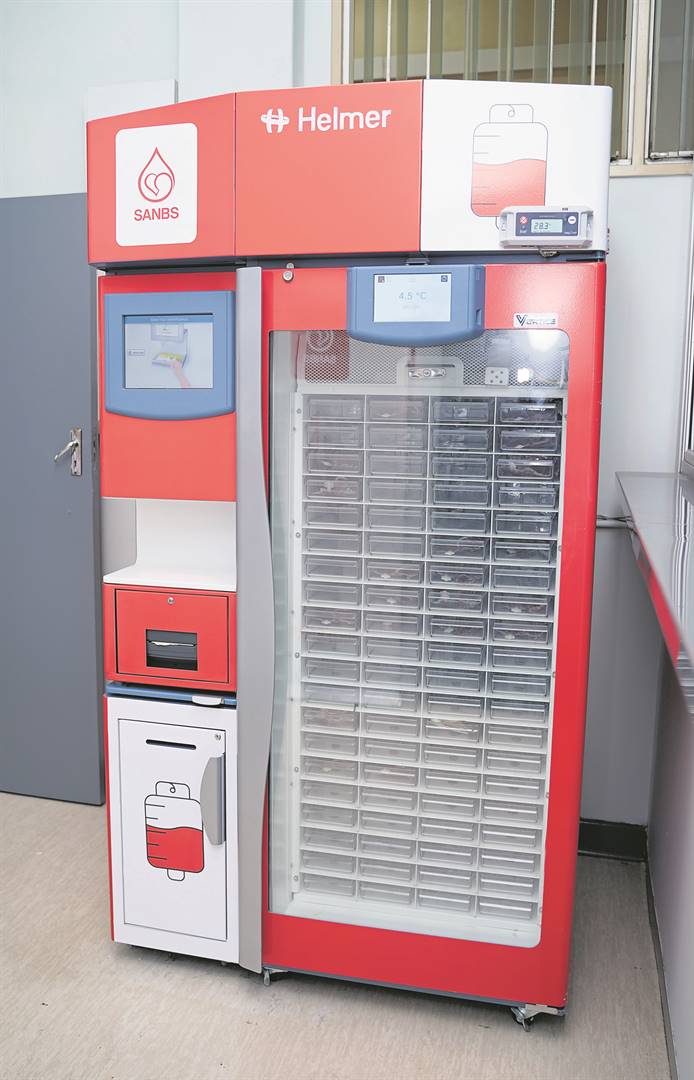
The South African National Blood Services (SANBS) has launched a smart fridge aimed at reducing turnaround times for patients to receive blood in rural areas.
Part of the reasoning behind the smart fridge is to provide much-needed blood in areas with a high mortality of mothers during childbirth.
The fridge, fondly referred to as Bophelo, is currently being piloted at Rahima Moosa Mother and Child Hospital in Johannesburg. The fridge operates like a vending machine and healthcare workers use a unique code sent to them by SANBS to access cross-matched blood.
“Bophelo will improve SANBS’ efficiency, supply reliability and coverage at hospitals that do not have blood banks on site by monitoring stocks remotely and availing blood timeously,” says Ravi Reddy, SANBS CEO.
He explains the Johannesburg-based hospital was elected for the pilot because of its high demand for blood, and proximity to the SANBS head office which allows for the remotely controlled automated fridge to be monitored as a trial for teething problems.
“The smart fridge is an important technological innovation under SANBS’s iHealth strategy and contributes towards improving accessibility to health care for all and the creation of a sustainable future for the organisation,” says Reddy.
Following the pilot project 10 more smart fridges will be rolled out to other hospitals, to be determined according to each hospital’s needs and where it is located.
“SANBS takes pride in being an integral player in the country’s healthcare system as we strive to transform, innovate and respond with agility to meet the health needs of all patients in need of blood products and services at a world class level of cost and quality,” Reddy urges.
The smart fridges will help SANBS:. Decrease the risk of transfusing emergency un-crossmatched units to patients with clinically significant red cell antibodies in remote hospitals. . Gain faster clinical access to compatible units in remote hospitals, increasing patient safety. . Increase traceability, ensuring the right patient receives the right product. . Achieve proper cold chain management, preventing the transfusion of incorrectly stored units. . Prevent use of expired units. . Ensure blood products quality and integrity through proper handling. . Decrease blood wastage.. Decrease emergency blood usage especially group O-negative in remote hospitals, type specific blood will be available for electronic crossmatching. . Decrease the risk of transfusing Rhesus (Rh) incompatibility emergency units to Rh negative patients.