What is Tuberculosis (TB)?
It is a bacterial infection caused by the bacterium Mycobacterium Tuberculosis, also known as Koch’s bacillus. It spreads through the lymph nodes and bloodstream to any organ in the body, but it’s usually found in the lungs. Other areas affected, include the spine, brain and kidneys.
How is TB spread?
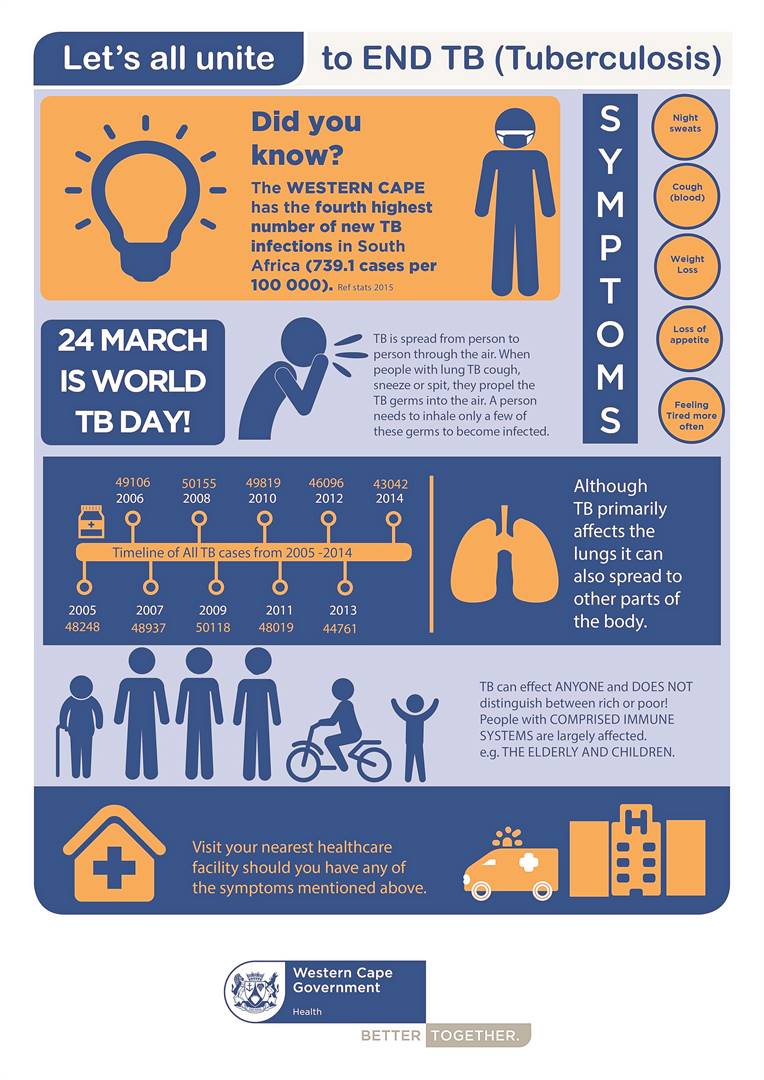
TB is highly infectious and spreads through the air when a person with TB coughs, sneezes, speaks or sings. Although the TB bacteria can live in your body without developing symptoms, if it’s not treated properly TB can be fatal. People with latent TB infection don’t feel sick immediately because their bodies can fight the bacteria to stop them from growing. Only once the TB bacteria becomes active in your body, does your immune system begin to weaken.
What are the symptoms?
Common symptoms include a persistent cough that lasts more than two weeks. Discoloured or bloody sputum (mucus coughed up from the lungs). Unexplained weight loss and loss of appetite are symptoms. Patients may experience drenching night sweats. It’s important to get tested if you have these symptoms. Tests are free at government clinics. This is done by taking two sputum samples and the results are normally available after two to three days.
What will happen if you have TB? Treatment is free from the clinic. Patients will start on TB medication, and the treatment is taken for six to eight months. Patients will receive information about the disease, how it’s treated, the importance of adherence support that can be provided while on treatment, the diet to follow, the importance of screening your immediate family members as well as things to avoid when you’re on treatment. TB is curable if you take your medication correctly for the full duration. If you feel better after taking medication continue until the nurse tells you to stop. TB is dangerous if you don’t comply with medication and it can lead to even more serious complications like MDR and XDR and even death.
How can I protect others?
Try to allow good ventilation in your home, allow a lot of natural light in your home, and practice good hygiene. Cover your mouth when you cough or sneeze. Open windows and let sunlight come through your house. Exercise and live a healthy lifestyle. Eat enough healthy food, stop smoking and avoid alcohol intake.