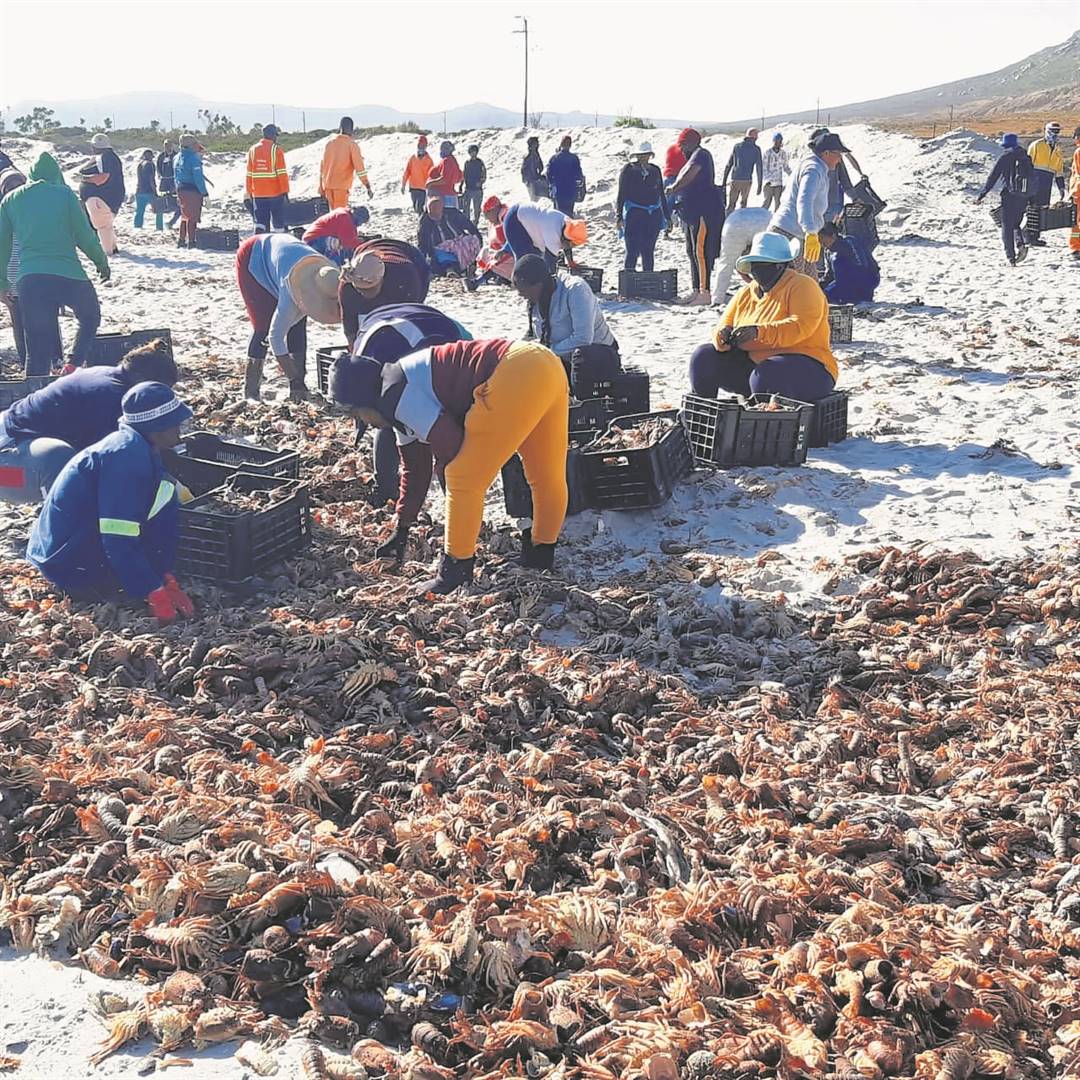
More than 100 workers took to the beach in Elands Bay to clean up tons of West Coast Rock Lobster which walked ashore this month.
According to the Department of Forestry, Fisheries and the Environment (DFFE) there have been no reports of new walkouts.
However, the potential for additional lobster walkouts or marine life dying due to anoxic conditions in the water column remains high for the foreseeable future.
“Satellite imagery shows that high levels of algae biomass remain between Cape Town and Paternoster as well as along coastal regions located between Lambert Bay and Doring Bay,” the DFFE said in a statement. “Warm weather and light wind predictions over the next few days will contribute to elevated risks of red tide over most of the West Coast.”
Around 30 tons of live lobster have been returned to the sea. The Department says these lobsters do not pose any threat to humans or sea life.
“Rock lobsters walk out of the water because the water is starved of oxygen and they are looking for more oxygen,” the DFFE said. “So the rock lobsters are not toxic or ‘contaminated’ in any way, and therefore do not pose a direct threat to humans.
“But lobsters, which have walked out and died on the beach, pose a risk because they start to rot very quickly after they die and lie in the sun on the beach. This is why the public is not allowed to pick-up washed-up rock lobsters (or other fish).”