On 18 November 2023 at the West Coast Fossil Park (WCFP), Prof Muthama Muasya from the University of Cape Town enthralled an appreciative audience with insights into Africa’s rich diversity of vascular plants, amounting to nearly 60,000 species.
Muasya is a leading scientist in his field of Biological Sciences, and is well-known for his succinct, holistic packaging of complex concepts, as witnessed with his remarkable presentation.
Piecing together the story of the development of the African flora is much like detective work. Proxies include petrified plants, fossil pollen, the signature of wax-covering of plants and carbon isotopes in soil. The traits are mapped on fossil-calibrated phylogenies based on DNA data of extant biota to infer when particular traits or assemblies of plants evolved. Examination of carbon isotope signals in the teeth of mammalian fossils, with C4 plants imparting a signal different from C3 plants, helped to calibrate the timing of the expansion of C4 plants.
African plants are distributed in four major floras: forest, savanna, temperate and montane, and arid. These floras changed significantly in the past 60 million years (Ma) since America split from Africa to form the Atlantic Ocean. Although Africa has been one of the most stable continents in the world, it has experienced several major environmental changes, with expanding aridification from 45 Ma, increasing savannas and decreasing forests. Then, after 17 Ma, with the initiation of the Benguela Current, a renewed radiation of arid-adapted plants followed, including the appearance of C4 grasses. Since then, the interplay of aridity and droughts, herbivory, fire, and interactions with other biota, such as pollinators, dispersal agents, and microbes, have further changed the composition of floral assemblies.
The evolution of plants in Africa and the formation of different communities had important repercussions for the flora of all southern continents and Eurasia and large islands, such as Madagascar. Until recently, this was mostly a one-way exodus of species out of Africa, which evolved further in their new homes. What happened in Africa, therefore, mattered for much of the world.
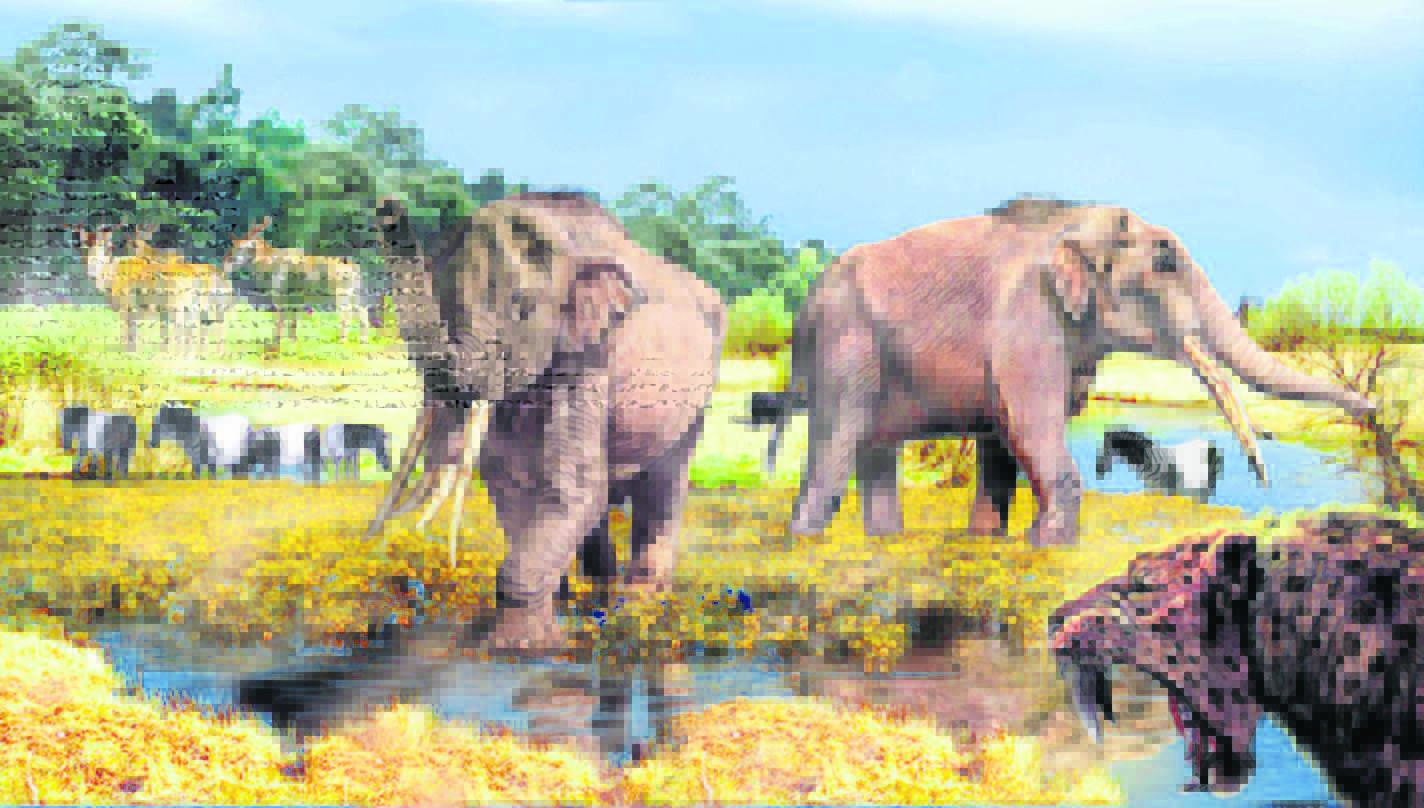
On a near-to-home note, Muthama showed how the Cape Flora experienced several boosts to become two world biodiversity hotspots: Fynbos and the Succulent Karoo (the latter largely derived from the former). The development of the narrow winter rainfall region across the southwestern tip of Africa is closely connected to the first development of the Benguela Current and its later intensification, and the subsequent exposure of limestones coinciding with glaciation of the poles, favouring ever further radiation of plant species. During the Pliocene, when the animals now fossilised at the WCFP, roamed Langebaanweg, some Cape Flora dispersed into the tropic montane and alpine islands up East Africa. With such a high calibre of scientific talks for the public, be sure not to miss future WCFP talks.