World Environment Month is celebrated in June and with so much biodiversity in the region, the West Coast has a lot to celebrate.
Along with environmental month, World Environmental Day (5 June) and World Ocean’s Day (8 June) is also celebrated in June.
World Environmental Day is the United Nations Environment Programme’s (UNEP) biggest annual, with the aim of galvanising positive environmental action. It was adopted by the United Nations General Assembly in December 1972, and was first celebrated in 1974 with a view to deepening environmental awareness and address concerns such as the depletion of the ozone layer, toxic chemicals, desertification and global warming.
Bergrivier Estuary
This year the theme of World Environmental Day, #OnlyOneEarth, champions global transformative environmental change and the Berg Estuary’s Ramsar recent status means that this sensitive and dynamic ecosystem will be protected and conserved for generations to come. About 127 species of waterbird have been recorded since 1975, some of which are globally threatened such as the Cape cormorant or regionally threatened such as the Caspian tern. The site is also important for fisheries, with communities of fish such as white steenbras and white stumpnose partially or fully dependent on it for breeding.
West Coast National Park
The park stretches from Yzerfontein to Langebaan and offers visitors activities from bird watching, game sighting, biking to whale spotting. The park was established in 1985 with the aim of conserving the Langebaan Lagoon, a Ramsar site, and surrounding landscapes, including the islands in Saldanha Bay.
The habitats in the park are varied, and the whole area is of international and national importance in respect of both terrestrial and marine life.
Birdwatchers can spot more than 200 species of land and sea birds, many just around the lagoon. Mammals also abound and, apart from eland, you could also see springbok, kudu, gemsbok and the rare mountain zebra.
Verlorenvlei
The Verlorenvlei is 30 km long and stretches from Redelinghuys to Elands Bay, where it empties into the sea.
In 1685 Governor Simon van der Stel referred to the vlei as Zeekoe Valleij. After that it was called the Zand River, and in 1924 it was renamed Verlorenvlei. It is fed by rivers, but mainly by its own groundwater. The Ramsar border follows the water in the wetland. It covers approximately 1 500 ha and was declared a Ramsar site on 28 June 1991.
Fynbos
The name fynbos comes from the thin stems of the shrubs, which at the time were considered unsuitable for construction. Fynbos grows in a 100-200 km wide coastal strip that stretches from Clanwilliam on the West Coast to Port Elizabeth on the south-east coast.
It is part of the Cape Flora, the smallest yet richest flora of the world’s six plant kingdoms. The fynbos on the West Coast is significantly more diverse than in the south-east coast and quite a few species grow just here.
The popular Hopefield Fynbos Show has been held in the area for three decades. The show annually celebrates the West Coast’s fynbos richness with beautiful fynbos exhibitions of more than 500 different species.
The exhibitions represent fynbos from the four biosphere in the area, namely Sandveld, Rietveld, Vleilande and Renosterveld. Many of the species are endangered, so visitors should not just enter the veld to pick fynbos.
Flower season
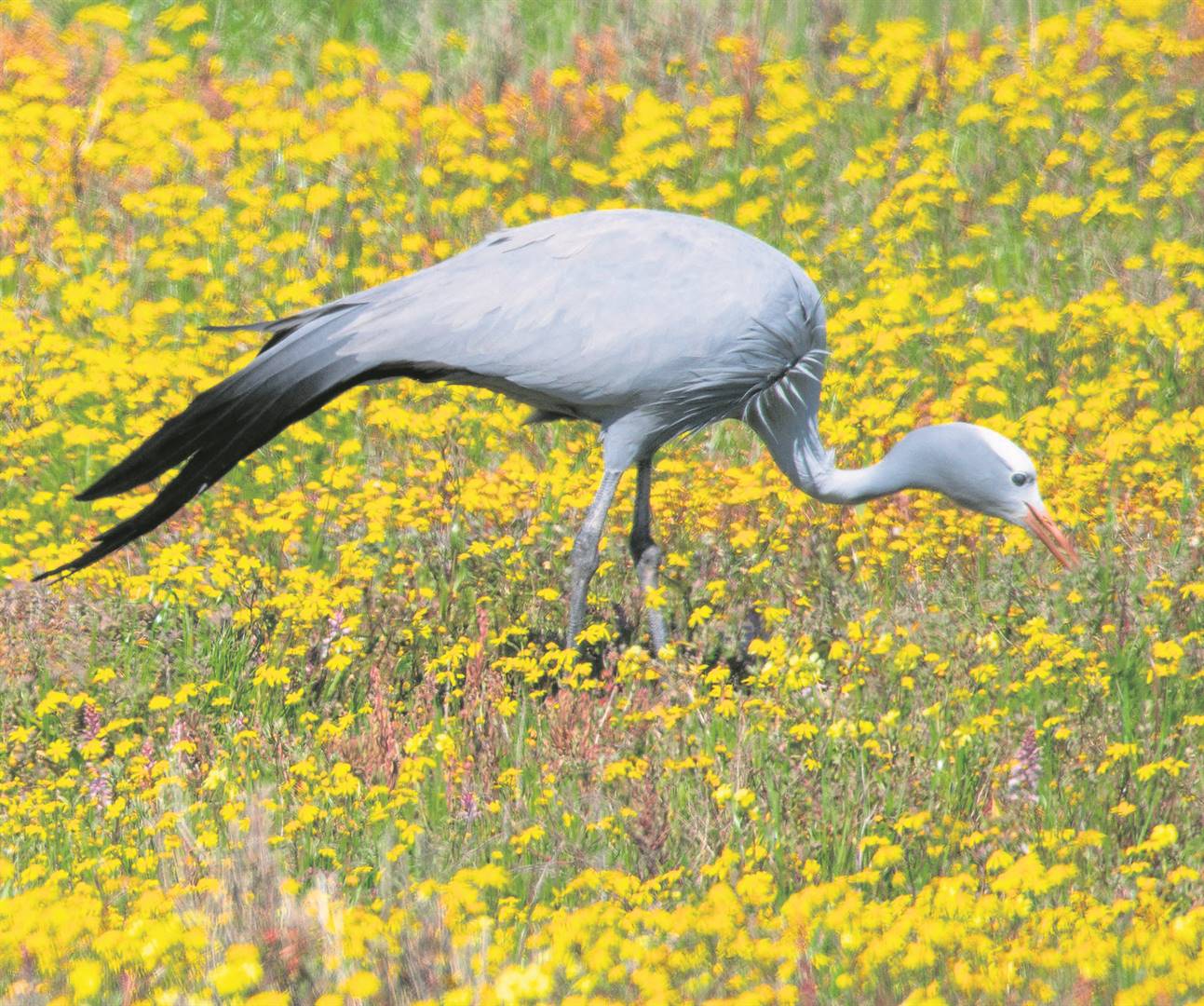
Every year, flower-watchers from all over descend on the West Coast in August and September to come and appreciate the area’s beautiful carpets of orange, white, yellow and purple wild daisies.
Just as the Hopefield Show celebrates the area’s fynbos richness, the Darling Flower Show has celebrated the West Coast’s annual Spring flower show for more than a century.
Frederick Duckitt of Waylands in the Hopefield area and Suzanne Malan stood among the wildflowers in 1915 and decided this wonderful heritage of wildflowers should be shared with others. Its outcome was the founding of the Darling Flower Society in 1917, which led to the first flower show.
The association wanted to show the area’s botanical wealth to the world, while at the same time promoting the conservation of flowers among the farmers of the district, which has since maintained the botanical diversity of the region over several generations.