Share grabs, defamation and intimidation.
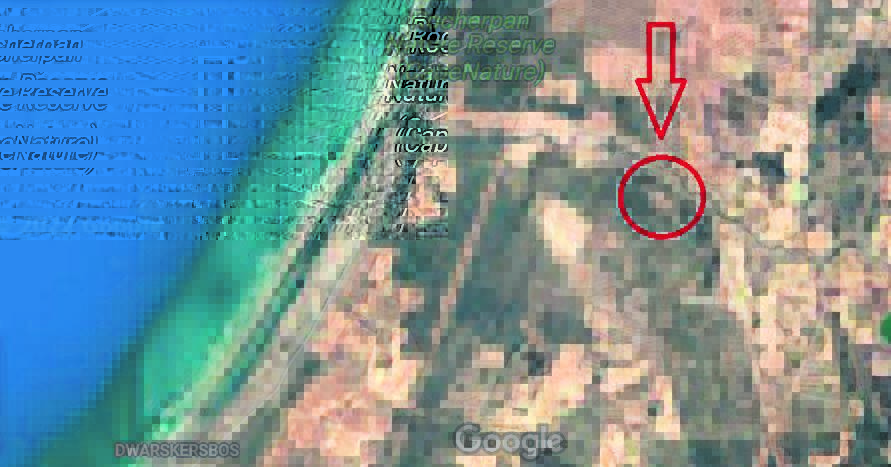
These are just some of the accusations in a cloud of controversy that surround the Dalbarton self-determination development on the farm Pampoenkraal near Dwarskersbos.
On 31 March Weslander reported on the challenges that the newly established Dalbarton is experiencing. Dalbarton forms part of the Zuidland independent state.
Weslander previously reported that the United South African Federation (Usaf) declared the independence of the first Zuidland state on 6 April 2019.
Since the publication of the article in March, the parties involved spoke to Weslander in their defence against the many allegations.
Dalbarton Farm was created as a self-determination development on the basis that buyers into the scheme would govern themselves.
Brian Dalton, former director and major stakeholder in the company, told Weslander investors were initially told that they could buy plots on the farm, but when it became clear that this could not be achieved without a town planning process being followed, the process was changed so that investors could rather buy shares in the company to own the farm collectively.
The idea was progressive and according to Dalton hundreds of investors bought shares with the highest investment having been paid by Dalton’s company called PayApp on the basis that approximately R3 million of his input would be paid back to him via a loan he made to the company.
Advocate Carlo Viljoen, current codirector with Rodney Bartman, could not confirm the precise amount of people buying in during Dalton’s time, but he said there was and still is “a huge interest in the idea”, he told Weslander.
According to Viljoen, PayApp itself did not make any payment towards the farm, but did make a transfer of R3 million towards the purchase of the farm on behalf of Dalton and Bartman, who both took out personal loans of R1,5 million each from PayApp in order to buy into the scheme.
However, when a dispute arose between Dalton and Bartman, the other major shareholder in the company, Dalton, resigned as a director leaving only Bartman as the remaining director.
Bartman then grabbed this opportunity and allocated himself an additional 1 040 shares, 350 to his wife, 24 to his father in law, 22 to his farm manager and 1 820 to Viljoen so that their total voting rights substantially outnumbered that of Dalton and other investors that had paid for their shares at a price of approximately R95 000 per share.
“Some of the investors had put their life savings into the farm and Bartman was dishing these out for free,” Dalton claimed.
But according to Viljoen the allocation of shares was done in accordance with the company’s memorandum of incorporation and the Companies Act. Allegedly the allocation of shares was done instead of paying for services rendered and to be rendered which “saved the company heaps of money. This is good business practice,” Viljoen said in his and Bartman’s defence.
At the same time Bartman convened a shareholders meeting and had Viljoen and two others put onto the board of directors.
Dalton explained that he then approached the Cape Town High Court to have his share allocation and the appointment of Viljoen and the other two directors declared unlawful. This case is set down for a hearing in July this year.
Dalton accuses Viljoen of embarking on a process of intimidation to get investors living at Dalbarton off the farm.
“He threatened them with eviction without compensation and legal action on the basis that they had not paid, which they had, and claiming that they were defaming the directors of the company by bringing their plight to the attention of the media,” he said.
Viljoen responded to these accusations by confirming the evictions of “a few people whose agreements were terminated after they were informed of their breaches of agreement and given more than ample time to remedy it”, Viljoen stated.
According to Viljoen, no-one is being evicted unlawfully since the evictees haven’t paid their service delivery fees.
“We are holding them responsible for it. This is absolutely normal and there is nothing unusual or untoward about it,” Viljoen said.
In the meanwhile, the Community Scheme Ombuds Service (CSOS) has served notice on Viljoen and Bartman requiring them to register the Dalbarton Farm with CSOS or face criminal prosecution.
Viljoen has informed them that they will not be registering with CSOS and that the scheme will govern themselves according to their own governance documents.
“Yes, as a community that legally and in terms of the South African Constitution and International law declared our internal self-determination, we do not recognise South African law and we will stand on this right,” Viljoen explained.