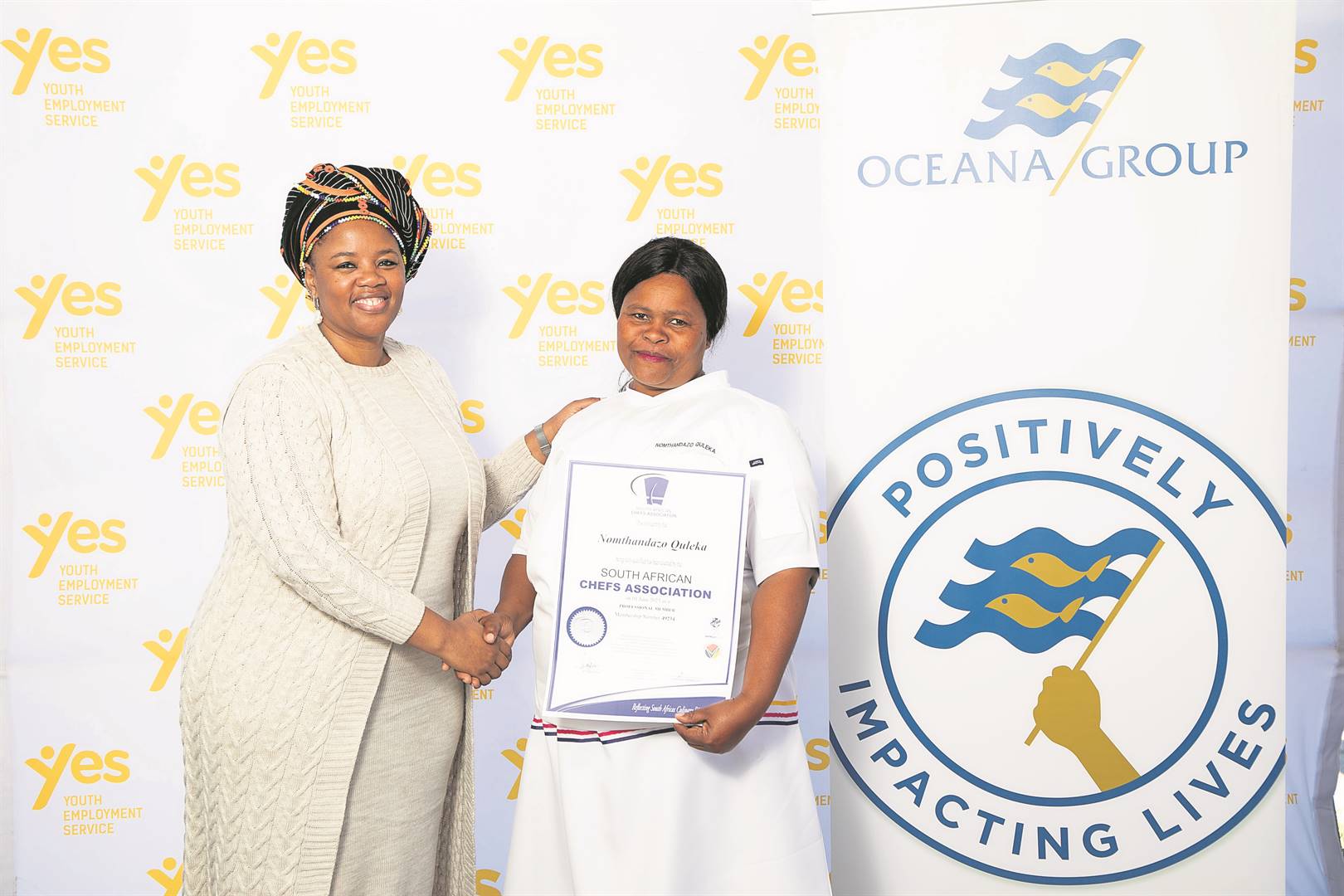
Ten previously unemployed St Helena Bay women recently graduated as qualified food handlers.
Their achievement is an important part of a pioneering project at a local primary school that seeks to make school feeding more impactful.
For many of the children school meals are the main source of nutrition. Typically, though, to stretch resources feeding programmes only provide meals for those who most need them.
Petrina Pakoe, director of the Peninsula School Feeding Association, said while this is entirely logical from a resource-management perspective, the problem is that children who accept the meals are stigmatised.
“When this happens some children would rather go hungry than be teased and this makes the feeding programme less effective.”
To overcome this problem, the Peninsula School Feeding Association, along with long-time partner Oceana, has been piloting a solution at HP Williams Primary, where some of the learners’ parents work across the road at Oceana’s Lucky Star cannery.
Instead of providing meals only to the most needy children, every child gets a healthy, nutritious, tasty meal, every day. This “feeding with dignity” approach effectively seeks to remove any stigma associated with accepting a school meal.
Oceana has donated a fully equipped, containerised kitchen as well as providing a spacious dining area, with tables and chairs so the children don’t have to eat their meals sitting on the ground.
The newly qualified community volunteers prepare the meals. Their training is fully accredited and is delivered by another Oceana-supported project, the YES Genesis Hub Culinary Academy in Louwville, Vredenburg.
“The idea is that, as well as making the feeding scheme more impactful and consequently improving the school’s educational outcomes – after all you can’t teach a hungry child, the women also benefit from receiving recognised, marketable skills,” said Zodwa Velleman, Oceana executive for corporate and regulatory affairs.
Their training, overseen by chef Allister Esau, is thorough and includes both theoretical and practical components and assessments.
The 17-day course covers food preparation using a variety of ingredients, creating menus, food safety, meeting regulatory hygiene requirements and budgeting.
Velleman said she’s been asked whether providing accredited training, skills and experience to the community volunteers is a risk as it may mean they leave the programme to pursue other opportunities.
“Actually, the opposite is true. If these women are able to use what they learn from this programme to empower themselves and better their lives and those of their families and community, that’s the first prize. It also means we’ll have no shortage of new volunteers to take their place.”
She said the St Helena Bay project that was launched just under a year ago has proven so successful that it is now being replicated in two additional schools along the West Coast this year.