


The latest quarterly provisional financial reports of the Free State Legislature confirm what residents of the Free State experience daily: municipalities are financially collapsing, drowning in debt, and failing to deliver basic services.
Instead of spending public money on repairing water pipes, maintaining electricity networks, or upgrading infrastructure, municipalities are underspending on grants. They are also running up billions in unpaid debt. Additionally, they are operating far beyond their means.
The recently tabled financial reports on the state of finances of local government in the Free State highlight the dire state of financial management. They specifically address the issues faced by municipalities. This was exposed during the joint parliamentary oversight on local governments in the province.
“These reports, although preliminary, paint a bleak picture of mismanagement across the province, from dismal revenue collection and collapsing infrastructure budgets to municipalities owing more to creditors than they can ever hope to recover.”
Werner Pretorius, DA spokesperson on Public Accounts in the Free State Legislature.
The reports indicate a revenue collapse. Municipalities are spending beyond their means and are failing to use grant funding. Infrastructure is neglected, and maintenance is poor. There is a debt crisis, and budgets are unfunded.
Many municipalities are collecting only a fraction of what they should, crippling service delivery. The Nala (10.5%), Phumelela (20%), and Mafube (21.4%) municipalities are the worst, far below the 95% norm.
Others like Mohokare, Kopanong, and Letsemeng cannot even provide reliable figures because of chaotic systems.
Werner Pretorius is the DA spokesperson on Public Accounts in the Free State Legislature. He says municipalities ran up a combined R2 billion deficit by June 2024. This shows they are operating in the red. By year-end, municipalities are projected to underspend by R807 million in conditional grants meant for development. The Mangaung Metro alone is projected to underspend by nearly R589 million (55%), depriving residents of desperately needed improvements.
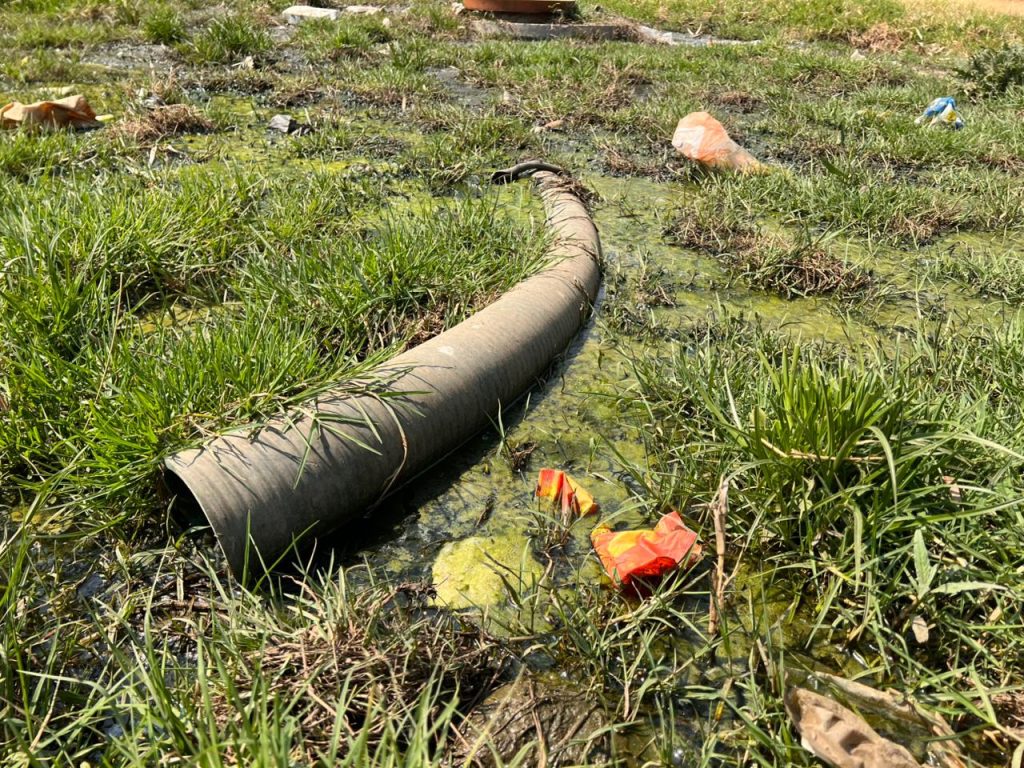
Money for water, electricity, and waste infrastructure projects is not being used optimally. Lejweleputswa (6.3%), Mohokare (7.9%), and Letsemeng (6.7%) spent almost nothing, often using capital project funds to cover salaries and running costs instead.
Municipalities are spending only 2.9% of their budgets on repairs and maintenance, far below the 8% norm. This means income-generating infrastructure is breaking down faster, reducing revenue and worsening service delivery.
Residents, businesses, and even government departments owe municipalities R43.5 billion. Households make up the largest share, at R31.8 billion, with Mangaung (R12 billion), Matjhabeng (R8.3 billion), and Metsimaholo (R3.9 billion) being hardest hit.
Municipalities themselves owe R36.5 billion, mostly to Eskom and water boards. Matjhabeng leads with R15.2 billion, followed by Maluti-a-Phofung (R8.2 billion), and Ngwathe (R2.8 billion).
Pretorius says only nine of 23 municipalities passed balanced budgets for 2025-’26. The rest are spending money they do not have.
“The Office of the Premier, MEC of Cooperative Governance and Traditional Affairs (CoGTA), and Provincial Treasury will have to go back to the drawing board to ensure effective support is provided, to turn around the tide of poor financial management in the province, and to ensure consequence management is implemented.”
Werner Pretorius, DA Spokesperson on Public Accounts in the Free State Legislature
“The DA will continue to call for the quarterly tabling of the reports in the legislature to serve as an early warning system and to ensure continued monitoring, accountability, and intervention where needed. We will continue to monitor the financial performance of municipalities across the Free State and demand accountability for poor financial decision-making, systems, and wastage of public funds,” he said.
Pretorius believes that local governments in the Free State will deliver quality basic services only with sound financial management. They can grow the economy and create job opportunities when performance management is implemented.
“Residents of the Free State deserve quality basic services to unlock social and economic opportunities to better their lives.”

You must be logged in to post a comment.