Have you ever thought about it that your waste could reveal certain aspects of your character?
Among others whether you recycle, respect food, donate used clothes and shoes to the less fortunate and whether you have a compost heap?
How you dispose of your refuse, can also reveal a lot about your character: whether you respect the neighbourhood or whether you’re a selfish dumper, reckless polluter or an environmental destroyer.
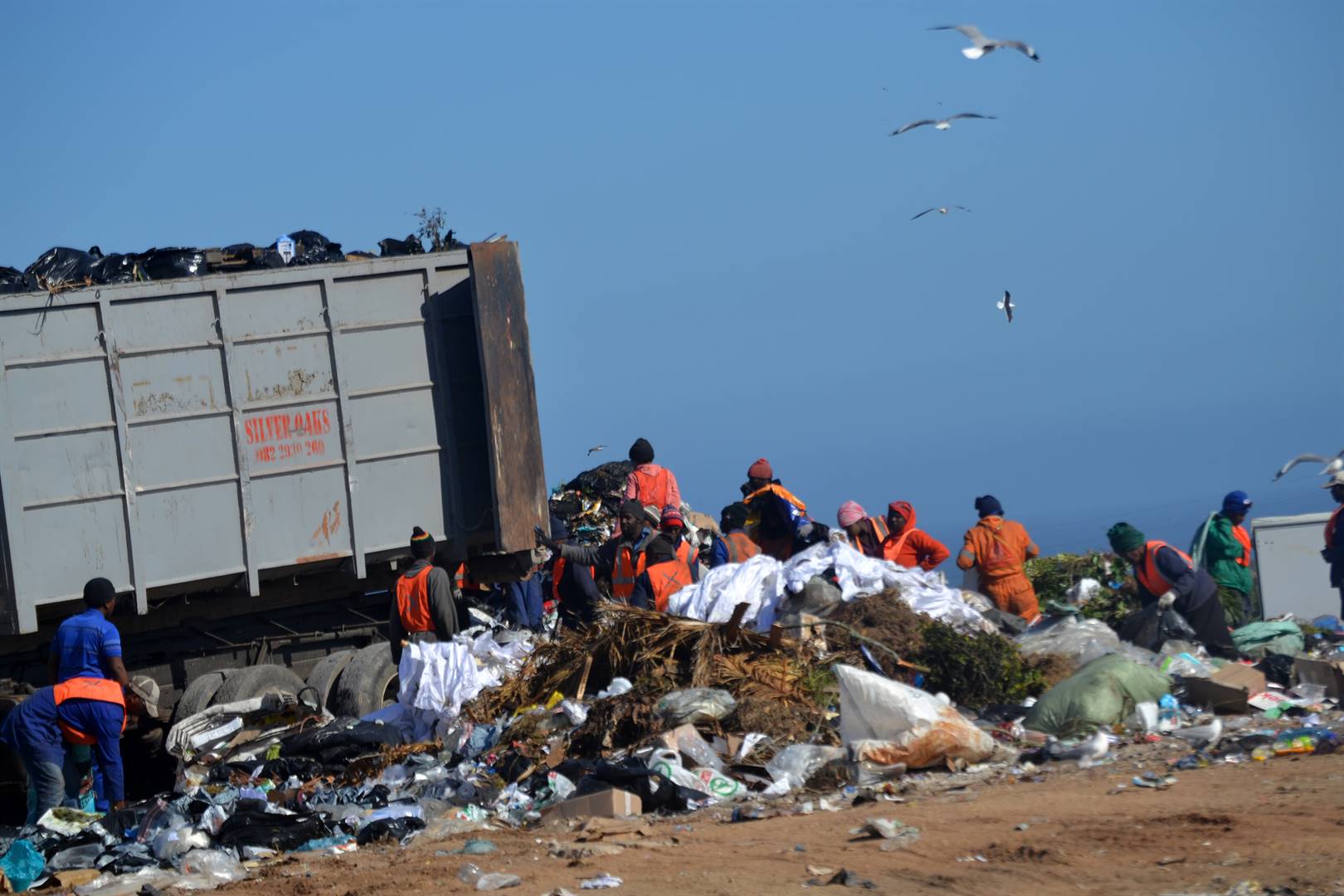
The way Nelson Mandela Bay Metropole is drowning in rubbish, one could say there are bad “waste characters” living among us.
It’s true that it is any municipality’s core function to collect waste and dispose of it at a landfill site, but this is not the magic wand that will make the Metro’s enormous refuse problem disappear.
People’s habits need to change
“Landfill sites are reaching their end of life, as they are filling up quickly,” warns Melinda Labuscagne of the municipality’s Waste Management Department and resident of Kariega.
“Waste disposal should be the last option. We must first look at how we can reduce, re-use, recycle or treat waste prior to disposal of it.”
Why waste characterisation?
“Getting any resident to rather recycle than to throw away, is easier said than done. The government took this into account, and recommended waste characterisation studies as step one in the process,” said Melinda.
“The NEMWA requires municipalities to develop an Integrated Waste Management Plan every five years and do a waste characterisation survey to establish the waste streams within a municipal area to guide them on recycling and treatment methods when planning.”
Nelson Mandela Bay municipality’s Waste Management Department undertook their waste characterisation study, using the Western Cape Government guideline documents as a national guideline document does not exist.
The survey was done by taking samples from domestic waste (household waste) collected during the weekly waste service, Melinda explained.
“Properties were categorised into the three consumer groupings of high, middle- and low-income. A random 5% sample was then selected from each identified area. Sampling is necessary because the study of an entire population would be too expensive or physically impossible to conduct, as in this case.
“Samples from each area were collected on their normal day of placing out refuse. All bags collected on that day were then taken to central point, where a team of seven sorters go through the bags and then sorted into 10 categories and then further subdivide them into 27 subclasses.”
A few of the findings
Recyclables (paper, cardboard, metal, glass and plastics) were found to make up approximately 29% of the total domestic waste stream
Organics constituted on average 36% of the total waste collected in the three areas.
Cardboard and paper constituted 10.5% of the total weight in the waste sample.
The glass fraction was significantly higher in the high-end consumer area with 13% of the waste stream from that area made-up by glass.
The more affluent socio-economic area generates the most waste on average per household in all waste categories.
“The results indicated that in the high-income area the average weight generated by each household was 20,4 kg, in the medium income group 14,3 kg and in the low-income group it was 8,6 kg per household,” said Melinda.
“The results revealed that on average, a high-income area would yield 37% recyclable waste vs 28% in medium income and 25% in low-income group, therefor its more viable to implement recycling initiatives in the high to medium income group.”
Food waste
One item that stood out during the waste characterisation survey was the amount of food waste found in the waste bags.
“Most of that food waste was in such a condition that someone else could have still consumed it if it was not disposed with the general waste. It was shocking,” said Melinda.
The need to change this type of behaviour, as well as the need to let less refuse end up in the almost full landfill sites, resulted in the municipality’s Source Separation Recycling Project which was launched in Westering in September last year.
“We encouraged the participating households to recycle by separating waste accordingly to different categories in their own homes. Waste recycling is one of the pillars of waste management within the metropole.”
But didn’t this recycling initiative serve as a very strong magnet for the bag scratchers and the waste pickers?
“Our operational team did a survey to determine if the people going through the refuse bags were informal recyclers or people that was looking for food or other valuable items.
“It was found that only a few of them remove aluminium cans or glass bottles that have a deposit value. Most of the people indicated that they remove food, clothes, or other items of value to them.”
Melinda said it is nothing but a kind human gesture to place any surplus or leftover food, as well as clothes or items of value, in a separate bag and place it out with the weekly refuse.
“This will prevent the black bags from being ripped open by the back scratchers or waste pickers and is a more dignified way for the person looking for food. I have been doing this for years and it works.”
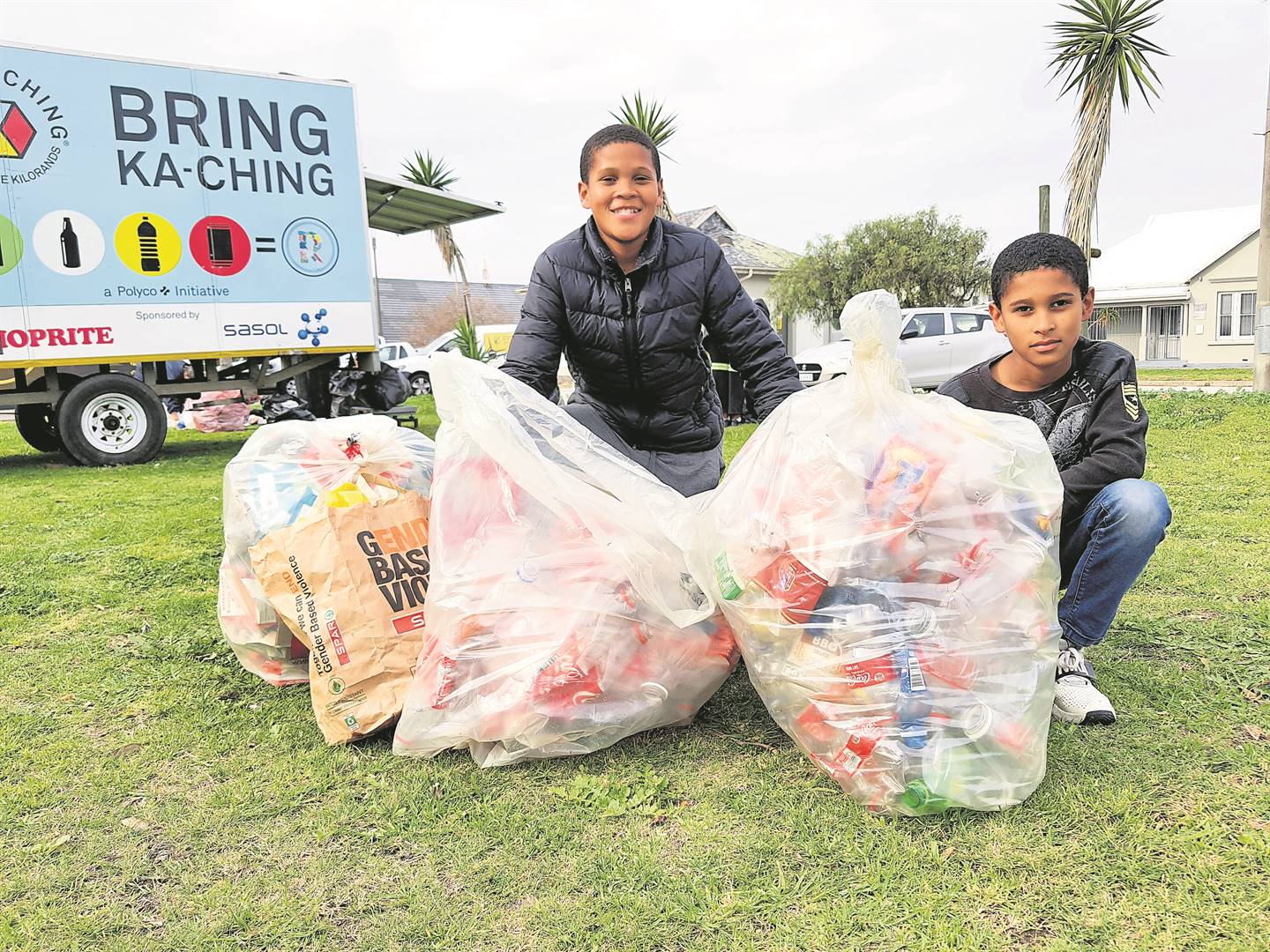
- The Waste Trade Company launched the community-based recycling project Packa-Ching through which residents can earn vouchers by handing in their recyclables. Visit https://www.packaching.co.za for more information or send a whatsapp to Emmy Mxayeka at 084 028 5734 or phone the Waste Trade Company at 041 486 2110
- Greencycle Recycling provides inexpensive recycling collection service to the homes and businesses of Qeberha. Contact details 041 581 2174 or Mobile: 072 237 5895 or send an email to info@greencycle.co.za. Visit https://www.greencycle.co.za for more information.