

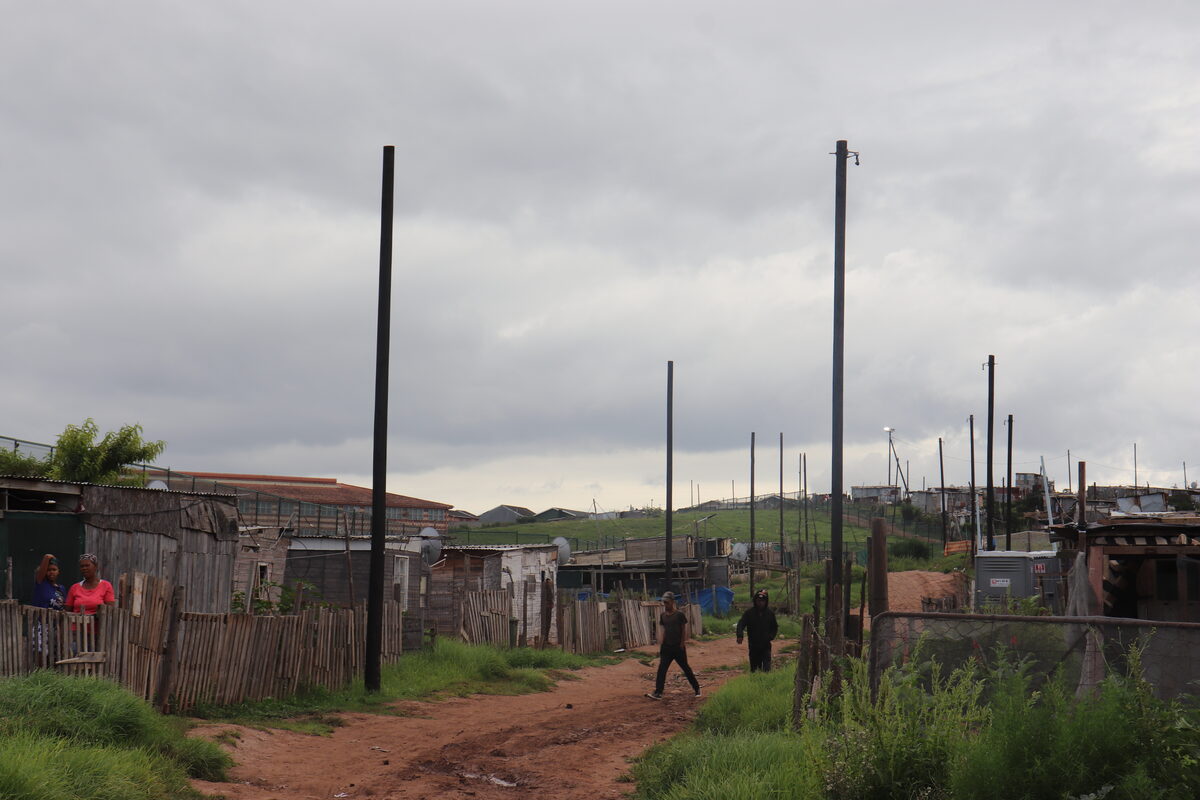
KARIEGA – After more than a decade of advocating for basic service delivery, residents of McCarthy Informal Settlement in Kariega are finally set to be connected to the municipal electrical grid; a breakthrough that addresses one of their most pressing safety concerns.
The electrification project brings hope to a community that has long grappled with multiple service delivery challenges, including inadequate road access that prevents emergency vehicles from reaching residents, limited water access points, absent refuse collection services, and poor police visibility, particularly during night-time hours.
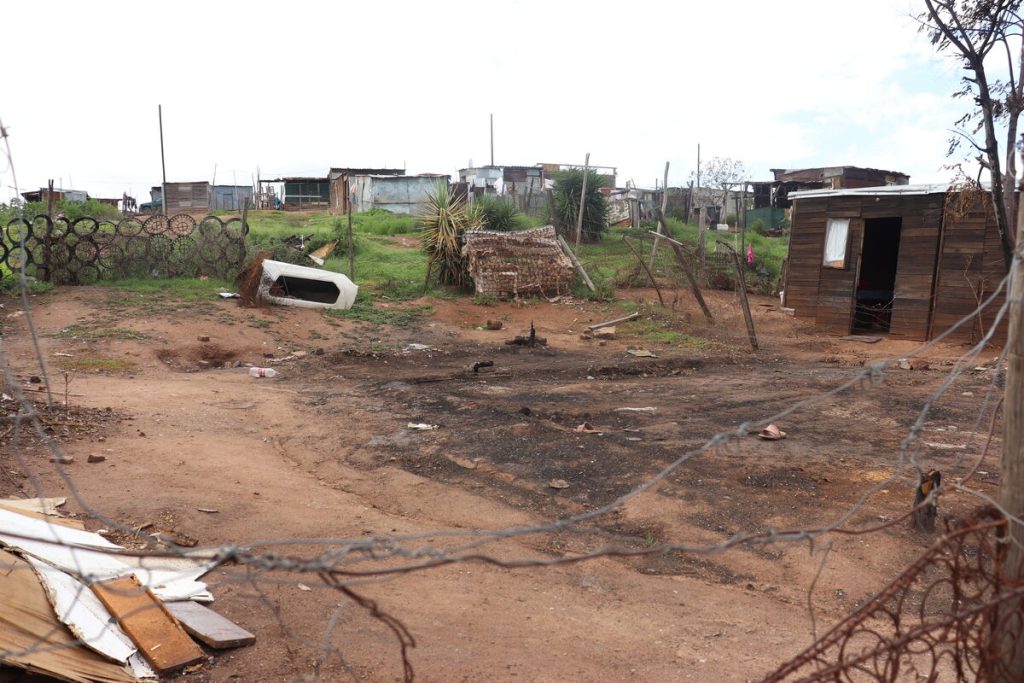
For years, residents have resorted to dangerous illegal electrical connections to power their homes, creating serious fire hazards. The urgency of proper electrification was highlighted by a recent devastating shack fire that claimed all possessions of one family, a tragedy that could have been prevented with safe, legal electrical infrastructure.
The new electrical connections are expected to reduce fire risks and restore lighting through existing floodlights, potentially improving safety.
While water access has been partially addressed through the deployment of water trucks to the area, electrification represents the first major infrastructural victory for residents who continue to advocate for comprehensive service delivery, including proper road construction and regular waste collection.
In a statement, the municipality said that it had set aside R2,608,695.65 for the 2025/26 budget year to install electrical cables, poles, and connection infrastructure in McCarthy Informal Settlement. Currently, the poles and some cables have been installed.
ALSO READ: McCarthy informal settlement electrification underway
Speaking to UD Express, Ward 48 councillor, Franay van de Linde, said that the area has been in her ward since 2014, when it fell under Ward 49, her previous ward.
“I have made the municipality aware of these issues since 2014, so seeing these issues addressed even after 10 years is a win for the community.”
Susan Ruiters, a community leader of McCarthy Informal Settlement, welcomed the installation of electricity in the area, while highlighting the plight the community still faces.
“We do not have basic service delivery, like waste removal. People can now dump anywhere, even between shacks, because currently, we have an unofficial dumping site that looks horrible, as it has not been cleaned for so long,” she said.
When we had litter pickers and black refuse bags, this place was much cleaner.
While it is a health hazard to live among rubbish, Ruiters said that she only wants the tools, like plastic bags, “because our intention is to start our own litter collection crew of approximately eight people who will assist where needed, so that we can be self-sufficient and not rely on other people to help us. We do not expect outside people to clean the litter, we will do it ourselves.”
She added that she wants the initiative to be endorsed by the municipality.
“We plan to erect designated refuse collection points at all four corners of the informal settlement, where refuse trucks can collect without driving inside, just so that we can also have a cleaner environment. I don’t know if it is budget constraints that have prevented us from receiving this basic service, but we want it back.”
Van de Linde added that McCarthy, commonly known as an informal settlement, is now regarded as a formal settlement, which means these services ought to be provided to the community. “This area is part of the municipality’s plan to develop the informal settlement. I have escalated the request for this area to be put on to the system to receive this service on a weekly basis, as it is done in any other formal area. They should not be disadvantaged when they are now formalised,” she said.
Discussing the things the community needs, Ruiters said, “Normally with informal settlements, there are two programmes, namely: community gardens and recycling programmes. Those don’t only assist but empower our people, creating a culture of self-sustainability. Through these initiatives, we can feed families in need through soup kitchens. Our hope is that each household, each family, has some sort of friendly competition with others so that we can empower one another.”
Ruiters added, “Sometimes, residents of informal settlements are seen as the delinquents of society. We want to change that narrative, because we want to earn what we get, we don’t just want handouts. We don’t want to protest to get what we need; we would much rather sort things out peacefully.”
When asked how receiving electricity would make them feel, two other residents, Belinda Brown and Donovan Matill, said the community was excited to receive this basic need. Brown said, “We have lost so much from electrically-caused shack fires; we have even lost families. We were forced to illegally connect our homes because we have been without electricity for so long. Now, we will sleep in peace knowing that nothing will randomly catch fire.”
Brown added, “We have also been in the dark because the floodlights are connected to the electricity poles. The lights have been off because we have not had electricity, but now we will feel much safer knowing there are lights to see danger coming. We will also feel better knowing that emergency services will finally be able to drive into our area.
“Normally, we are told that they cannot drive in because it is too dark, putting them at risk. That is on top of the lack of roads we have, which makes it impossible for anyone to drive in when it is raining.
“When someone has died or requires medical assistance, we as residents have to pick them up using a wheelbarrow to transport them to the entrance where emergency services wait for us. Imagine the loss of dignity for both the family and us as residents.”
Recalling a troubling memory of the lack of help the community receives, Matill said, “Because of the bad road that we have, we had a funeral in the area and the undertakers did not want to enter the area. We as the community had to fetch the casket from the entrance to the home, which happens a lot. It is very bad.”
The community members pleaded with the municipality for more of their basic needs to be met.
We only ask that we receive the same services that every other resident receives. We understand that everything is a process. We will protect the service providers who come here to help us.
According to the Nelson Mandela Bay Municipality spokesperson, Sithembiso Soyaya, a total of approximately 423 households are planned to benefit from the electrification project, with the appointed contractor stringing low-voltage aerial bundle conductors.
He added, “Owing to budgetary constraints, the project is being implemented in phases and will not be fully completed within the current financial year. Phase 1 of the project, which focuses on the installation of bulk electrical infrastructure, is scheduled for completion by the end of June 2026.
“This phase includes critical work such as the excavation and installation of poles, installation of conductors, service distribution boxes, as well as earthing, testing, and commissioning of the network,” he said.
To ensure the completion of the project, Soyaya said a budget request has been submitted for the 2026/27 financial year to enable the rollout of Phase 2. “Subject to approval, this phase will include the installation of ready boards and prepaid meters to individual households,” he concluded.
ALSO READ: Residents demand adequate service delivery


You must be logged in to post a comment.