KARIEGA – John Walton Secondary School has recorded an overall matric pass rate of 81.7% for the Class of 2025 in the 2025 National Senior Certificate results, marking a notable improvement from the 80.1% achieved in 2024 and reinforcing the school’s trajectory of consistent academic growth.
Speaking to UD Express, Deputy Principal Phillip Joseph said the school community was “elated and ecstatic” about the results, particularly given the socio-economic challenges faced by many learners.
“We are certainly happy that we showed an increase of more than one per cent. Over the past few years, we have proven that we can consistently perform above the 80% mark, and that speaks to the commitment of our learners and educators,” Joseph said.
At the start of the 2025 academic year, the school set an ambitious internal target of 85%, a goal Joseph described as realistic but challenging. “While we did not quite reach 85%, we came close under very difficult circumstances. As long as we continue making steady progress, that target is definitely achievable in 2026,” he said.
Joseph credited the Class of 2025 for their discipline and willingness to go beyond expectations, noting that teachers consistently reported high levels of commitment and cooperation from learners throughout the year.
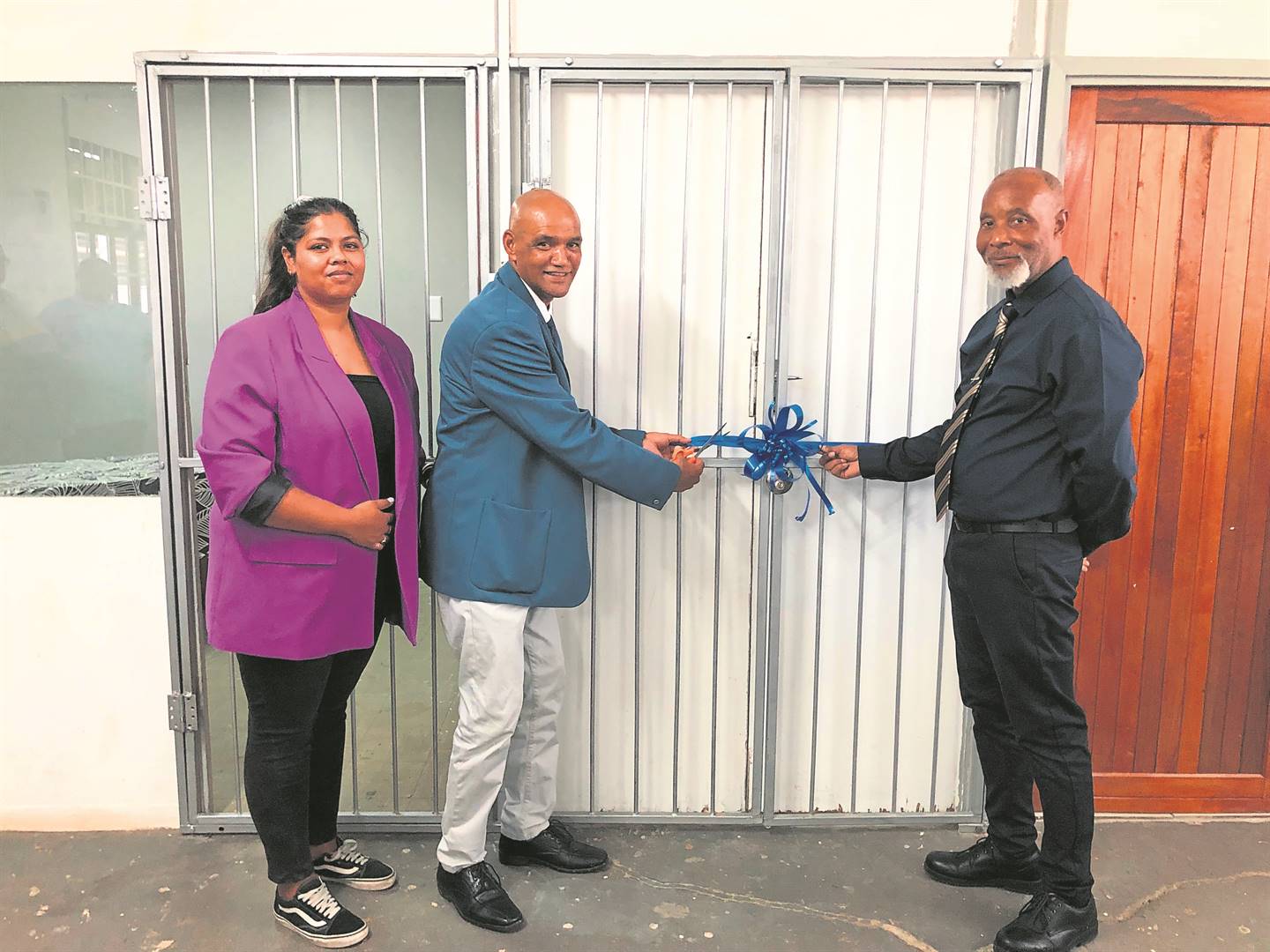
A key contributor to the school’s improved performance was the study centre and sleeping quarters, established to support learners who struggle to study at home owing to overcrowding, financial hardship, and unstable living conditions.
“Our learners come from very difficult backgrounds. Many do not have proper parental structures or a conducive environment to prepare for exams,” Joseph explained. “The study centre helped enormously.”
In 2025, the initiative focused primarily on male learners, where the school identified greater academic and behavioural challenges. Learners were provided with supervised study time, accommodation during critical periods, and targeted academic support in subjects in which they were struggling.
“It did wonders not only for academic performance, but also for discipline,” Joseph said, adding that plans are in place to expand the facility to accommodate both boys and girls simultaneously.
Beyond the study centre, Joseph emphasised that learner success was the result of a collective effort involving educators, parents, the Department of Education, and the broader community.
“The starting point is always learner attitude, and this group had a very positive mindset,” he added. “When we asked them to go the extra mile, they did so without complaint.”
Educator commitment, particularly at Grade 12 level, played a critical role, while parental involvement, where family structures existed, was strengthened through formal agreements signed towards the end of 2024. Partnerships facilitated by the Department of Education also proved invaluable, allowing John Walton learners access to facilities at more affluent schools during holidays and weekends.
“These partnerships worked wonders. They showed us that collaboration is key if we want to move from strength to strength,” Joseph said. He also highlighted the importance of regular meals in supporting learner focus, attendance, and overall well-being.
“For some learners, the meal they receive at school is the only proper meal of the day. A hungry learner cannot concentrate, let alone perform well in exams,” he said.
The Department of Education’s early release of nutrition funding enabled the school to provide not only lunch, but also breakfast and porridge for learners who arrived early. Five parents were employed to run the feeding programme, often volunteering their time beyond paid hours, particularly during weekends when learners stayed over at the study centre.
In addition to the overall pass rate, the quality of passes also improved significantly. Nearly 50% of learners achieved Bachelor’s degree passes, while close to 36% qualified for Diploma studies, opening pathways to tertiary education. Two learners achieved Level 7 distinctions in Business Studies, with one learner, Deon Peterson, also attaining a Level 7 in Mathematical Literacy, making him the school’s top performer. “These results show that our learners are capable of succeeding at university level,” Joseph said.
Reflecting on lessons from the Class of 2025, Joseph said the school’s focus going forward would be on strengthening coordination between all role players; learners, educators, parents, non-teaching staff, alumni, the School Governing Body, and the wider community.
“When all these role players operate within a coherent structure, success becomes inevitable,” he said.
To the Class of 2026, Joseph offered a message of continuity and discipline. “Follow in the footsteps of the Class of 2025, start working from day one, attend school regularly, and go the extra mile. We have already started with extra classes, and the commitment from both teachers and learners is there,” he concluded.