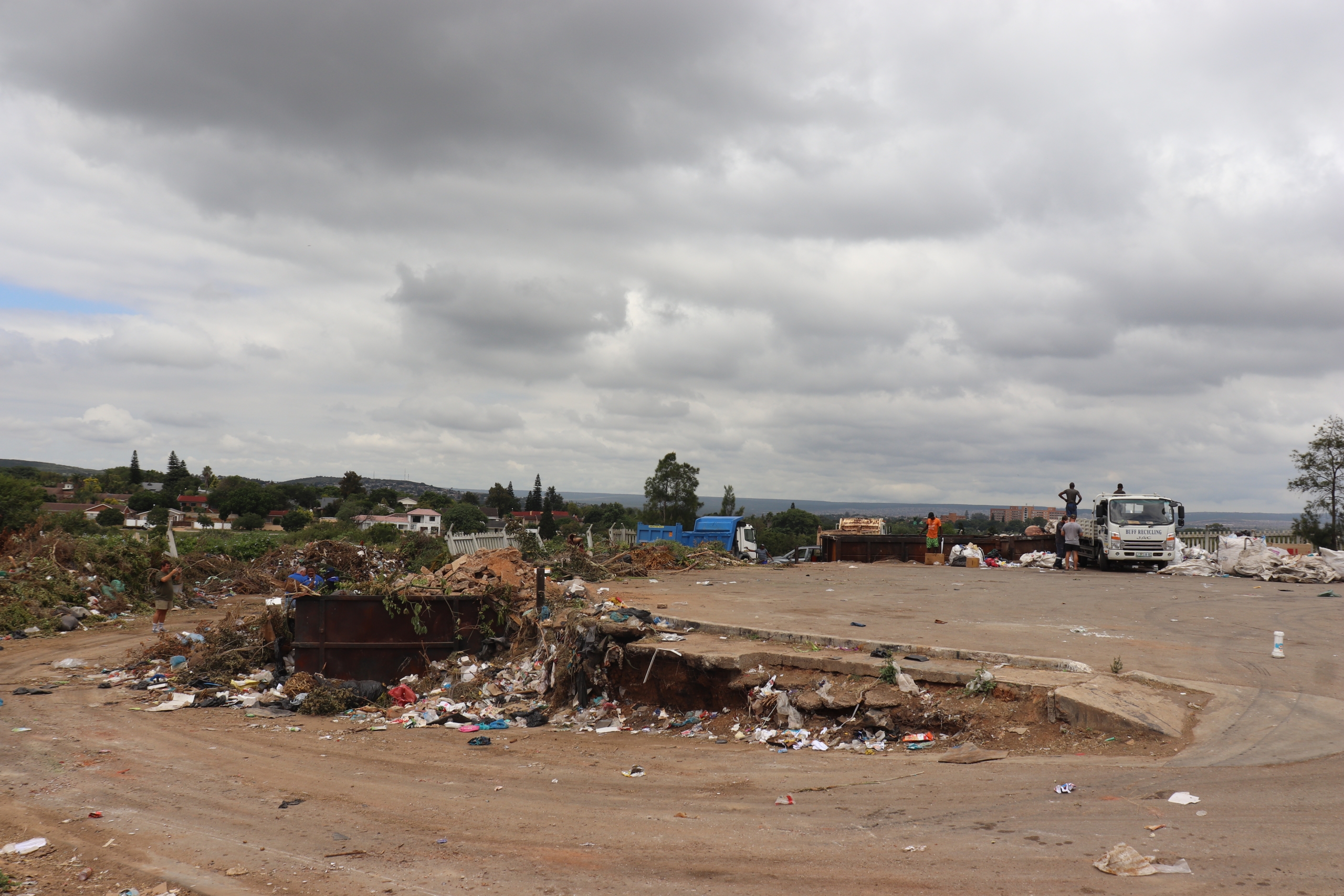
KARIEGA – Koedoeskloof landfill and Hillwacht transfer station in Kariega are among the four worst-performing waste management sites in the Eastern Cape, according to AfriForum’s 2026 landfill audit, which found that none of the five Nelson Mandela Bay Metro facilities assessed met the minimum compliance requirements.
Koedoeskloof recorded a compliance score of 36%, while Hillwacht managed only 30%. The five sites audited in Nelson Mandela Bay achieved an average score of 42%, well below the 80% threshold required to pass the audit.
The other facilities assessed were the Arlington landfill in Gqeberha, which scored 44%, and the Gillespie and Rosedale transfer stations in Kariega, which recorded 50% and 52% respectively.
Louis van der Vyver, AfriForum’s district coordinator for the Eastern Cape, said the poor performance of waste management facilities in Nelson Mandela Bay, the province’s largest metro with approximately 1.2 million residents, was particularly concerning.
“Effective waste management is non-negotiable and has a far-reaching impact on people and the environment. There is no longer time for excuses, the municipalities’ poor performance in this audit clearly indicates that we are heading toward a disaster,” he said.
The audit also found declining compliance at facilities in the neighbouring Kouga Local Municipality. The Humansdorp landfill site, which passed the audit in 2025 with a score of 80%, dropped to 68% this year, falling below the required threshold.
The Hankey landfill site scored 44%, unchanged from its 2024 result. Its compliance score has fluctuated between 42% and 44% over the past two years.
The Roundhill landfill site in KuGompo City, formerly East London, was the only facility in the Eastern Cape to pass this year’s audit. It recorded a compliance score of 96%, down from 100% in 2025 but substantially higher than the 64% achieved in 2023.
Van der Vyver said Roundhill’s performance was an exception in a province where waste management facilities continued to struggle.
“One swallow does not make a summer, and this is especially true in the Eastern Cape. Despite Roundhill’s exceptional performance, the province only managed an average compliance score of 55%. If Roundhill were excluded, the other eight sites audited in the province would not even have managed a combined compliance score of 50%,” he said.
The Eastern Cape’s average compliance score of 55% was marginally below KwaZulu-Natal’s 56%. The Western Cape and Gauteng recorded the highest provincial averages, at 66% and 64% respectively.
Nationally, AfriForum assessed 132 landfill sites and transfer stations across all nine provinces. Only 30 facilities, representing 23% of those audited, achieved a compliance score of at least 80%.
According to the organisation, the findings point to widespread shortcomings in infrastructure, operational management and compliance with basic waste management requirements.
AfriForum submitted its report to the Department of Forestry, Fisheries and the Environment in Pretoria earlier this month. The organisation said it would continue auditing municipal waste facilities annually and engage with authorities, industry stakeholders and communities on possible solutions.
It also encouraged communities to participate in responsible waste management, recycling and local initiatives aimed at reducing the amount of waste sent to landfills.
Responding to the findings, Nelson Mandela Bay Municipality (NMBM) spokesperson Sithembiso Soyaya said the municipality acknowledged the concerns raised about its landfill sites and transfer stations but had not yet verified AfriForum’s findings and compliance scores.
“While the Municipality has not yet verified the findings and compliance scores contained in AfriForum’s 2026 landfill audit, it is aware of the operational challenges experienced at some of its waste management facilities,” he said.
Soyaya attributed these challenges to ageing infrastructure, vandalism and budgetary constraints, which he said affected the maintenance, security and efficient operation of the facilities.
He said the municipality had invested more than R15 million in improvements to its waste management facilities during the current financial year, with further investment planned for subsequent years. “Priority interventions include improving perimeter fencing and access control, acquiring additional fleet and upgrading infrastructure within the facilities,” he said.
Soyaya added that the municipality was engaging with communities and exploring public-private partnerships to advance waste recycling. “These initiatives are aimed at improving waste management practices, strengthening operational efficiency and creating local economic opportunities,” he said.
Asked how the municipality would address the specific shortcomings identified in the audit, Soyaya said the findings would first need to be assessed against its operational records and applicable compliance requirements.
He said this process would help establish the deficiencies identified at each site and determine whether additional corrective measures were necessary.
Soyaya said the municipality remained committed to improving the condition and management of its waste facilities through infrastructure upgrades, stronger security measures and other interventions aimed at improving compliance.