LET’S face it, texting is fostering bad grammar and spelling. This makes it even more challenging for educators to teach learners spelling rules.
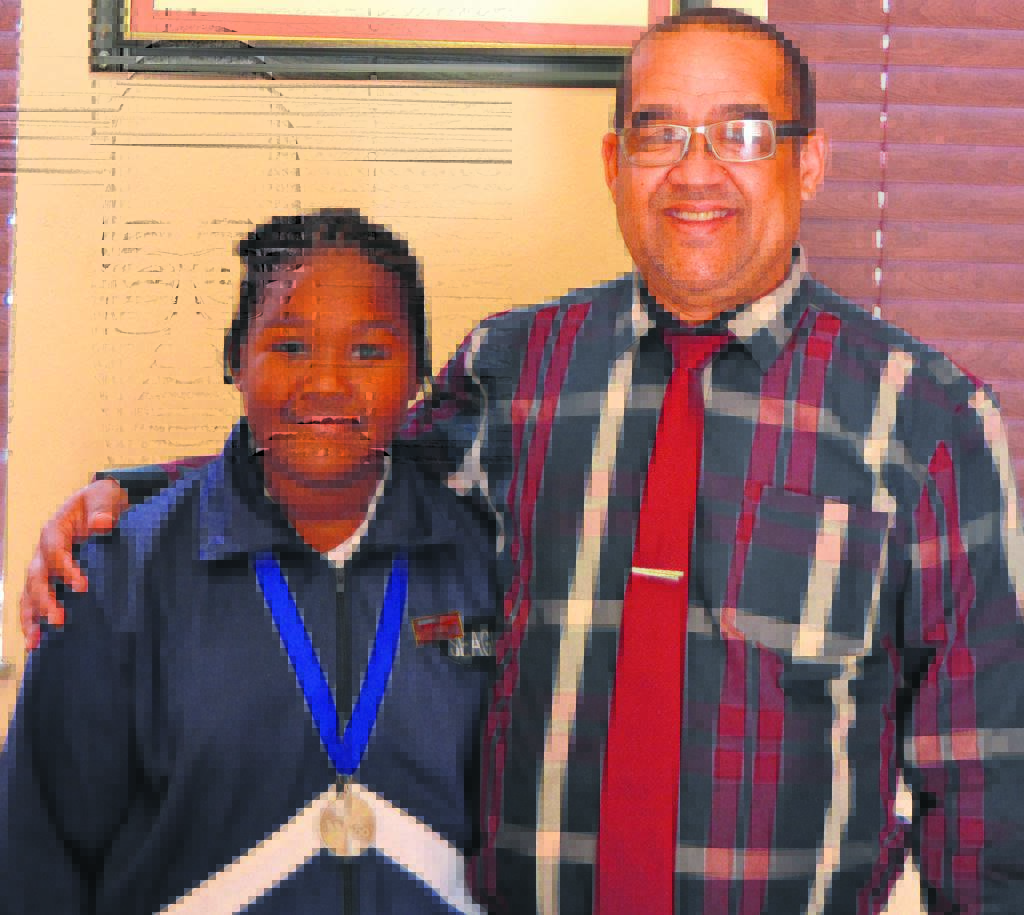
At Hombakazi Primary School in KwaNobuhle, teacher Phumla Scritch-Faku is passionate about spelling. This is evident in the achievements of learners she coaches for the annual Spelling Bee competition hosted by the Department of Basic Education.
Next Thursday, August 15th a learner from Hombakazi, Ananda Blou (12) will be in East London to compete at provincial level in the 2019 Spelling Bee competition.
“It is a first for our school. In the past we had several winners at cluster and district level, but we never had a finalist at provincial level,” said Scritch-Faku.
The 1 200 words listed for this year’s Spelling Bee competition are not easy to spell. With words, only at the start of the alphabet like arteriosclerosis, anaesthetic, anticoagulant and ampulluceous, it’s evident . . . you for sure have to know your spelling rules.
“My learners have to know all the words. That is why we practise after school. Ananda is gifted and prefers the challenging words. The more difficult the more she likes it,” said Scritch-Faku.
The 2019 Spelling Bee cluster competition in KwaNobuhle saw 12 learners from various schools competing, with the top three positions going to Hombakazi learners namely, Ananda Blou, Azazole Antonie and Siphosethu Fisanti. At district level, Ananda was the winner with Siphosethu in second position. Now, Ananda has to show her spelling expertise at provincial level.
“It all is about dedication. That is the most, most important recipe for success. Spelling is crucial. When you read something that is full of spelling mistakes, it does not leave a good impression. That is why we should care about the fundamental part good spelling plays in language,” said Scritch-Faku.
The aim of the Department of Basic Education with the Spelling Bee competition is to set a platform for South African learners to improve skills associated with good spelling habits.
The categories of participation are Bumble Bees (Grade 4 – 6); Honey Bees (Grade 7- 9) and Melittidae Bees (Grade 10-12).