For as long as I live in Nelson Mandela Bay, I will never ever take the Addo Elephant National Park, situated so close by, for granted again.
Why is this?
The answer lies in two words:
“Shaping Addo”
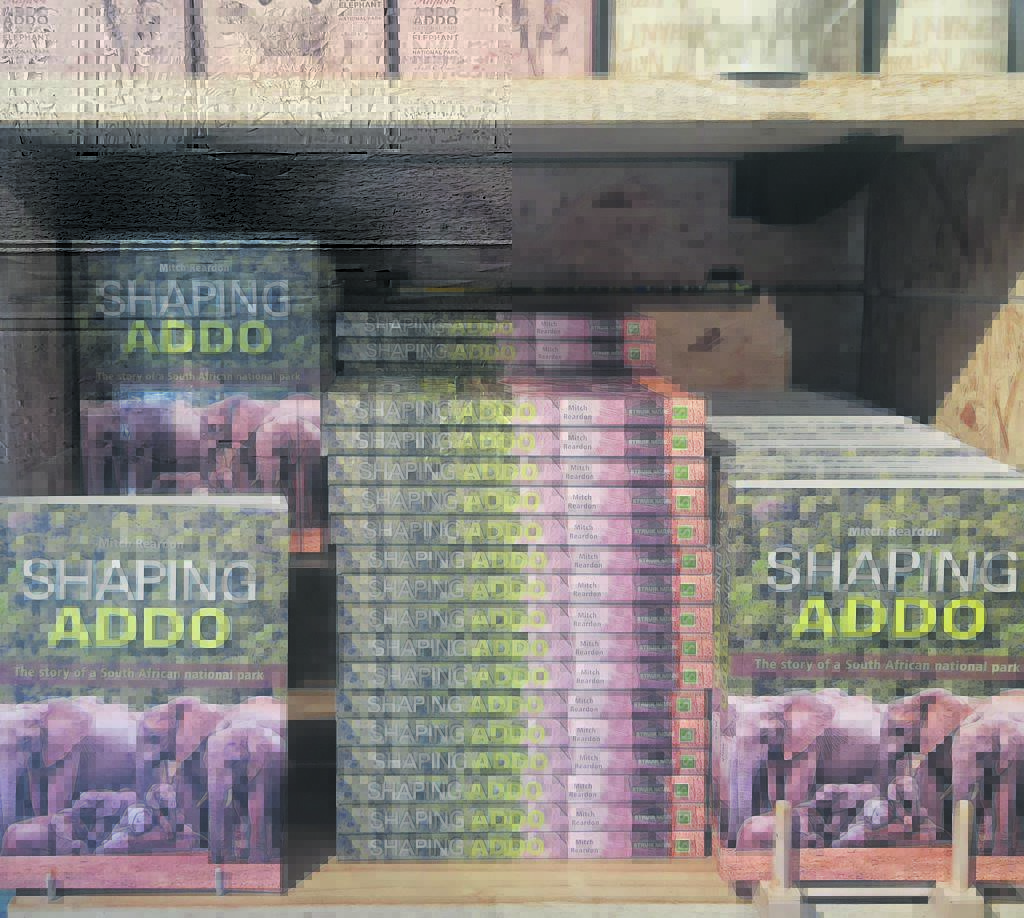
This book is a masterpiece, written by Mitch Reardon after years of his own intensive research on the park, his own observations while staying in the park, drawing on various doctoral dissertations and master theses as well as delving into the history of the park.
And for those who wonder about the Addo elephant’s addiction to oranges in earlier years: it is true. After the establishment of the park in 1931, one of the schemes to boost tourism to the park was to let visitors feed the elephants oranges during the fruiting season by floodlight, Reardon writes.
Not only does he take the reader back to the early days when clashes between the Addo-elephant and farmers in the Sundays River Valley resulted in a carnage which at the end saw only 16 elephants left, he also takes the reader through the land, the veld, the different vegetations, the Alexander Bay beaches as well as the islands in the Indian oceans that all form part of the greater Addo-park.
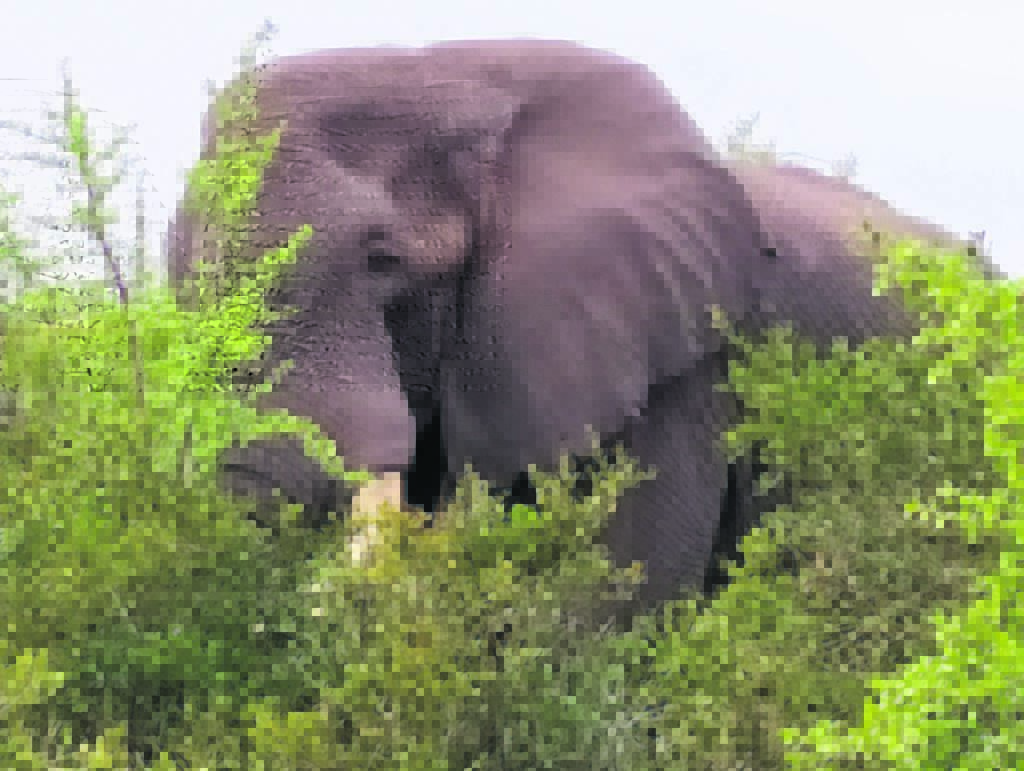
In the introduction to Shaping Addo, Reardon writes: “Addo is home to the densest concentration of wild elephants anywhere in the world.”
This struck me, because for the first time I realised that only an incredible and biodiversity rich piece of nature can sustain almost 650 elephants, even in times of crippling drought.
The Thicket
And yes, piece by piece you find the answers in the different chapters of Shaping Addo. What stood out for me, was the chapter (Life in the Thickets) dealing with the dense vegetation of the thickets, also referred to as valley bushveld or Albany thicket. Of course, the remarkable spekboom, the elephant’s big favourite, is part of this Addo thicket which consists of 112 vegetation types and 1 560 plant species.
Reardon doesn’t shy away from the tragic part of the Addo Elephant Park in the early 1900’s when the Uitenhage and P.E. Farmer’s Association demanded the elephant’s total extermination. Major Jan Pretorius, who was contracted to do the hunting, described the thicket as a “hunter’s hell.” He killed more than 120 elephants according to his own estimates.
One can feel one’s anger rising while reading the tragic history, yet find solace in the words written by Reardon: “In hindsight many may have condemned what Pretorius did as wanton and grotesque, but history is about looking at the past without imposing contemporary values on those events.”
Thus, with a “lighter” mind one can follow Reardon as he describes the various landscapes, biomes, fauna, flora, islands and marine life of the Addo Elephant National Park.
Addo dung beetle
But let us not forget the flightless dung beetles, the black invertebrates that are the decomposers of elephant and buffalo scat. To them the dung is food and brood balls, to us the beetles are the sewage removal teams who work for free. In the chapter “After the Storm” the Addo flightless dung beetle is discussed in very interesting detail.
Also interesting is the black backed jackal, described in the Chapter “Jackals and hyaenas”. After my having read through this, it felt to me as if the jackal has decided: “Try to kill me and I will multiply.”
Of course, the ways and means of the Addo elephant also had me spellbound, but the details on the red hartebeest, rhino, bat eared fox, lion, eland, zebra, buffalo, the gannet (with its phenomenal plunge dives) the whales, the dolphins and African penguins also kept my eyes glued to the book.
From every page of Shaping Addo it’s clear that Mitch Reardon, who worked as a ranger in South Africa and Namibia before becoming a wildlife photographer and writer, draws not only from his own extensive knowledge of nature, but also on decades of research as well as physical observation to present a very readable and super informative book on the Addo Elephant National Park.
Also remember to take Shaping Addo with you the next time you visit the park, because the index at the back of the book will lead you to the page of the subject you want to know more about.
One cannot but agree with Penguin Random House South Africa when they say: “Shaping Addo is an engrossing account of how a seemingly insignificant sanctuary (for the Addo elephant) was transformed into an astonishingly successful mega-park, and the most ecologically diverse protected space in South Africa.”
- Shaping Addo by Mitch Reardon ISBN: 9781775846048 | RRP R320.00