Rescuers stretched across multiple emergencies as floodwaters rose and storm seas battered the Eastern Cape coast.
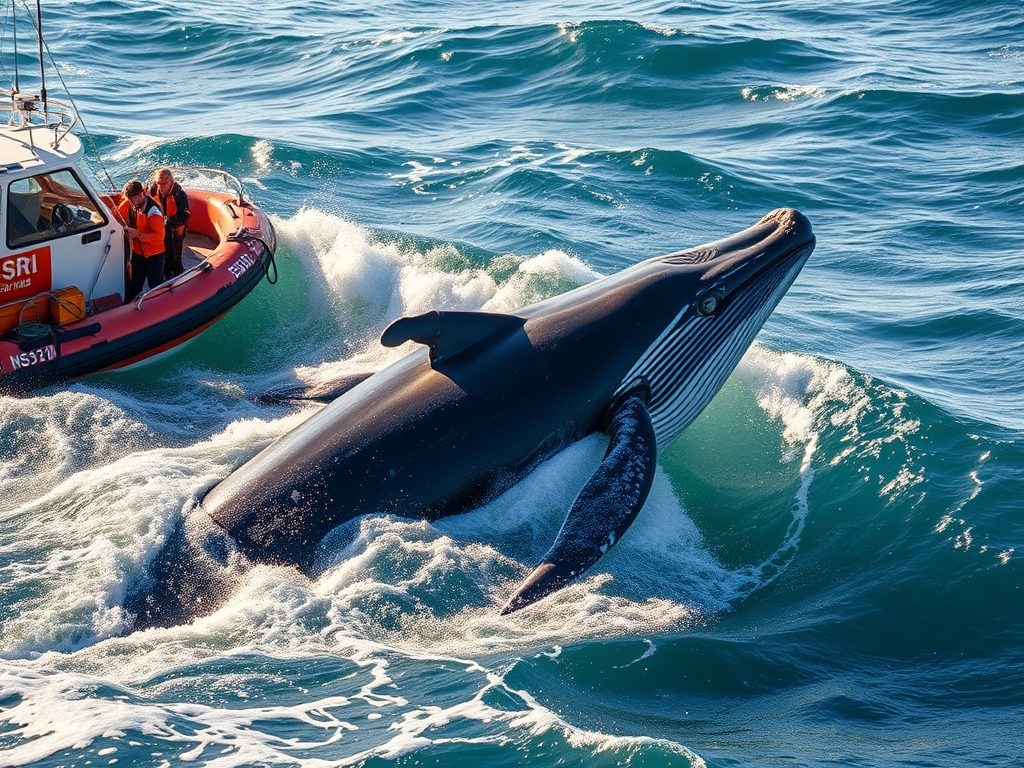
According to a National Sea Rescue Institute (NSRI) statement, it was a weekend that tested the limits of the National Sea Rescue Institute’s Gqeberha station, with crews simultaneously battling floodwaters on the Sundays River and mounting a three-day medical evacuation operation in storm-lashed Algoa Bay.
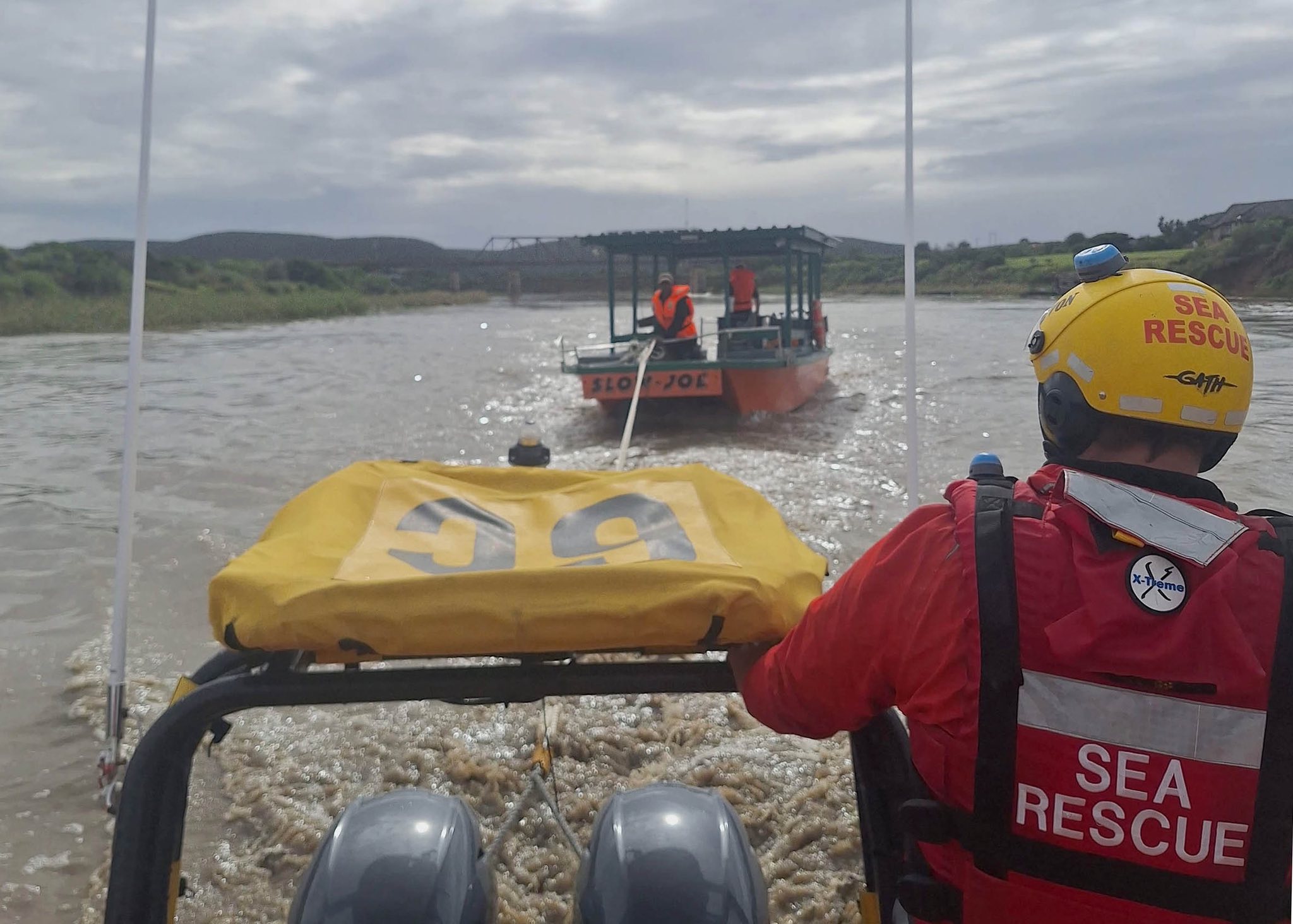
At just before 11:00 on Friday morning, 8 May, NSRI Gqeberha received a distress call from two local men aboard a nine meter vessel on the Sundays River. Their motor had failed, their anchor wasn’t holding, and rising floodwaters were dragging them downriver.
The timing could hardly have been worse. The majority of NSRI Gqeberha’s resources were already committed to a large-scale multi-agency mass rescue operation at the Gamtoos River. With manpower stretched thin, two crew members diverted to the Institute’s satellite rescue station at Noordhoek, where they collected the rescue craft Eddie Beaumont II and transported it overland to the Sundays River Angling Club for launch.
Upon arrival, rescuers spotted the two men, both wearing life-jackets, who had drifted to a jetty and were safe. Their vessel, however, was firmly lodged on a submerged tree stump.
The Eddie Beaumont II was launched, a towline was secured, and the stricken boat was freed. After repeated attempts to restart the motor failed, NSRI towed the vessel downriver to a safe mooring. No injuries were reported.
The statement added that Sundays River rescue came on the back of a far more complex operation that had already been underway since Thursday afternoon.
On 7 May, NSRI Gqeberha was activated, in coordination with the NSRI Emergency Operations Centre and the Maritime Rescue Coordination Centre to medically evacuate an injured seafarer from a container vessel anchored in Algoa Bay, off Cannon Rocks. The patient, a 58-year-old Ukrainian national, had fallen down a flight of stairs and sustained injuries requiring hospital care.
However, the sea had other plans. After assessing conditions, NSRI deemed it too dangerous to operate in the storm seas that night. Throughout the evening, a Western Cape Government Health EMS duty doctor maintained contact with the ship’s medical team, who kept the patient stable and comfortable.
By Friday, the rescue craft Bay Guardian was launched with an NSRI Maritime Extrication (MEX) crew. An MEX crewman was transferred aboard the vessel and confirmed the patient was in a stable condition, but the seas remained too rough for a safe high-angle transfer. The crew was recovered, and the team stood by for a better weather window.
That window came on Saturday morning.
At 11:30, the Bay Guardian was launched once more, this time carrying an Eastern Cape Government Health EMS rescue paramedic and two NSRI MEX crewmen. The statement added that in reaching the vessel, both MEX crewmen boarded and, in a carefully executed technical high-angle operation, transferred the injured sailor, secured in full protective gear, down onto the rescue craft.
Under the care of the EMS paramedic, the patient was brought ashore to NSRI Gqeberha’s Station 6 rescue base, before being transported by ambulance to hospital in a stable condition. Doctors expect him to make a full recovery. The operation concluded at 13:04.
NSRI paid tribute to the ship’s master, crew and medical team for their professionalism throughout the ordeal, and to Telkom Maritime Radio Services, which facilitated communications across the multi-day operation.
ALSO READ: NSRI sounds alarm over Kromme River as floods leave trail of destruction