When Magrietha Justus, a Kariega resident, was diagnosed with spondylolisthesis (a spinal condition where a vertebra slips forward or backward over the one below it) in April 2025, she never imagined that more than a year later she would still be waiting for a specialist appointment at Uitenhage Provincial Hospital (UPH) whilst spending R500 monthly on private pain medication.
Her deteriorating back condition, now complicated by sciatica, has become a symbol of a collapsing public health system where patients wait over a year for critical care whilst lying on hospital floors during medical emergencies.
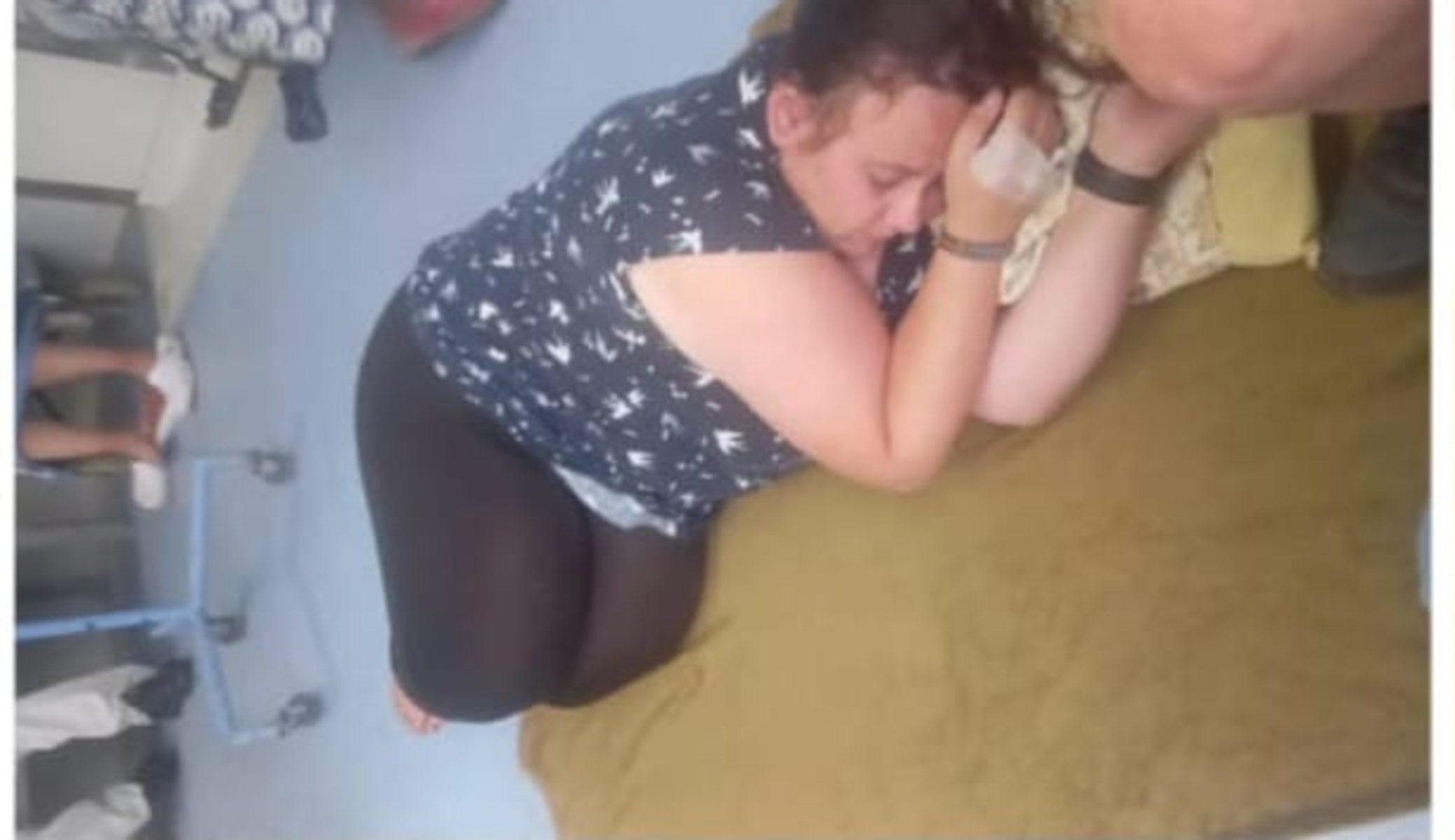
In February 2026, when viral meningitis brought her to the same hospital, Justus said she spent five hours lying on a waiting room floor in excruciating pain whilst an entire ward of empty beds sat unused upstairs owing to staff shortages.
What began as two separate medical crises has transformed this determined woman into an unlikely healthcare advocate, inundating Eastern Cape health officials with formal complaints and demanding answers for a hospital she says has deteriorated so badly that “many people would rather die at home.”
Despite escalating her concerns to national health authorities, multiple failed meetings with UPH, and promises from hospital complaints officers that have led nowhere, the silence from officials continues.
“Where is this going to stop?” Justus asked.
Speaking to UD Express, Justus said that this didn’t start in February 2026, but actually began much earlier.
“In April 2025, I was diagnosed with spondylolisthesis by a private doctor. My back pain was getting significantly worse, so in June 2025, I got a referral letter to attend the Out-Patient Department (OPD) at UPH so they could schedule an appointment with a specialist. I presented myself at OPD, had X-rays taken, gave them all my details, and was told a consultant would contact me with an appointment date,” she said.
“That was June 2025. Here we are now, and I have not received a single communication about that appointment. My condition has deteriorated to the point where it’s affecting my everyday life. I’m limited to minimal function now. Whilst some days are manageable, most days I struggle to walk normally.”
She added that in the meantime, she has been diagnosed with sciatica, which she said comes with financial strain.
I now have to spend R500 every month just on pain medication because the public system that’s supposed to help me has completely abandoned me.
Returning to the place she said had abandoned her for eight months for what she thought was an uncontrollable migraine, she waited hours for help but saw a doctor only the following morning, who gave her Panado tablets for the extreme pain she was experiencing.
“The pain was so severe I couldn’t open my eyes or move without experiencing terrible spasms. They sent me to the trauma unit for admission and told me to wait. After several hours, despite having a spinal condition and suspected meningitis that made it impossible for me to sit upright, I ended up lying on that floor because of the pain.
“When we asked about the delay, they said there were no beds available. There were already about 11 other patients who had been waiting since Friday for admission, whilst the entire fifth floor sat empty because they don’t have enough staff,” she claimed.
“There I was, lying on a hospital floor, sick with meningitis, already dealing with an untreated back condition that I’d been waiting eight months to get help for. That’s when I realised this wasn’t just my personal struggle; this is a crisis affecting everyone in our community.”
When asked about how lying on the floor of a hospital made her feel about her own dignity, she said, “Lying on that hospital floor, sick and in pain, waiting for basic care, was one of the most humbling and heartbreaking moments of my life. In that moment, I felt invisible; like my dignity as a human being didn’t matter. No one should ever feel that way when they are at their most vulnerable. It made me question my worth, not because I believe I am less, but because the system treated me as if I was.”
She said that people with serious medical conditions are waiting a year or more for necessary treatment.
“When appointments are eventually scheduled, patients have to travel to other towns to see specialists; something many can’t afford, especially those earning a minimum wage or unable to work like I am now. My main concerns haven’t changed: there’s not enough medication available, severe staff shortages, not enough hospital beds, and patients are being abandoned by a system that’s supposed to help them. The financial burden alone is crushing families. Where is this going to stop?” she said.
I’m exhausted and frustrated by the lack of response from management, but I’m also determined. Giving up would mean accepting that this is okay, and it’s not. Every day that passes without action means more people will suffer like I have, or worse. Our community deserves better than this complete breakdown of healthcare services.
She concluded that emotionally, this has been a very exhausting journey.
“There are days when I feel frustrated and drained by the lack of response and accountability from those in power. It is difficult to keep pushing when it feels like you are not being heard. However, at the same time, I still hold on to hope. Hope that by speaking out, by refusing to stay silent, something will change. Yes, I feel tired and discouraged, but I am also determined. I just want those of us waiting for a year or more to see specialists in Kariega to receive that care.”
ALSO READ: Hospital complaint system to improve services
In response, the Department of Health spokesperson Camagwini Mavovana stated that the matter was subsequently investigated, and the complainant was contacted on 18 March 2026.
“Upon conclusion of the investigation, the Department initiated a redress process; however, the complainant indicated limited availability for engagement. The complainant stated she would only be available after hours, over weekends or public holidays,” she said.
“This is concerning. It is therefore difficult to reconcile the decision to escalate this matter through the media when the Department has already initiated direct engagement and a redress process, which the complainant did not reasonably make herself available for.”
Mavovana added that according to hospital records, Justus was attended to at Uitenhage Provincial Hospital on 24 June 2025 and appropriately referred to Livingstone Tertiary Hospital Orthopaedic Department for further management.
“It must be noted that once a patient is referred, the receiving institution is responsible for patient scheduling and communication,” she said. “The Department takes all allegations regarding service delivery seriously. Investigations into the complaint did not substantiate claims of a systemic collapse as described.”
She also noted that while intermittent stock constraints may occur, facilities are required to implement contingency measures, including the provision of clinically appropriate alternatives and sourcing from neighbouring institutions, which was done, she claimed.
Regarding the alleged empty ward, Mavovana said that only Ward 5B on the 5th floor, an 18-bed unit, is currently non-operational.
“This matter has been escalated and is known to Head Office,” she said. “The non-functionality of this ward does not equate to available unused capacity, as operationalisation is dependent on staffing, equipment, and safety compliance requirements.”
Explaining the timeframe in which Justus allegedly waited for assistance, Mavovana claimed that on 8 February 2026, Justus presented at the facility at approximately 01:00 and was triaged at 01:45 as a yellow-category patient in accordance with the South African Triage Scale, then attended to by a medical officer at 04:20.
“These timeframes fall within the acceptable norms and standards prescribed in national policy for non-immediate cases,” she said.
Mavovana also claimed that measures are being implemented to strengthen staffing, including the recent appointment of additional healthcare professionals across facilities.
The Department rejects the assertion of a “complete system breakdown” at Uitenhage Provincial Hospital. “Clinical care was provided, appropriate investigations were conducted, and admission was initiated. It is important to note that the patient left the facility prior to completion of the admission process without notifying staff,” Mavovana said.