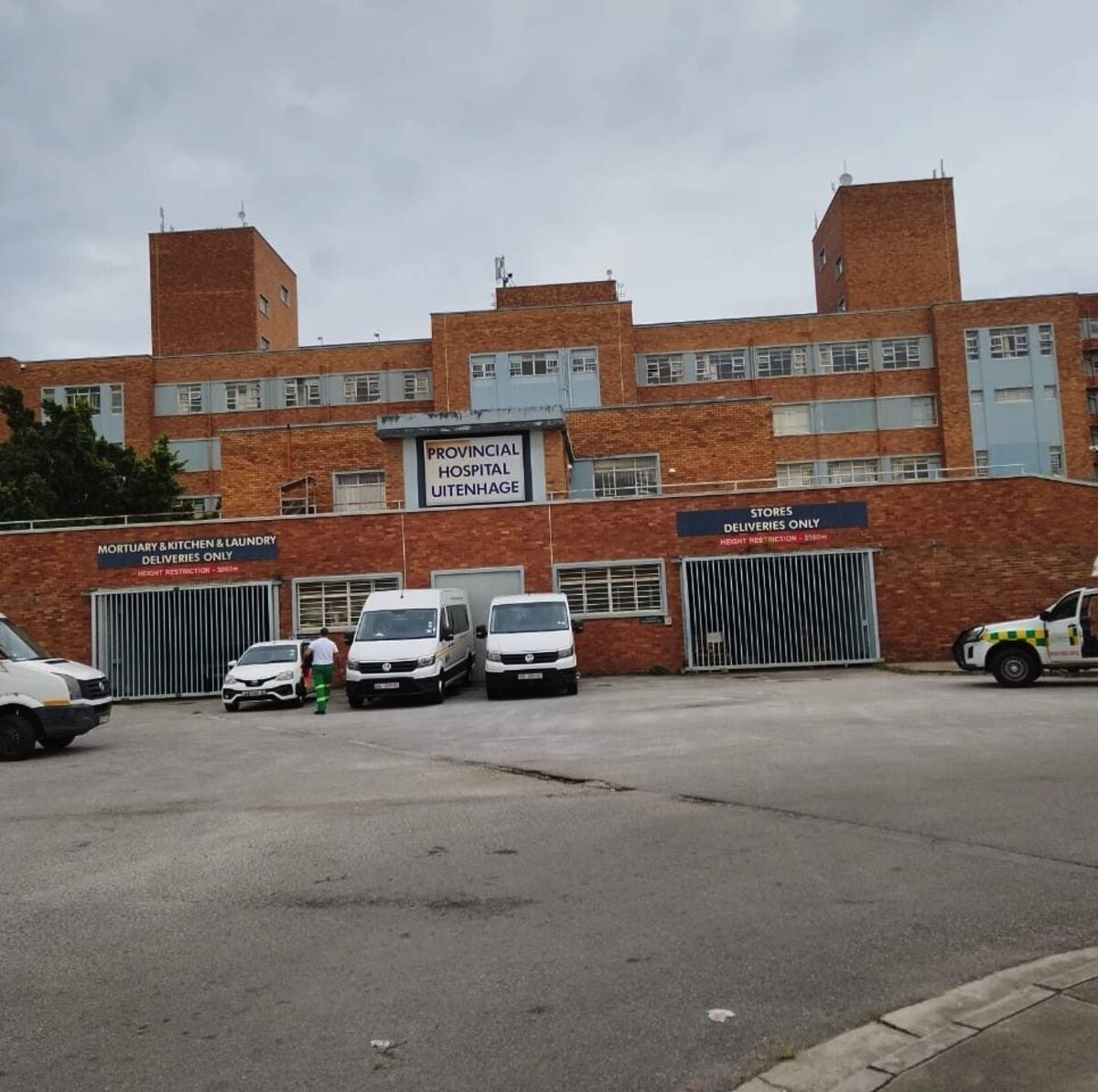
A social media announcement about file opening fees at Uitenhage Provincial Hospital has ignited a fierce debate about healthcare access in Nelson Mandela Bay.
The hospital’s 28 September Facebook post, outlining charges of R55 during regular hours and R70 after hours, has drawn sharp criticism from residents and civil society organisations. Community members quickly took to social media platforms to voice their concerns about the policy, whilst local leaders and civil society organisations condemned what they viewed as a violation of constitutional healthcare rights.
A concerned resident of Kariega, Sinclair Baatjies, shared with UD Express, “I’m deeply troubled by the recent notice issued by Uitenhage Provincial Hospital, which imposes fees for opening patient files and mandates the disclosure of medical aid information. These new rules – R55 during regular hours and R70 after hours, are not just administrative changes. They represent a direct barrier to healthcare access for the most vulnerable in our community.”
He added that the South African Constitution guarantees every citizen the right to healthcare. “For many in Kariega, the public hospital is the only lifeline in times of illness or emergency. Introducing fees at the point of entry undermines this right and risks turning away those who cannot afford to pay.
“We understand that hospitals face financial pressures, but these must never come at the expense of human dignity and constitutional rights. Healthcare is not a privilege; it is a human right.”
Kariega activists, the South African National Civil Organisation (SANCO), Uitenhage Despatch Taxi Association and the Reverend Fraternity Forum also shared their disdain for this new rule. “We unequivocally reject and condemn the recent communication from your office that is circulating on social media indicating that community members will now be required to pay when opening files at Uitenhage Provincial Hospital. We view this decision as a direct and serious violation of the fundamental human right to accessible healthcare, rights that are protected under our Constitution. The imposition of such fees creates an unjust barrier to access, particularly affecting vulnerable groups who rely heavily on public health facilities.”
The organisations added: “We are deeply concerned that this decision appears to have been made without proper consultation or transparency. This only serves to erode public trust and raises further questions about the hospital’s governance; especially in light of ongoing concerns and unresolved issues regarding internal management practices.”
In response, the Eastern Cape Department of Health spokesperson, Siyanda Manana, emphasised that no patient has ever been or will be turned away from a health institution owing to inability to pay required fees, reaffirming that access to healthcare remains a fundamental right for all South Africans.
“Section 27 of the Constitution of the Republic of South Africa guarantees that everyone has the right to access healthcare services, including reproductive healthcare, and explicitly states that no one may be refused emergency medical treatment. The Uniform Patient Fee Schedule, implemented across South Africa in November 2000, standardises billing for services in the public health sector by categorising patients based on income and funding status. All hospitals in the country comply with this system, which is not unique to any single facility in the Eastern Cape,” Manana said.
Under the current fee structure, patients are classified into four categories:
• H0 patients, including social pensioners, receive free services except in specified circumstances, such as when they have medical aid.
• H1 classification applies to individuals earning less than R70,000 annually or households with incomes below R100,000.
• H2 category covers individuals earning less than R250,000 per year or households earning under R350,000, with fees of R55 during office hours and R70 after hours.
• H3 patients earn above R250,000 annually for individuals or R350,000 for households, with fees assessed based on services received.
The department clarified that any person, regardless of their financial situation, can open a file and must do so to receive medical care. “Whilst payment is expected from those who can afford it, patients without money at the time of consultation will still receive treatment. In such cases, a debt is recorded against the patient’s file, a practice that has been in place for years. The fee structure applies to all hospitals in the Eastern Cape except tuberculosis (TB) hospitals, where TB treatment is provided free of charge unless the patient has medical aid. Primary healthcare services at clinics remain free for all patients.”
Manana added that eligible patients can settle their fees using cash or card, as facilities are equipped with banking machines. “Upon payment, receipts are immediately issued, and collected funds are retrieved by the Revenue Section for banking purposes or stored securely if immediate banking is not possible. Even existing patients must complete the registration process for each consultation, with applicable fees due at each visit. Each hospital maintains its own bank account linked to the department’s main account.”
He said that the department follows up on outstanding debts through telephone calls and verbal communication, with plans to implement an SMS reminder system for debtors. “Communities are encouraged to start at primary healthcare clinics before seeking higher levels of care and to familiarise themselves with the Universal Patient Fee Structure policy available on the Eastern Cape Department of Health website.”
The department concluded by reiterating that no individual will be denied healthcare services owing to their economic or social status, maintaining the principle that healthcare access is a constitutional right for all South Africans.