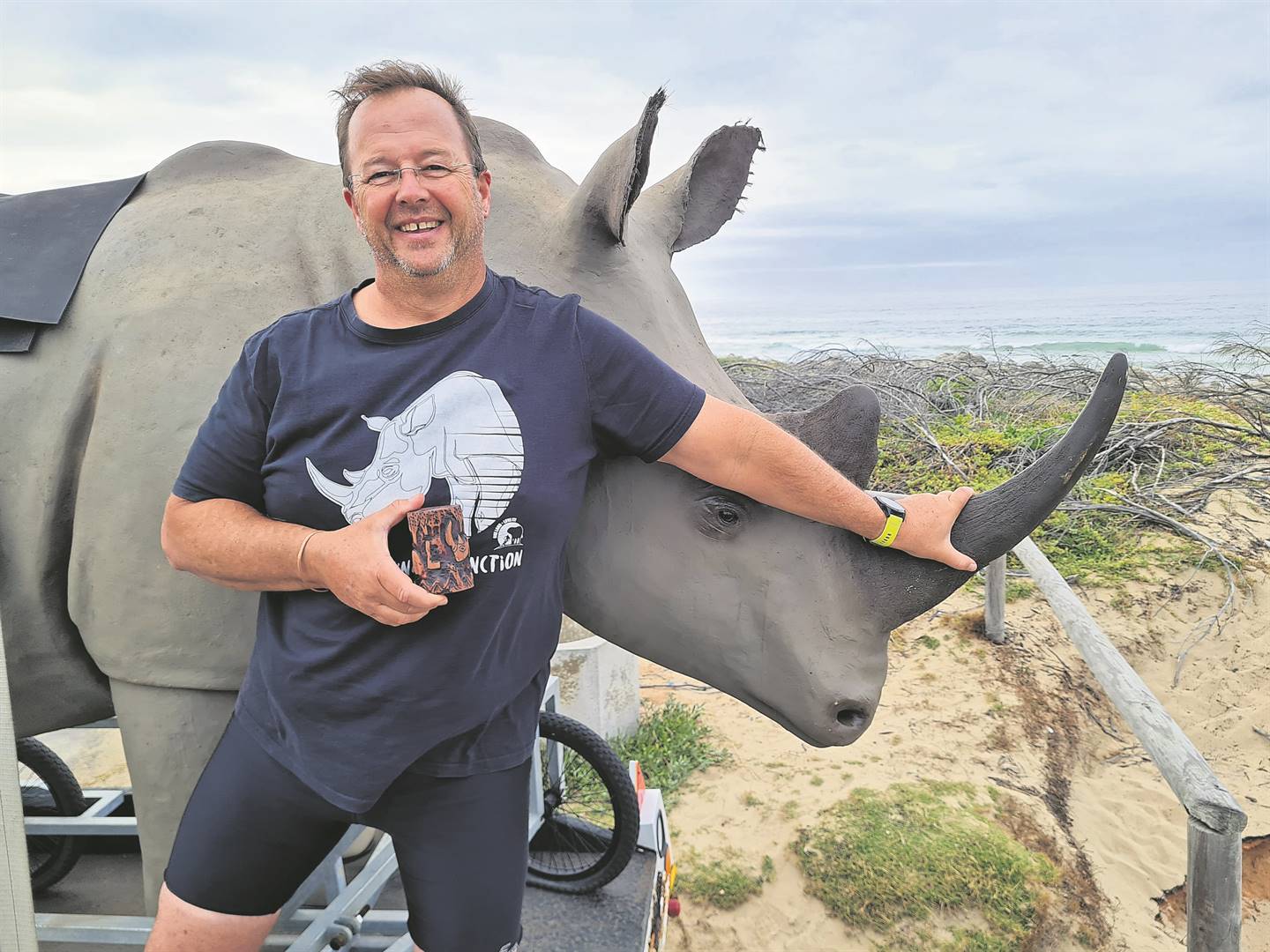
“Sadly, our planet is facing a global extinction crisis, with more than 1 million species predicted to go extinct in the next decade.”
This is according to Carl Havemann, SANCCOB Centre Manager, where the OLLIMove representing ‘One Land Love It NPC’ for rhino conservation, symbolically finished. SANCCOB’s primary objective is to reverse the decline of seabird populations, especially endangered species like the African Penguin.
In another venture to draw the attention to remind humans not only to the plight of rhinos, but that there are so many other species at risk, Andrew Stewart an OLLIMove director, part of Algoa Bay Ocean Stewards and Chairman of Discover Mandela Bay (DMB), swam 6.55 kms around the Cape Recife Point with its legendary lighthouse to draw attention to the environmental significance of this area.
Stewart has a few long-distance swims under his belt including the Robben Island crossing and Cape Point. Accompanied by Duncan Stewart, the brothers started their swim from the wild side of Cape Recife and as they entered the water were quickly surrounded by a massive school of inquisitive dolphins that criss-crossed the swimmers and support boat for about 40 minutes.
“Rhinos and penguins are both iconic and endangered species – symbols of the need to protect and conserve our natural heritage. They are also both indicator species which means that they reflect the state of our environment, and it is fitting that this OLLIMove highlights their plight,” said Stewart.
This joining of forces is a sobering acknowledgment of the enormousness of the conservation issues our planet faces and highlights the threats faced by species in both the marine and terrestrial ecosystems. “SANCCOB Gqeberha is proud to support One Land Love It (OLLI), as we come together,” says Centre Manager, Carl Havemann. “The African Penguin and Rhino, two iconic species, are part of this number. Now, more than ever, is the time for people, organisations, and government bodies to set aside their differences and work together to halt this decline to ensure these species are still thriving in the wild for future generations to see.”