
“Women have to survive, be strong and be the right example for our children.”
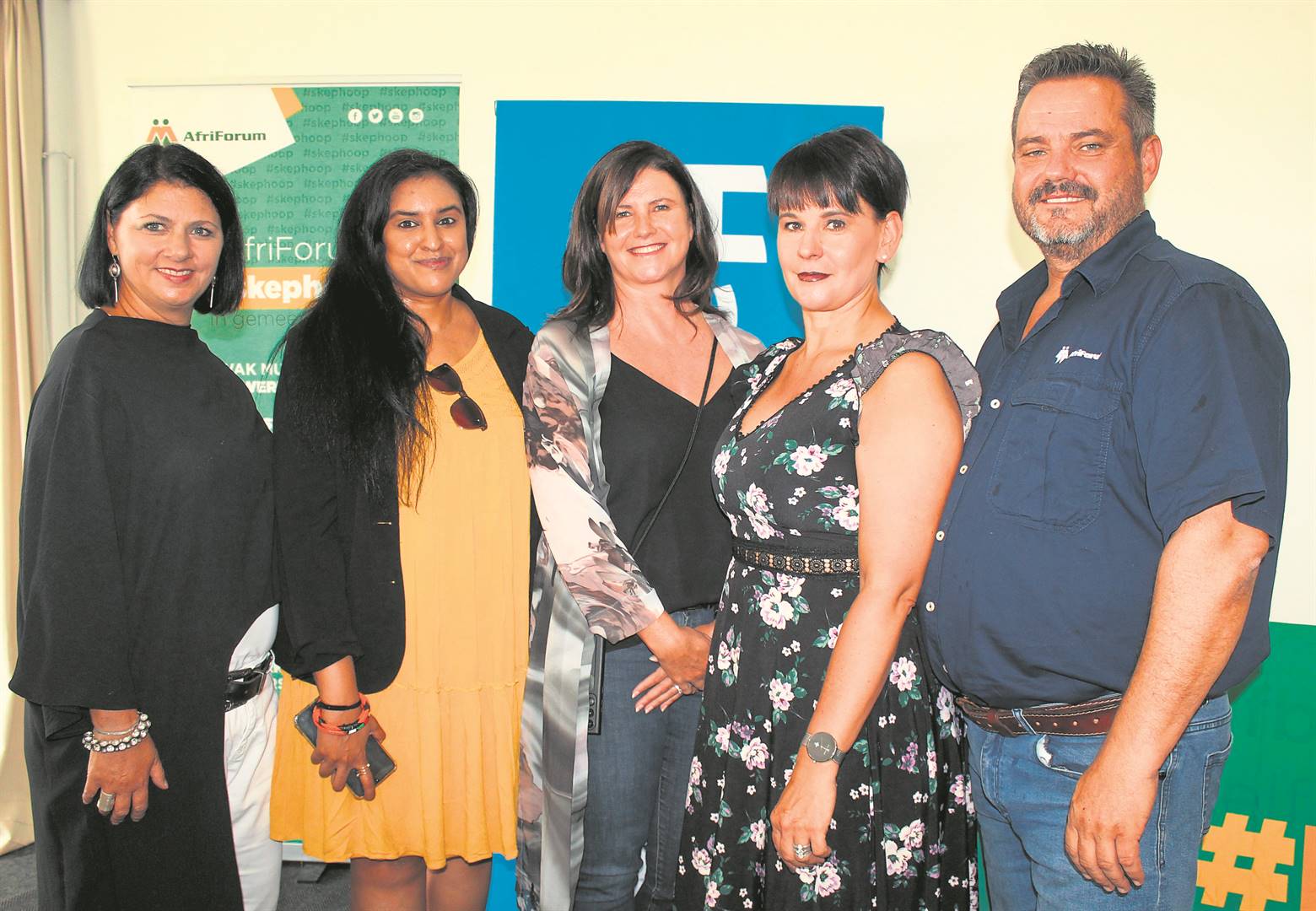
The rights of women in abusive relationships and legal protection was discussed by Adv Phyllis Vorster of AfriForum’s Private Prosecutions Unit at an event on Wednesday 20 March at Durbanville Golf Club.
The event was presented by AfriForum in collaboration with Denis Dunn Investor Club.
AfriForum took hands with the non-profit company Stop Trafficking of People two years ago in their fight against trafficking, and now also in their fight against violence against women, Tommy van Zyl of AfriForum Western Cape said at the event.
“You never hear statistics of how many women are verbally or physically abused in relationships. If we can help only one, then we have made a difference already,” he said.
Empowerment
Vorster, who has 22 years experience as prosecutor in the National Prosecuting Authority (NPA), said people react to gender-based violence as something not to be named.
“My objective is empowerment. Women have to survive, be strong and be the right example for our children. I do not tell women that everything will be okay, because it is not true. The road will not be easy and it will not be over quickly, but at the end you will be unstopable,” she said.
“Our unit was established as the brainchild of Kallie Kriel, chief executive officer of AfriForum. Originally the reason was to ensure the prosecution of politically connected individuals. However, we soon realised that due to the collapse of the criminal justice system, we have an enormous task to ensure that justice is done.
“Our office can keep ourselves busy with crimes against women and children. We do not keep quiet and will fight until the end.
“We can only hope that, for the sake of other victims of violence, we will stand together, because it is our duty. We currently support numerous women who were victims of violence and rape. These women had the courage to break the silence and, in most cases, the short term effect thereof was to their detriment, but the victory was when the accused stood in the dock to face his crimes,” she said.
“I want to focus on the collapse of the criminal justice system when it comes to vulnerable women and children. The president, minister of justice, the police, NPA and the courts only pay lip service and make empty promises that gender-based violence will be prioritised. But do you know of any practical examples implemented by them?” she asked.
“The president referred to gender-based violence as a pandemic (and I agree), but the problem remains. It is our experience that the officials, prosecutors and police that practically have to deal with these matters, do not know how to deal with it.
“Public prosecutors often don’t want to deal with these cases,” she said.
Why do women often not succeed with criminal charges against their abusers?
“These incidents do not occur in the presence of witnesses. These cases are difficult to prove and you need experienced and dedicated policemen and prosecutors.
“Many women are financially dependant on their partners and do not know how to survive, so they just tolerate the abuse. Therefore, there is a tendency that women withdraw these charges later. That makes officals negative.
“Accused are clever. The moment they realise they are in trouble, they lay a counter charge. This then provides an excuse not to charge anybody.
“Victims are also uninformed about the process. They will hear months later that the matter was withdrawn with no explanation as to why.
Awareness
“Raising awareness is necessary but it did not help our victims. We cannot just talk; we need to act. Speak up and speak out. Support organisations like AfriForum; we will have success in numbers,” she said.
“We have to put pressure on the roleplayers in the criminal justice system. We must force prosecutors to consult with victims and for the police to treat them better.
“We have to gain knowledge of criminal law to prepare ourselves better.
“As a prosecutor, I want to share practical tips with you of what I have learned through experience,” she said.
“Your cellphone is a docket. You can record, film, take photos of anything without the permission of the other party. The only requirement by law is that you have to be a party to the conversation.
“We have received so many cases of video footage or photos of injuries, and then the prosecutor will tell the victim that it is inadmissable because the phone was not sent to the forensic laboratory and downloaded, and therefore there is a gap in the chain of evidence. That is nonsense. It is your phone; you took the video or photos. You can tell the court exactly what happened during an assault and prove it with your video. The same with photos of your injuries and bruises. Take a video of the room where the incident took place afterwards. Write everything down while it is still fresh in your memory,” she advised.
“Send the video, photos or recordings to your email address or family members, because you never know if something might happen to your device.
“You have to lay a charge at the police station. They have to open a case docket; they cannot refuse.
“The chance of you ever seeing the investigating officer is slim, so write you affidavit down with all the details. Print out the photos and attach them to your statement. Put the video on a USB and attach that to your statement. When the docket is registered, take a photo of your statement or request a copy of it.
“If you have made a statement, insist to read it yourself to ascertain that whatever is drafted, is correct. Make sure all the facts are correct.
“If there is an eyewitness, let them draft a statement and take it with to the police station. Most of the matters referred to us are through friends and family of the victim. Depend on their support.
Medical reports
“A medical report also needs to be completed by a medical doctor. Take a photo of the medical report.
“If you need to make statements for a protection order and for the divorce, it can be the same. Make only one statement that can be used in both instances. If there are small differences in more than one statement, it will bite you in court. You can even be charged with purgery is there are differences in statements.
“Often partners use private photos or videos against their victims. The abuser is not allowed to distribute private sexual photos of videos without your consent – even if you have given permission for it to be taken at the time. It is a criminal offence to share any intimate photos or videos without consent and with the intention of causing harm,” Vorster said.
“It is relatively easy to obtain a domestic violence interdict, but you have to follow through. Protection orders are not only for physical abuse. It can also be to prevent cohesive behaviour like forcing someone to do anything she has a lawful right not to do. It also includes controlling behaviour and economic abuse, where the husband refuses to make financial contributions.
“If a specific action is not stipulated in the protection order, it cannot be executed. A protection order is valid for life; it does not expire. Only the victim can set it aside.
“I am the last person that can stand here today and judge any decision, but we have to start somewhere to break this vicious circle.
“Our children are the product of what they see. We have to secure a legacy to empower them to stand up and fight for their dignity and have the boldness to speak out against bullies so that they know there are consequences for their deeds,” she said.